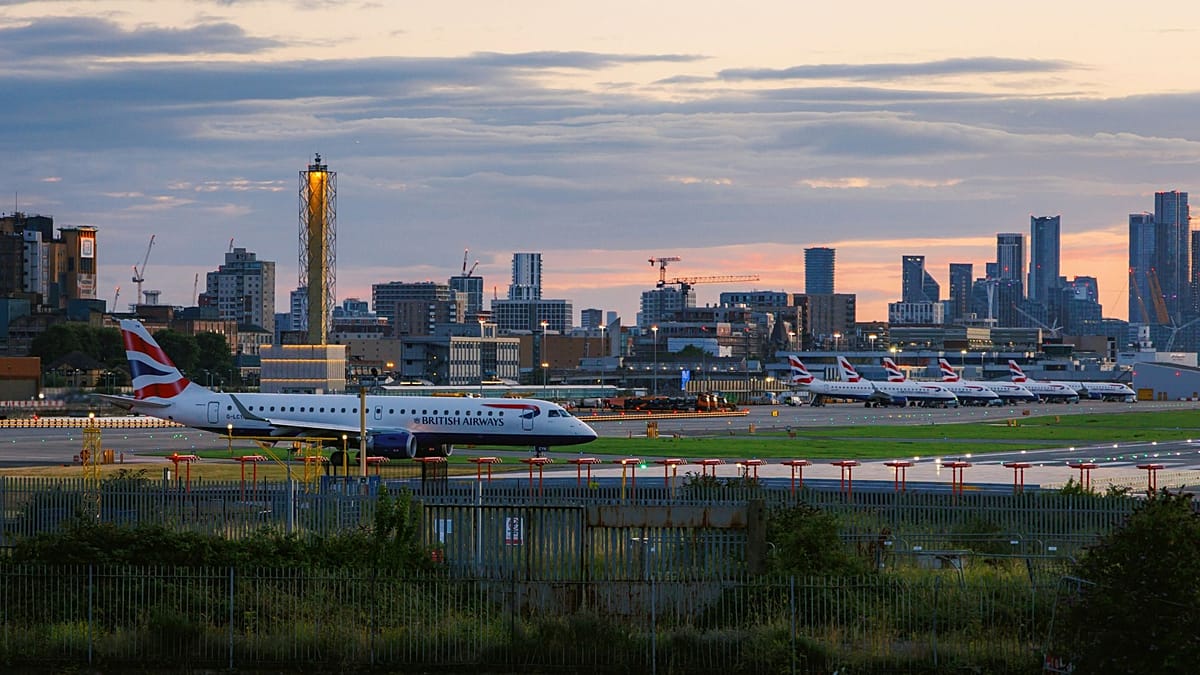
The UK government has announced a temporary relaxation of aviation rules to help airlines manage jet fuel supplies and minimise disruption to summer travel. While carriers currently report no immediate shortages, the Department for Transport (DfT) says the changes will allow airlines to “plan realistically” and finalise schedules earlier, reducing last-minute cancellations.
Under the new measures, airlines operating several flights to the same destination on a single day can consolidate those services. This means passengers from different departures may be grouped onto one aircraft, cutting the amount of fuel burned by flying planes with many empty seats. The policy is designed to curb waste as jet fuel prices remain elevated following the closure of the Strait of Hormuz.
Slot Rules Suspended to End Ghost Flights
Another key change allows carriers to hand back take-off and landing slots at airports without losing them permanently. Previously, airlines had to use at least 80% of their allocated slots each season or risk reassignment to competitors. That rule famously led to thousands of ghost flights during the COVID-19 pandemic—near-empty planes flown solely to retain slots. The DfT says the suspension removes that incentive.
Transport Secretary Heidi Alexander stated: “Since the closure of the Strait of Hormuz, the government has been monitoring jet fuel supplies daily and working with airlines, airports and fuel suppliers to stay ahead of any problems. There are no immediate supply issues, but we’re preparing now to give families long-term certainty and avoid unnecessary disruption at the departure gate this summer. This legislation will give airlines the tools to adjust flights in good time if they need to, which helps protect passengers and businesses. We will do everything we can to insulate our country from the impact of the situation in the Middle East.”
The UK has increased domestic jet fuel production in response to the crisis. Imports continue from unaffected countries, including the United States.
Consumer Rights Under Scrutiny
Not everyone welcomes the changes. Rory Boland, editor of consumer rights publication Which? Travel, warned that passengers could be left footing the bill. “Millions of Britons will have already booked their flights for this summer, often paying over the odds for flights at peak times,” he said. “Existing rules already allow airlines to move customers to new flights so long as they give them more than 14 days' notice and offer the choice between a new flight or a refund. It's only for cancellations within 14 days that compensation is payable, rightly. It's not fair for the rules to now be bent in favour of airlines and potentially leave passengers holding the bill.”
Boland added that while many travellers might accept a delay of a few hours or a day, those on short trips or connecting flights could find their journey no longer worthwhile. He called for “cast-iron assurances” that passenger rights will not be weakened and that airlines cannot use the reform as cover to shift costs onto travellers.
The broader European context is equally tense. Several carriers across the continent have already cut routes or grounded flights due to soaring fuel costs. The Lufthansa Group has reduced 20,000 flights, and Ryanair CEO Michael O’Leary has predicted that two or three European airlines could collapse this winter. Meanwhile, Europe's jet fuel crisis threatens summer flights across the continent, with regional airports facing existential challenges.
For passengers in the UK, existing rights remain in place: if a flight is cancelled, they can choose a refund or re-routing. Significant delays—over two hours on short-haul, three on medium-haul, and four on long-haul—entitle them to food, drink, and accommodation vouchers. Similar protections apply across EU member states, offering refunds or re-routing at the earliest opportunity or a later date of their choosing.