Hungary is grappling with an intensifying drought that is transforming the Great Plain into a dusty expanse and pushing rivers and lakes to critically low levels. According to HungaroMet's latest agrometeorological analysis, the country has experienced a persistent lack of rainfall, with April 2025 bringing particularly adverse conditions for agriculture. Over the past ninety days, precipitation has been twenty to seventy millimetres below average, leaving the soil surface porous and the top twenty to thirty centimetres critically dry across the entire nation. The thirty to sixty centimetre layer is also in increasingly worrying condition.
Attila Szegi, deputy spokesman for the National Water Directorate, told Euronews that nearly one year's worth of rainfall has been missing over the last five years. In the most affected areas of the Great Plain, the soil moisture deficit stands at 120 millimetres, with only 80 millimetres present. This has triggered a water crisis that threatens both agriculture and natural ecosystems.
Agricultural and Economic Toll
Last year, drought damage affected 550,000 hectares, and insurers paid out nearly HUF 40 billion (approximately €100 million) in compensation. This year could be even worse, with 90% of the country's land already at risk. Some areas have not seen rain for a month, making crop production critical. The situation has prompted political action: Péter Magyar, the incoming prime minister, has asked the future Tisza government's minister for the living environment, László Gajdos, to take charge of an immediate water management plan. Gajdos has called on citizens to avoid cutting grass in May, as frequent mowing increases the need for watering.
The Tisza Party aims to implement new water conservation programmes with the involvement of local populations and farmers. Szegi emphasized the need to make infrastructure more flexible to better allocate existing water resources, highlighting the importance of public participation. He cited a recent site visit along the Romanian border in the Little Sárret, where the water authority has been working with NGOs for over a year to retain water. There, public works deliver water based on the Sebes-Körös and Berettyó rivers, with NGOs assisting in canal filling and water management.
Rivers and Lakes at Risk
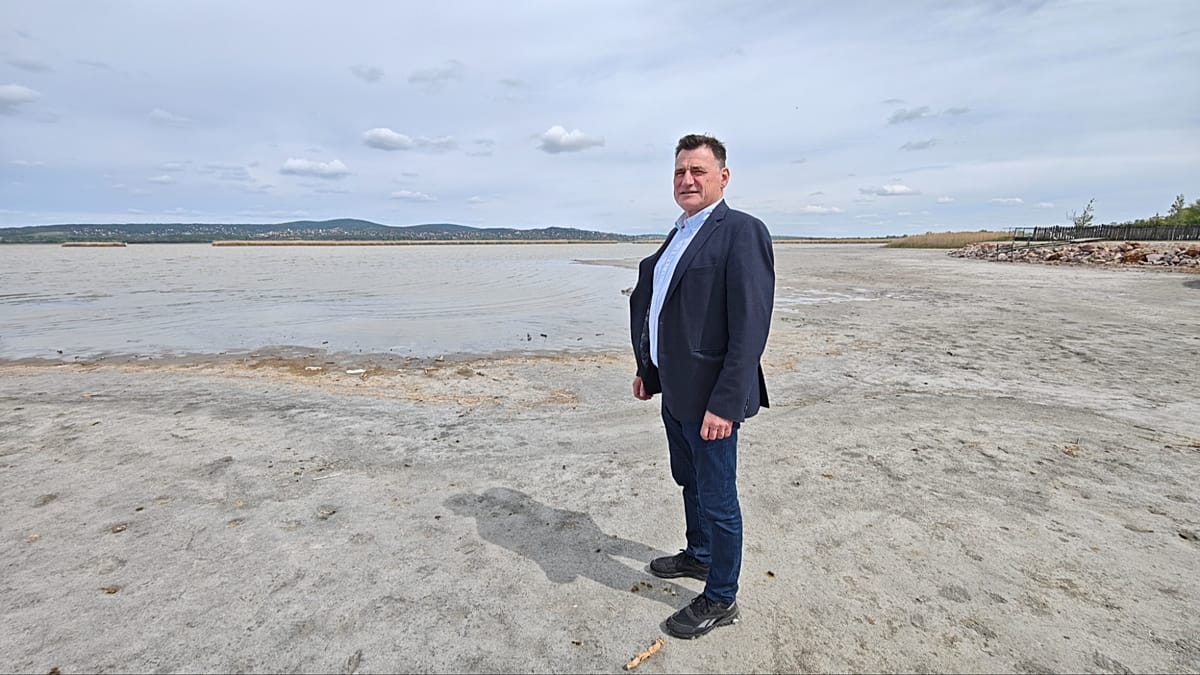
The water crisis extends beyond the Great Plain. Hungary's rivers, standing waters, and groundwater levels are critically low. Lake Velence, a popular tourist destination near Gárdony, is particularly affected. The lake's water level has dropped to 66 centimetres, down from 81 centimetres at the start of the season, and is approaching its historic low of 53 centimetres, which the mayor expects to reach by the end of June. In some areas, the shoreline has receded by fifteen to twenty metres, exposing dry lake bed.
The lake's only natural water source is the stream called the Emperor's Water, as its two reservoirs—Pátka and Zámolyi—are practically dry. Mayor Árpád Pál Eötvös of Gárdony told Euronews that transferring water from the Danube would only be a temporary fix; a new pipeline system is needed for a long-term solution. He noted that the city's economy has relied on tourism for fifty to sixty years, making the lake's water level critical. Despite initiating several programmes to save the lake, Eötvös said that not all local mayors have cooperated. While independent mayors signed his letter, Fidesz mayors did not, which he attributed to a reluctance to confront the outgoing government.
The mayor criticized the outgoing State Secretary for Water Management, V. Zsolt Németh, for undermining local efforts to address the water shortage. The current water level is about sixty to seventy centimetres below optimal, and the situation is expected to worsen without immediate action.
This drought is part of a broader European pattern of water stress, with implications for food security and regional stability. As Hungary's new government prepares to take office, the clock is ticking for the Great Plain and its communities.