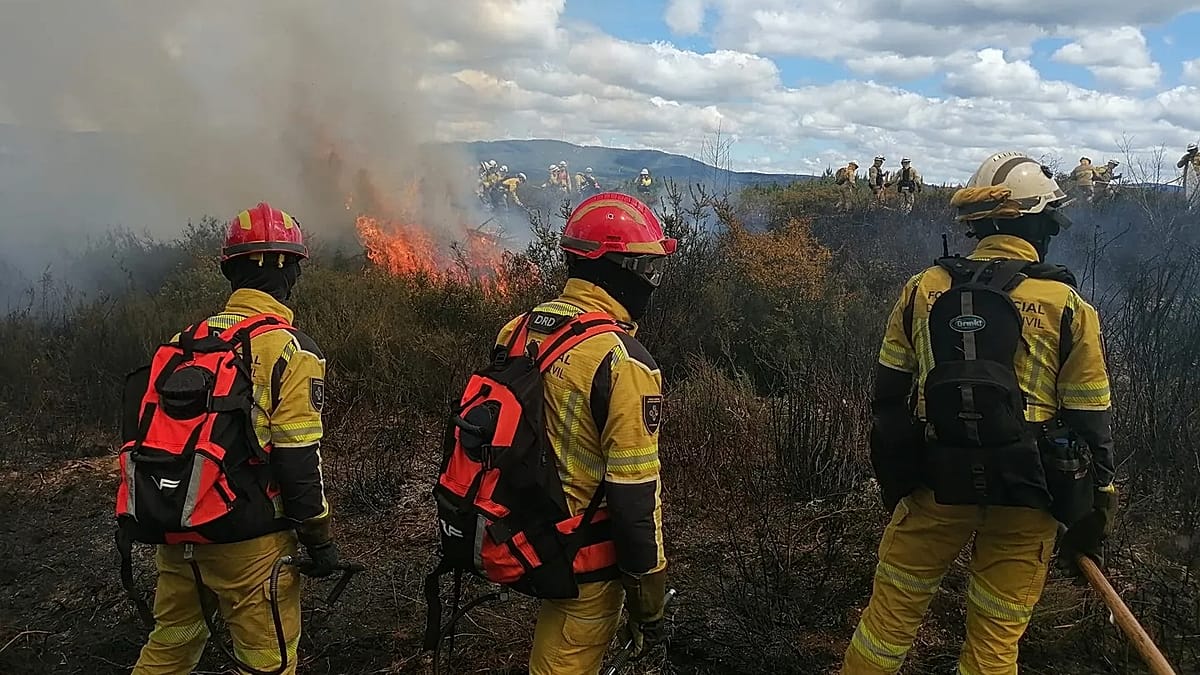
As southern Europe braces for another intense wildfire season, Portugal has hosted a large-scale simulation involving more than 700 emergency personnel from six European countries. The exercise, held near the town of Macieira in the Viseu district, was designed to test and refine cross-border cooperation in tackling fast-spreading rural fires.
Teams from Cyprus, Spain, France, Poland, and the Czech Republic joined their Portuguese counterparts for nearly a week of realistic drills. The scenario involved a major wildfire threatening forested areas and several residential zones, though no actual danger was posed to local communities.
Testing Coordination and Self-Sufficiency
The PT EU MODEX 2026 exercise was organized by Portugal’s National Emergency and Civil Protection Authority (ANEPC) in partnership with the APELL-EUROMODEX consortium, under the umbrella of the European Union’s Civil Protection Mechanism. Beyond firefighting, the drill simulated population evacuations, support for affected residents, and the integration of foreign teams into national command structures.
Miguel Ângelo David, commander of the Viseu Dão Lafões Sub-regional Emergency and Civil Protection Command, emphasized that the exercise went beyond routine drills. “We’re playing with the time factor, but above all we’re talking about procedures. In the end, the international modules will obtain their certification or recertification from the European Union’s Civil Protection Mechanism,” he said.
A key focus was the self-sufficiency of each national module—ensuring they could manage their own food, transport, accommodation, and personnel rotation without burdening local resources. This is critical for sustained operations during prolonged emergencies.
The exercise also activated the municipal emergency plan and tested the reception and integration of international assets, a process that has become increasingly important as climate change drives more frequent and severe wildfires across the continent.
Last year, Portugal deployed thousands of firefighters to combat blazes as temperatures soared, with much of the country on high alert for heat risk. Wildfires burned through 10,768 hectares of land—three times more than in the same period the previous year. The country’s vulnerability underscores the value of such multinational preparedness efforts.
The EU MODEX exercises, funded by the European Union, aim to strengthen international cooperation and ensure a more effective and coordinated response in disaster situations. They are part of a broader push to enhance Europe’s resilience to natural hazards, which also includes monitoring near-record sea temperatures and coordinating responses to emerging health threats like the hantavirus outbreak on a cruise ship.
As Portugal continues to grapple with the environmental and economic impacts of wildfires, the lessons from this exercise will inform national and European strategies. The country’s push for greater international recognition—such as its campaign to make Portuguese an official UN language by 2030—reflects a broader ambition to play a leading role in global and regional cooperation.