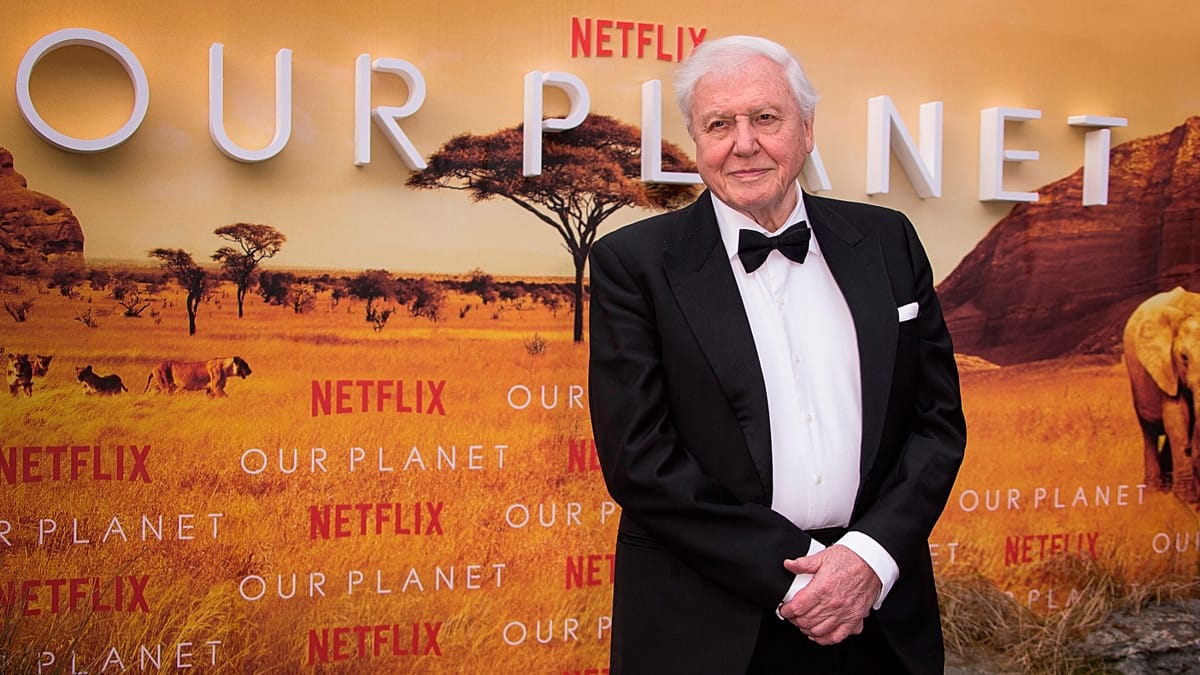
On 8 May, Sir David Attenborough reaches a century of life, having spent more than seventy of those years chronicling the natural world for global audiences. From the Pacific’s abyssal trenches to Antarctica’s frozen expanse, his documentaries have shaped how millions understand biodiversity. Yet as he turns 100, the question lingers: have we heeded his warnings?
Biodiversity in Freefall
In the 2020 BBC documentary Extinction: The Facts, Attenborough warned that declining biodiversity threatens food and water security, climate stability, and public health. “Over the course of my life I have encountered some of the world’s most remarkable species of animals,” he said. “Only now do I realise just how lucky I have been. Many of these wonders seem set to disappear forever.”
The data backs his concern. The World Wildlife Fund’s 2024 Living Planet Report documents a catastrophic 73% decline in average monitored wildlife populations between 1970 and 2020. Freshwater species suffered the steepest drop at 85%, followed by terrestrial (69%) and marine (56%). Specific examples include a 57% decline in nesting female hawksbill turtles on Australia’s Milman Island and a 65% drop in Amazon pink river dolphins.
Climate change continues to accelerate these losses. Last month, emperor penguins and Antarctic fur seals were reclassified as “Endangered” on the IUCN Red List as greenhouse gases thaw Antarctica. Fauna & Flora warns that this year alone, unique species like the psychedelic earth tiger spider and the clouded leopard are being pushed toward extinction. The Amazon rainforest, often called the planet’s lungs, has lost roughly a fifth of its area; deforestation has been linked to deadly floods in Indonesia that threaten the already endangered Tapanuli orangutan.
Glimmers of Recovery
Yet the picture is not uniformly bleak. Conservation efforts are yielding tangible results. In Australia, around 100 Eastern barred bandicoots—once declared extinct on the mainland—were released near Melbourne after the world’s first genetic rescue programme. Green sea turtles were reclassified from “endangered” to “least concern” in 2025, their global population up 28% since the 1970s thanks to decades of protecting nesting females, reducing egg harvest, and curbing accidental capture in fishing gear.
In Europe, the European bison is making a remarkable comeback. Efforts dating to the 1950s have boosted free-roaming populations from 2,579 to an estimated 7,000 individuals, with the largest herds in Belarus and Poland. These animals enhance biodiversity, restore ecosystems, and even capture carbon: a herd of 170 bison can store as much carbon as 84,000 average US petrol cars emit annually, through grazing and nutrient cycling. Other successes include rewilding tauros—a breed of huge wild cattle—in the Scottish Highlands, and moose returning to Germany after conservation measures.
The Plastic Tide
Plastic production has surged over the past century. According to Our World in Data, global output rose from 2 million tonnes in 1950 to over 450 million tonnes today. Roughly half is designed for single use, and the equivalent of 2,000 garbage trucks of plastic enters oceans, rivers, and lakes daily. Microplastics—fragments smaller than 5mm—now pervade rural woodlands, drinking water, and even Greenland’s glaciers.
Attenborough’s 2017 series Blue Planet 2 brought this crisis home with harrowing footage: sea turtles entangled in plastic, an albatross feeding its chick debris, a calf whale killed by toxic plastic. The impact was immediate. A 2019 GlobalWebIndex poll found that after Attenborough’s call to action, UK searches for “plastic recycling” spiked by 55%. The Attenborough Effect has also inspired a new wave of wildlife artists and activists across Europe.
As Attenborough marks his centenary, the planet he has documented faces profound challenges—but also pockets of resilience. His legacy is not just a record of loss, but a call to action that continues to resonate from Brussels to Berlin, from Warsaw to the Scottish Highlands.