At Aggersborg, one of Denmark's most impressive Viking ring fortresses, an international team of blacksmiths is reviving a craft that has not been practiced for a millennium. Students and lecturers from the UK's National School of Blacksmithing have joined Danish colleagues to recreate a Viking Age anchor, using only the materials and methods believed to have been available to early medieval smiths.
The project is a form of experimental archaeology, a discipline that seeks to understand the past by reconstructing its technologies. Instead of modern steel, the team is working with bloomery iron, a material produced by smelting iron ore in small furnaces, a process that yields a heterogeneous metal with distinct properties. The anchor's design is based on X-ray analyses of surviving early medieval anchors, which reveal weld lines and variations in iron composition. These clues allow the blacksmiths to infer the exact techniques used by their Viking predecessors.
Recreating ancient techniques
Working beside roaring furnaces, the team uses hand-powered bellows and historically appropriate fuel, such as charcoal, to achieve the temperatures needed for forging. This painstaking approach gives students a direct insight into the challenges Viking craftsmen faced daily. Technician Ernestas Jakubauskas, who is part of the team, explains that the experience highlights why Viking blacksmiths developed specific techniques to work with the materials available to them. "You quickly realise that every hammer blow matters," he said. "The iron behaves differently from modern steel, and you have to adapt your methods to its character."
The location is significant. Aggersborg was built around 980 AD during the reign of King Harald Bluetooth, a ruler known for unifying Denmark and introducing Christianity. The fortress commanded a strategic position on the Limfjord, a vital waterway connecting the Baltic and North Seas. This made it a hub for trade, travel, and military expeditions, and the anchor being recreated would have been essential for the vessels that navigated these waters.
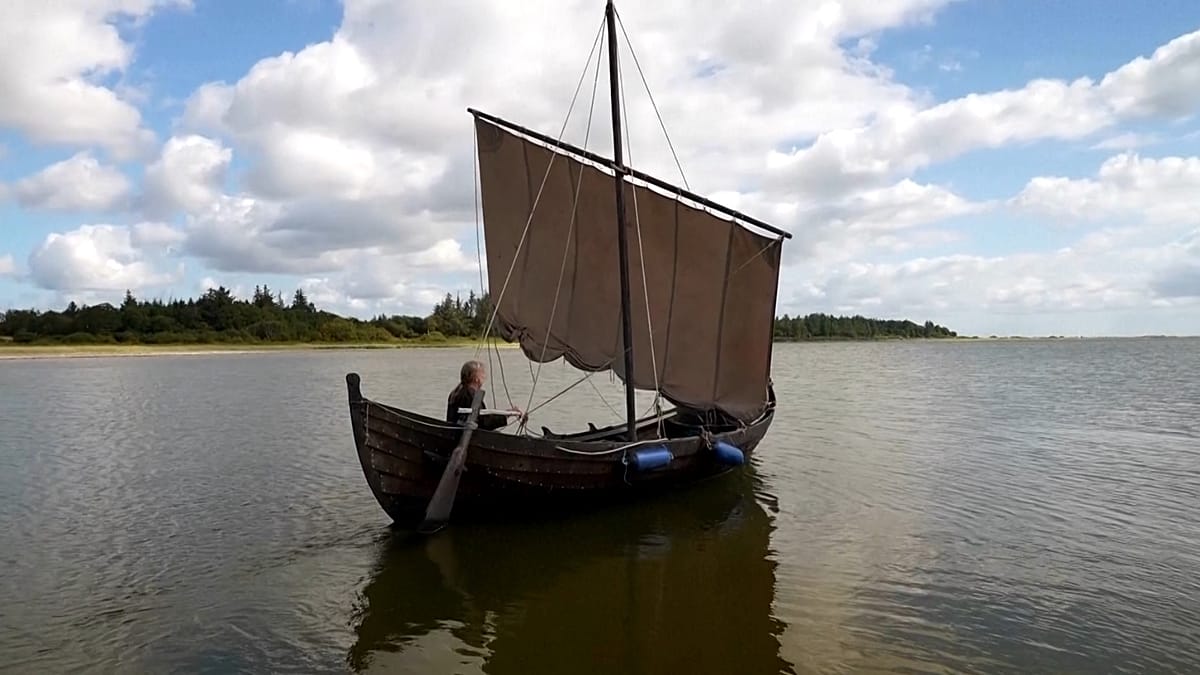
Once completed, the anchor will be fitted to a reconstructed early medieval workboat based on the Gislinge boat, discovered in Denmark in 1993. This vessel, dating from around 1130, represents the type of craft used for coastal trading and fishing, and the anchor will provide a functional complement to the reconstruction.
The researchers hope that the experiment will yield a deeper understanding of the expertise and craftsmanship behind the objects that enabled Viking seafarers to travel, trade, and raid across Europe. By recreating the anchor, they are not only preserving a lost skill but also shedding light on the technological ingenuity of a society that left a lasting mark on the continent.
This project is part of a broader interest in Viking heritage across Scandinavia. In recent years, similar experimental archaeology initiatives have been carried out at other sites, such as the Ribe VikingCenter in southern Denmark, where visitors can watch blacksmiths and other artisans at work. The Aggersborg project, however, is notable for its focus on a single, complex object and for the collaboration between British and Danish craftsmen.
The anchor is expected to take several weeks to complete, with the team working in shifts to maintain the furnaces. For the students involved, it is a rare opportunity to learn from master smiths and to connect with a tradition that spans more than a thousand years. As Jakubauskas put it, "This is not just about making an object; it's about understanding the people who made them."
The finished anchor will be displayed at Aggersborg, where visitors will be able to see the result of this unique collaboration. The project also underscores the importance of preserving traditional crafts, which are often overlooked in discussions of technological progress. In an age of mass production, the anchor stands as a reminder of the skill and patience required to create even a single tool in the Viking Age.