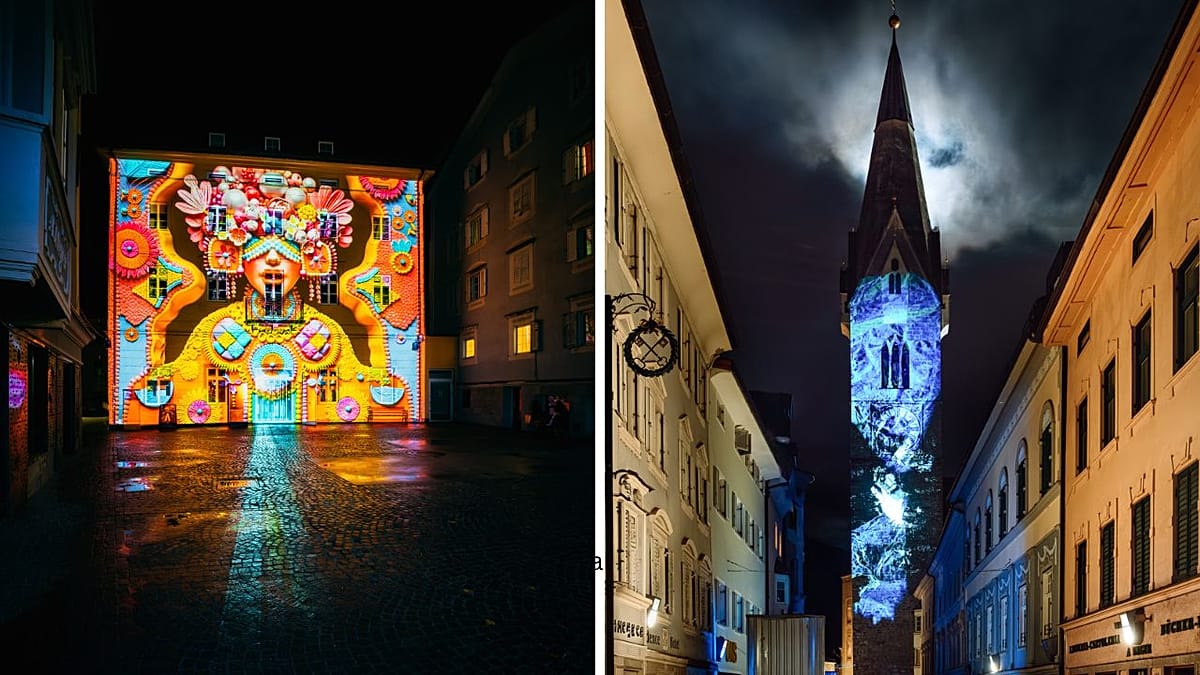
For two weeks each spring, the medieval streets and waterways of Brixen (Bressanone) in Italy's South Tyrol become an open-air gallery of light. The annual Water Light Festival, now in its seventh edition, has once again drawn artists from across Europe and beyond to transform the historic Alpine town into a luminous spectacle. This year's theme, 'Imagine Peace,' carries particular weight as conflicts persist on Europe's eastern flank and in the Middle East.
Art as a Medium for Reflection
The festival, which runs until 11 May, features 22 installations spread across Brixen's cathedral square, riverbanks, and medieval arcades. Artists from Austria, Germany, Italy, and further afield have created works that use water, light, and projection to engage with themes of war, memory, and hope. One installation, 'Floating Memories' by Austrian collective LichtKlang, projects archival images onto the flowing waters of the Eisack River, evoking the fragility of personal and collective recollection.
Another piece, 'Luminous Lament' by Italian artist Elena Mazzi, uses blue LED strips suspended over the Bishop's Palace courtyard to create a grid-like pattern reminiscent of a musical score. The work is intended as a visual elegy for those lost in recent conflicts, including the war in Ukraine. 'I wanted to create a space for quiet mourning, something that acknowledges pain but also suggests the possibility of rebuilding,' Mazzi told European Pulse.
The festival's organisers deliberately chose the peace theme in response to the deteriorating security situation in Europe. 'We are surrounded by news of war and division,' said festival director Lukas Pichler. 'Art cannot stop a war, but it can remind us of our shared humanity and the value of peace. That is what Brixen offers: a moment of collective reflection.'
A Town Transformed
Brixen, a town of around 22,000 inhabitants in the Dolomites, is known for its Baroque cathedral and its position at the confluence of the Eisack and Rienz rivers. During the festival, the town's usual quiet evening atmosphere gives way to a steady flow of visitors, many of whom come from nearby Innsbruck, Bolzano, and Verona. Local hotels and restaurants report near-full occupancy, and the festival has become a key event in South Tyrol's cultural calendar.
The use of water as a medium is central to the festival's identity. Many installations are placed directly on or above the town's waterways, using reflections and ripples to animate the light. 'Water is a universal symbol of life and change,' said Pichler. 'It also connects us to the natural environment, which is especially important in an Alpine region like ours.'
This year's programme includes a collaboration with the local music conservatory, with live performances timed to coincide with the light displays. On weekends, the cathedral square hosts a 'peace concert' featuring classical and contemporary pieces. The festival also offers guided tours in German, Italian, and English, catering to the region's trilingual population and international visitors.
Broader Context
The Water Light Festival is part of a growing trend of light art events across Europe, from Amsterdam's Light Festival to Lyon's Fête des Lumières. These events often serve as catalysts for winter tourism in smaller cities and towns. For Brixen, the festival has helped raise its profile beyond the usual ski and hiking seasons. The town's location on the Brenner railway line, which connects Munich to Verona, makes it easily accessible by train—a factor that aligns with broader European efforts to promote sustainable travel.
As Europe grapples with rising energy costs and a renewed focus on security, the festival's message of peace feels both timely and fragile. 'Imagine Peace is not a naive slogan,' said Pichler. 'It is a call to action. We want people to leave Brixen not just with beautiful photos, but with a commitment to dialogue and understanding.'
The festival runs until 11 May. For those unable to attend in person, the organisers have released a virtual tour on their website, allowing viewers to explore the installations from anywhere in Europe.