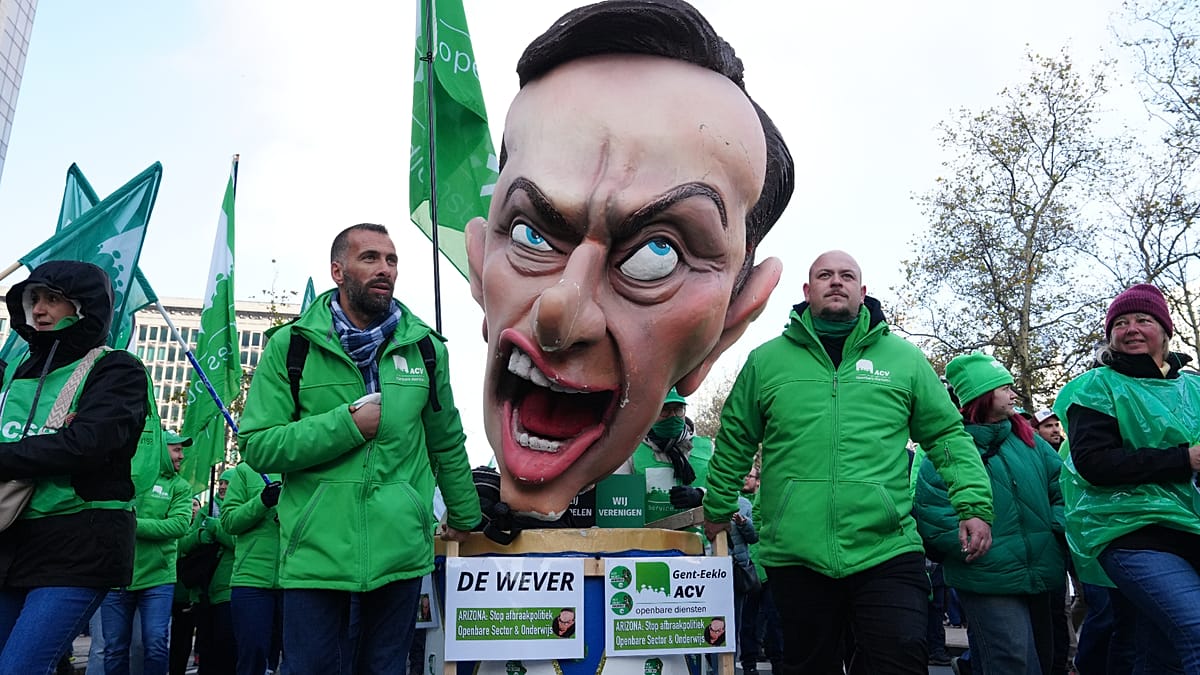
Brussels saw one of its largest labour demonstrations in recent years on Monday, as thousands of workers took to the streets to oppose the Belgian government's proposed spending cuts. The protest, organised by the country's main trade unions, was aimed at pressuring the coalition government as it struggles to finalise its budget for 2027.
Marchers gathered in the capital's northern district before moving towards the city centre, chanting slogans against austerity and carrying banners that read "Protect our future" and "No to cuts". The atmosphere was largely peaceful, but tensions flared in the afternoon when a group of demonstrators clashed with police near the European Quarter. Riot officers responded with tear gas and water cannons, dispersing the crowd.
Budget deadlock fuels anger
The protest comes at a delicate moment for Belgium's federal government, which has been unable to agree on spending plans for next year. Coalition partners are divided over how to reduce the country's deficit, which the European Commission has flagged as excessive. Belgium's debt-to-GDP ratio, one of the highest in the eurozone, has made the budget negotiations particularly fraught.
Prime Minister Bart De Wever, who leads the Flemish nationalist N-VA, has called for significant cuts to social programmes and public services. His proposals have met resistance from the francophone socialist party PS and the green party Ecolo, both of which argue that further austerity would hurt the most vulnerable households.
"We cannot ask workers to pay for a crisis they did not create," said Thierry Bodson, president of the FGTB, one of Belgium's largest trade unions, addressing the crowd. "The government must invest in public services, not slash them."
The standoff has raised concerns about political instability in Belgium, which has a long history of coalition governments and lengthy negotiations. If no budget is agreed by the end of the year, the country could face a caretaker government and fresh elections, a scenario that would further delay much-needed reforms.
Rising living costs add pressure
The protest was also fuelled by rising living costs, which have hit Belgian households hard. Inflation, while down from its peak, remains above the European average, and energy prices continue to strain budgets. According to recent data, food prices in Belgium have risen by nearly 5% over the past year, outpacing wage growth.
"Every month, I have less money left after paying for rent and groceries," said Marie Lambert, a nurse from Liège who travelled to Brussels for the march. "We are not asking for luxury. We just want to live with dignity."
The protest in Brussels echoes similar demonstrations across Europe, as workers in several countries push back against austerity and the cost-of-living squeeze. In Portugal, France and Spain, cost-of-living protests have drawn thousands of participants in recent weeks. Meanwhile, in Germany, metalworkers have gone on strike at Mercedes and BMW plants, demanding higher wages to offset inflation.
Belgium's unions have threatened further action if the government does not change course. "Today is just the beginning," warned Marie-Hélène Ska, secretary-general of the CSC union. "If the government persists with these cuts, we will mobilise again, and again."
The European dimension of Belgium's budget woes is significant. As a founding member of the European Union and host to its main institutions, Brussels is closely watched by other member states. The European Commission has urged Belgium to bring its deficit below the 3% threshold, but has also warned against overly harsh austerity that could stifle growth.
Analysts say the outcome of Belgium's budget negotiations could have ripple effects across the eurozone, particularly for countries with high debt levels. "If Belgium fails to agree on a credible fiscal plan, it could undermine confidence in the eurozone's fiscal framework," said Jan Van Hove, an economist at KU Leuven.
For now, the streets of Brussels remain tense, with police maintaining a heavy presence. The government has called for dialogue, but unions are sceptical. "We are ready to talk, but not with a gun to our head," said Bodson. The coming weeks will be crucial, as Belgium's political leaders try to bridge their differences and avoid a full-blown crisis.