Workers across Germany's metal and electrical sectors walked off the job this week after three rounds of wage negotiations collapsed without a deal. IG Metall, the country's largest trade union, has called on more than 23,000 employees at 19 sites in the north to join a 24-hour strike, with further walkouts planned in Berlin and the union's central district covering Hesse, Rhineland-Palatinate, Saarland and Thuringia.
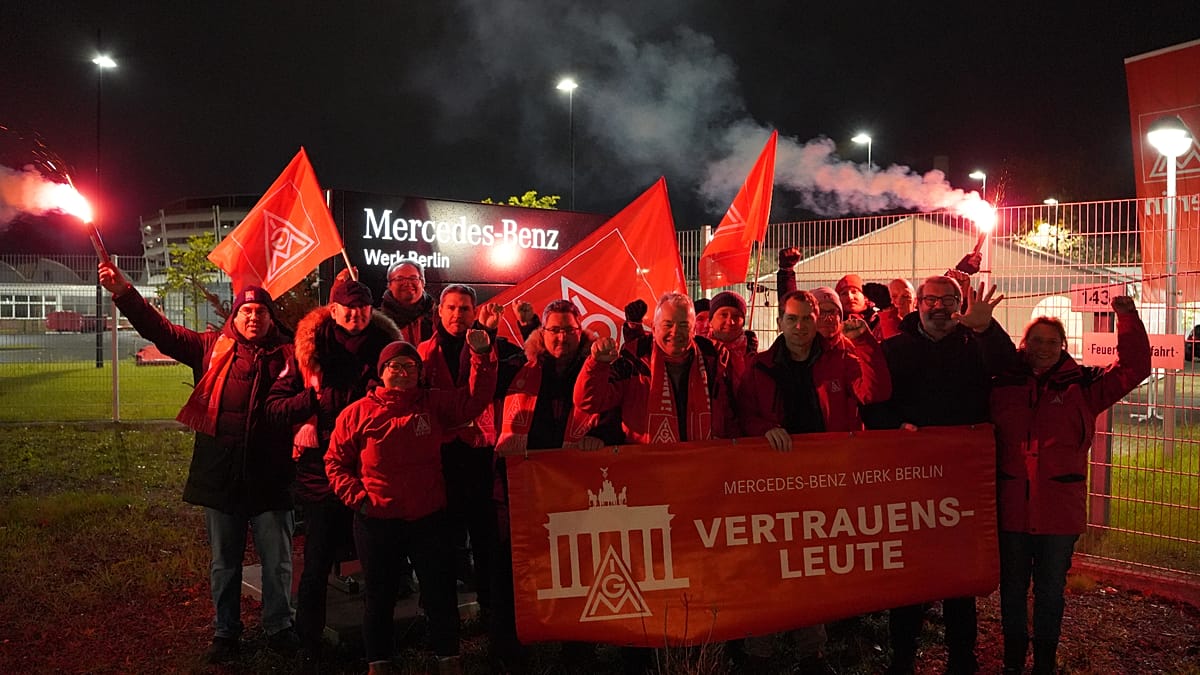
The latest "warning strikes" follow nationwide action last Friday that drew 151,000 workers, according to IG Metall. Among the affected plants were Audi's main factory in Ingolstadt and three BMW sites in Bavaria. On Sunday evening, night-shift workers at Mercedes-Benz plants in Bremen and Hamburg downed tools, bringing production to a halt.
Tagesschau, the news service of German public broadcaster ARD, reported that production lines at Mercedes-Benz's Hamburg plant have been idle since 10pm on Sunday. "So far, the plant is completely sealed off and no one has been allowed in to work," an IG Metall representative told the news service on Monday morning. "Only plant security is present, and otherwise nothing is happening here."
The dispute centres on pay for around 3.7 million workers in the metal and electrical industries, including those in the automotive sector. IG Metall is demanding a 5% wage increase over one year. Employers have countered with a one-off payment in July 2027 worth 1% of gross annual pay, followed by a 1.3% rise from July 2028. The union argues that this offer would leave workers worse off after inflation.
Strikes spread beyond automotive
The walkouts are not confined to carmakers. Wind turbine manufacturer Siemens Gamesa in Cuxhaven has also been hit, and the union called on workers at the Meyer Werft shipyard in Papenburg to strike on Monday, according to NDR. The action underscores the breadth of the dispute, which affects a wide range of employers in the sector.
Negotiations for around 130,000 employees in northern Germany have so far been unsuccessful, and the union has signalled that further escalation is possible if no progress is made. The strikes come at a difficult time for Germany's manufacturing heartland, which is grappling with high energy costs, weak export demand and the transition to electric vehicles.
Volkswagen, which owns Audi, is seeking a two-year pay freeze and more flexible working hours in separate talks with IG Metall covering about 120,000 employees, according to Reuters. BMW has previously sought to cut nearly 8,000 jobs through voluntary severance, as reported by Münchner Merkur. Mercedes-Benz is aiming for €800 million in annual savings in Germany, with options including longer working hours without extra pay and cuts to benefits, according to Handelsblatt and public broadcaster SWR. The company has also said it would suspend investment in Germany.
The strikes are the latest sign of tension between labour and management in Europe's largest economy. IG Metall has warned that the employers' offer would erode purchasing power, while companies argue that they face intense global competition and need to cut costs to remain viable. The outcome of these negotiations will be closely watched across the continent, as other European economies face similar pressures.
As the dispute widens, the impact on production and supply chains could ripple through the European automotive industry. The strikes also highlight broader questions about the future of manufacturing jobs in Germany, a topic that has been central to recent political debates. The union has vowed to continue the action until a satisfactory deal is reached, and further walkouts are expected in the coming days.