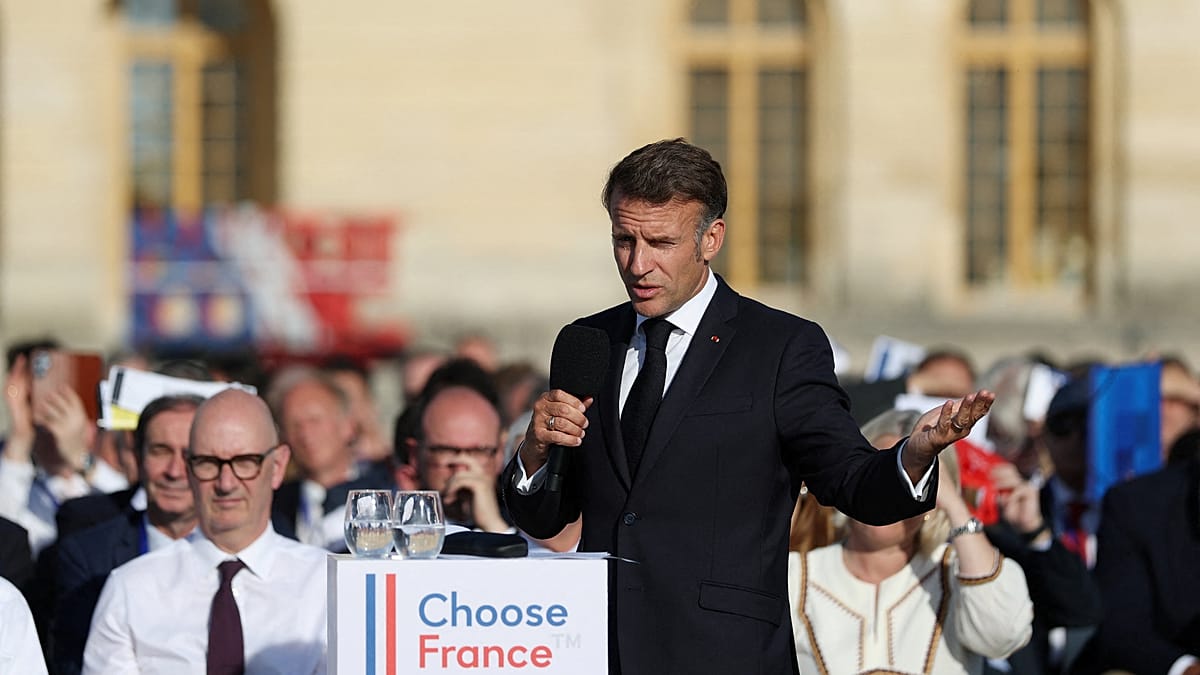
At the annual Choose France summit, held this year in Paris, the French government unveiled a package of industrial projects worth €42.5 billion, including €14.9 billion in fresh investment. The event, which traditionally courts foreign investors, this time focused on French companies, with 273 projects presented by domestic firms.
President Emmanuel Macron began the day at Airbus in Toulouse, the heart of the country's aerospace sector, and ended it with a dinner at the Élysée Palace attended by more than 150 business leaders, from Danone to Urgo. The summit, now in its second year, is part of a broader push to highlight French companies that are investing at home.
Aviation and energy lead the way
The headline projects are concentrated in energy, space, and health, with a strong presence of small and medium-sized enterprises from Île-de-France, Nouvelle-Aquitaine, and Normandy, according to the finance ministry. Two mega-projects alone account for €17.5 billion, more than 40% of the total package.
The first, worth €9.5 billion, is led by ADP, the operator of Paris airports, which is launching a major infrastructure investment plan financed largely by airline fees. The second, valued at €8 billion, comes from RTE, the electricity transmission grid operator, which is central to France's electrification strategy.
Among the smaller projects, Lyon-based Elyse Energy confirmed plans for a €1.6 billion aviation biofuel plant in the Pyrénées-Atlantiques.
This year's figures exceed last year's, when the government highlighted €30.4 billion across 151 projects. About 30% of the current package receives public support, notably through the France 2030 plan.
Clouded outlook for the French economy
Despite the upbeat announcements, the summit takes place against a backdrop of economic uncertainty. Growth prospects are more favourable abroad, and many large companies are looking to reduce their reliance on the French market. The draft budget law, currently before parliament, proposes higher levies on businesses in 2027, while household purchasing power remains squeezed and interest rates continue to weigh on credit.
Data from Insee, the national statistics office, showed that business investment fell for the fourth consecutive quarter at the end of October. The cost-of-living pressures that have sparked protests across Europe are also dampening domestic demand.
The summit's focus on French companies is a shift from its original purpose of attracting foreign capital. It reflects a broader European trend of governments seeking to bolster domestic industry amid global competition. As Europe projects quiet confidence on the world stage, France is trying to position itself as a hub for innovation and manufacturing.
Yet the gap between the summit's fanfare and the underlying economic reality is hard to ignore. While the investment announcements are welcome, they may not be enough to reverse the cautious mood among business leaders. The coming months will test whether these projects translate into sustained growth or remain a symbolic gesture.