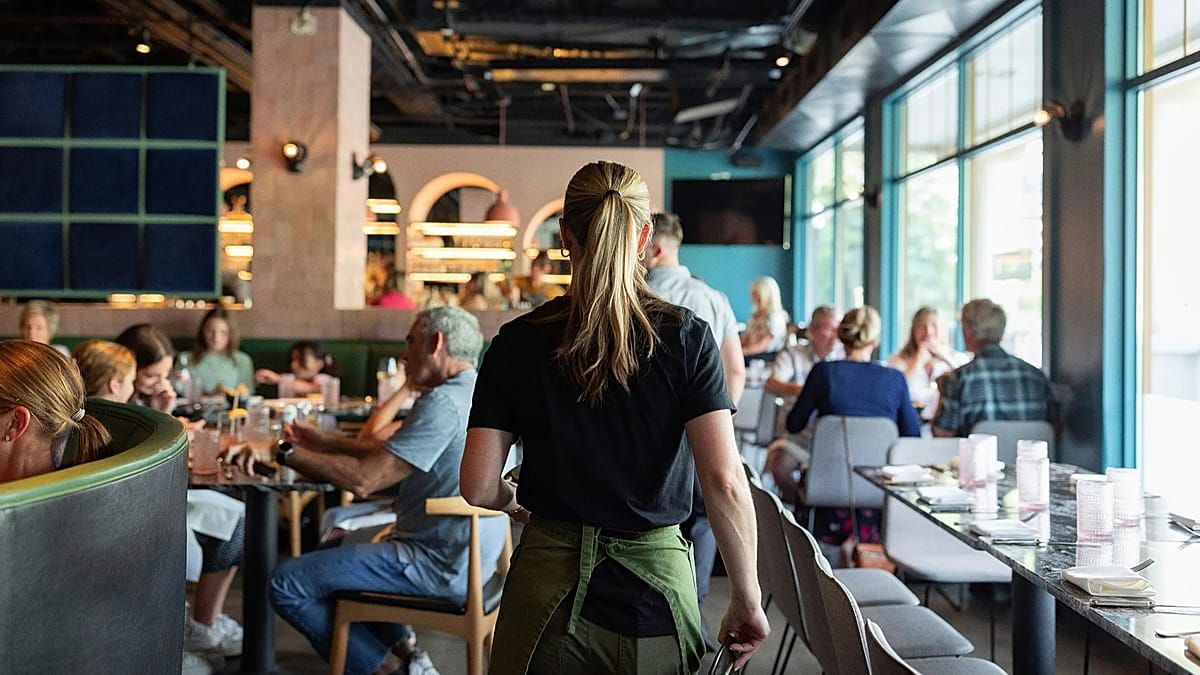
In the high-pressure environment of a busy restaurant kitchen, long hours on your feet, carrying heavy trays, and racing against the clock can be gruelling. For female staff who suffer from severe period pain, the physical demands can become overwhelming. One Bavarian restaurateur has decided that his employees should not have to push through such discomfort at any cost.
Peter Brutscher, who runs the Schlosskeller restaurant in Bad Hindelang in the Allgäu region, says he has for years deliberately kept female employees with severe menstrual complaints off the rota for two to four days each month, “without discussion”. In an Instagram post, he explained his philosophy: “The female cycle should not be ignored, but understood.” Cramps, nausea, and circulatory problems are real physical limitations, he argues, especially in the demanding hospitality sector.
Not everyone has been supportive. “Of course I have been laughed at for it,” Brutscher told the Allgäuer Zeitung. His approach was prompted by an experience with a colleague, which made him pay closer attention to such complaints when planning shifts. According to Focus magazine, affected employees can move their shifts to another week, but this does not automatically mean extra paid days off.
A widespread but hidden burden
Brutscher’s initiative touches on a problem that is far more common than public discussion suggests. A new study by the Institute for Employment Research (IAB), the research body of Germany’s Federal Employment Agency in Nuremberg, found that 63% of women surveyed feel limited in their daily work tasks by menstruation-related complaints, and 23% feel strongly limited. The survey, conducted in spring 2026 among 2,107 women in dependent employment aged 25 to 55 who had menstruated in the previous six months, provides the first representative data on this topic for Germany.
The true scale of the burden is not reflected in sick leave statistics. Only 13% of respondents had missed at least one full working day in the six-month period because of their symptoms. Even among women who felt strongly impaired, 56% had taken no sick days at all. Many continue to work despite finding their tasks difficult—a phenomenon researchers call presenteeism, which can lead to reduced concentration, resilience, and productivity.
Menstruation remains a taboo in many workplaces. More than 80% of respondents rejected the idea that women should hide menstrual complaints at work, yet 64% admitted to doing exactly that. Over half believed that speaking openly about it would make them seem less resilient to colleagues and managers.
Flexibility as a solution
Flexible working hours, longer breaks, or the option to work from home can ease the burden for those affected, but these options are not universally available. According to the IAB survey, 45% of women can arrange their working hours flexibly, and 37% can work from home. Women with severe complaints are particularly likely to use these options when their jobs offer them.
In kitchens and front-of-house service, working from home is not an option. Other forms of relief, such as more flexible shift patterns, can help. Similar approaches exist in care work: the intensive care service “Kunterbunte Butterfliege” in Grasberg, Lower Saxony, takes account of the cycle and complaints of its female employees if they wish, as reported by RTL Nord. Such models require staff to be able to express their needs and for work to be organised dynamically within the team.
Researchers are also calling for more flexibility. A team led by Eva Schultz from the Institute of Occupational, Social and Environmental Medicine at Goethe University Frankfurt reviewed the existing literature in a paper titled “The influence of the menstrual cycle on everyday working life”. They describe how cramps, back and headaches, fatigue, and difficulty concentrating can impair work, and note that tabooing the subject and a lack of flexibility make the situation worse. They recommend flexible working hours, home office options, and better education in the workplace. However, they caution that many studies rely on retrospective self-reports without medical verification, so which measures are most effective still needs further investigation.
While Brutscher relies on internal arrangements, Spain has taken a legal approach. Since 1 June 2023, women in Spain can obtain a special sick note for menstrual complaints that make them unable to work, provided they have a medical certificate. The state covers the financial security, so the common term “menstruation leave” is somewhat misleading—it is a form of paid sick leave, not an automatic entitlement.
The debate in Germany is part of a broader European conversation about workplace accommodations for menstrual health. As more countries consider similar policies, the challenge remains to balance individual needs with operational demands, and to break the silence that still surrounds menstruation in many workplaces.