Israel is on track to become the world's 25th-largest economy by the end of 2026, according to the International Monetary Fund (IMF). The IMF's October outlook projects nominal GDP of roughly $747 billion, which would see Israel surpass Sweden and Ireland in the global rankings. The figures come as more than 700 participants, including over 200 European guests, gather in Jerusalem for the ELNET Summit (22–24 November) to discuss closer cooperation on security, technology, research, and trade.
Despite ongoing geopolitical challenges, the IMF forecasts 4.5% economic growth for Israel in 2026. The Bank of Israel is even more optimistic, predicting 5.6% growth this year and 7.5% in 2027, though these higher figures include production abroad by Israeli companies. Excluding that activity, the central bank expects domestic growth of 3.4% in 2026 and 5.1% in 2027. The numbers point to an economy with considerable resilience and recovery potential.
The engine: a deeply integrated tech ecosystem
Israel's economic performance is largely driven by its technology sector. Over decades, the country has built a highly connected innovation ecosystem, with strengths in cybersecurity, artificial intelligence, software, semiconductors, medical technology, and defence-related innovation. According to the Israel Innovation Authority's State of High-Tech 2026 report, the sector contributed 18.3% of Israeli GDP in 2025 and roughly 58% of exports.
Research and development (R&D) spending is a key pillar. The OECD reports that Israel devoted about 6.8% of GDP to R&D in 2024, one of the highest proportions globally. In contrast, the European Union spent around 2.3% of GDP on R&D in the same year, according to Eurostat. This gap underscores how sustained investment in innovation can become a defining feature of economic development.
Israel's model is characterised by close links between universities, private companies, investors, and the public sector. The Israel Innovation Authority supports technological research, early-stage businesses, and industrial innovation, helping companies move from lab to market. A business culture that embraces entrepreneurship and risk-taking, backed by a robust venture-capital community, fuels the pipeline of new ventures.
With a relatively small domestic market, Israeli tech firms often look abroad from an early stage. International customers, investors, and partnerships are central to their strategies. The US–Israel Free Trade Agreement, in force since 1985, has been a cornerstone of this outward orientation.
War, defence, and economic resilience
Israel's technological rise has occurred against a difficult security backdrop. Military operations, reservist mobilisations, labour shortages, and business disruptions have strained the economy, while higher defence spending has increased fiscal pressure. Yet the tech sector has maintained its international reach.
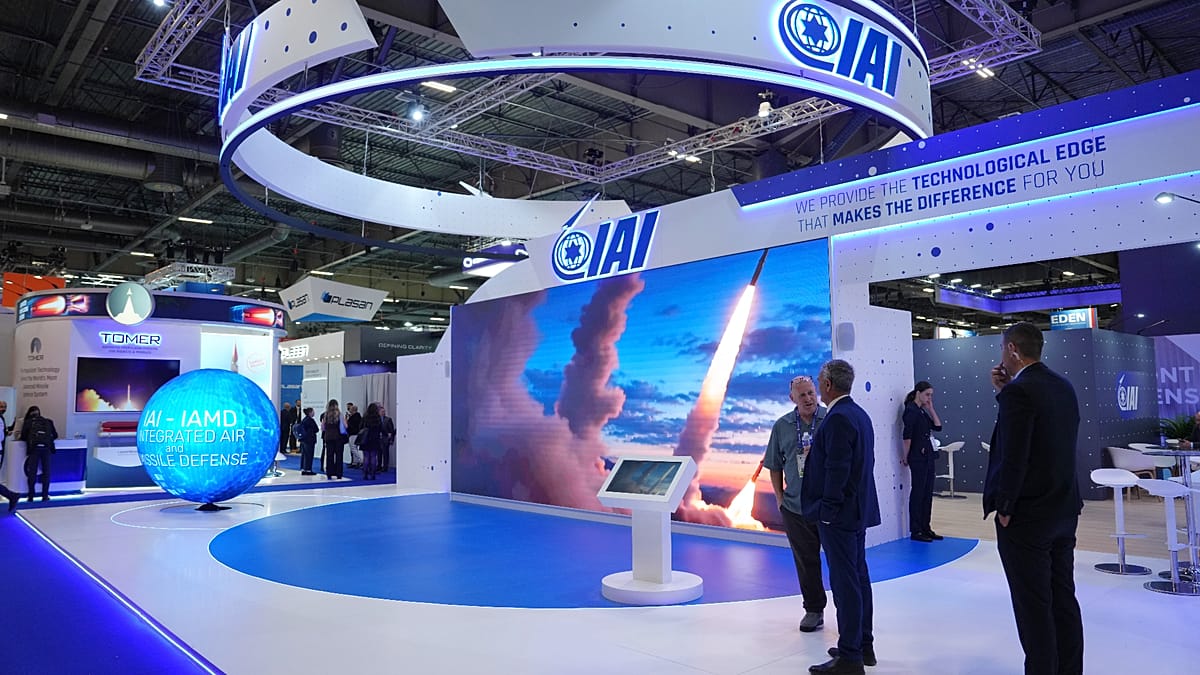
The defence industry—companies like Elbit Systems, Rafael, and Israel Aerospace Industries—has developed advanced capabilities in missile defence, radar, drones, and military electronics. Some of this expertise spills over into civilian applications, particularly in cybersecurity and communications. However, defence spending is not a proxy for prosperity; it diverts resources from education, infrastructure, and healthcare, which are vital for long-term growth. The OECD's Economic Survey of Israel 2025 highlights these trade-offs and the need to safeguard investment in productivity and skills.
Challenges remain
Despite its strengths, Israel faces significant economic challenges. The IMF warned in July 2026 that inflation could temporarily rise due to higher energy prices and supply shortages, even as the shekel strengthens. The medium-term outlook is also weighed down by conflict-related costs and labour shortages. Long-standing issues, such as low employment rates among ultra-Orthodox Jewish men and Arab Israeli women, could constrain growth potential.
For Europe, the Israeli example offers both inspiration and caution. The EU's R&D spending lags far behind, and its innovation ecosystem is more fragmented. Yet Israel's experience also shows that military expenditure does not automatically translate into economic success. As European and Israeli policymakers meet in Jerusalem, the focus should be on practical cooperation—on technology, research, and trade—while recognising the limits of a model built on constant security pressure.
For more on regional economic dynamics, see Italy's fiscal discipline and the EU's sanctions on Russia.