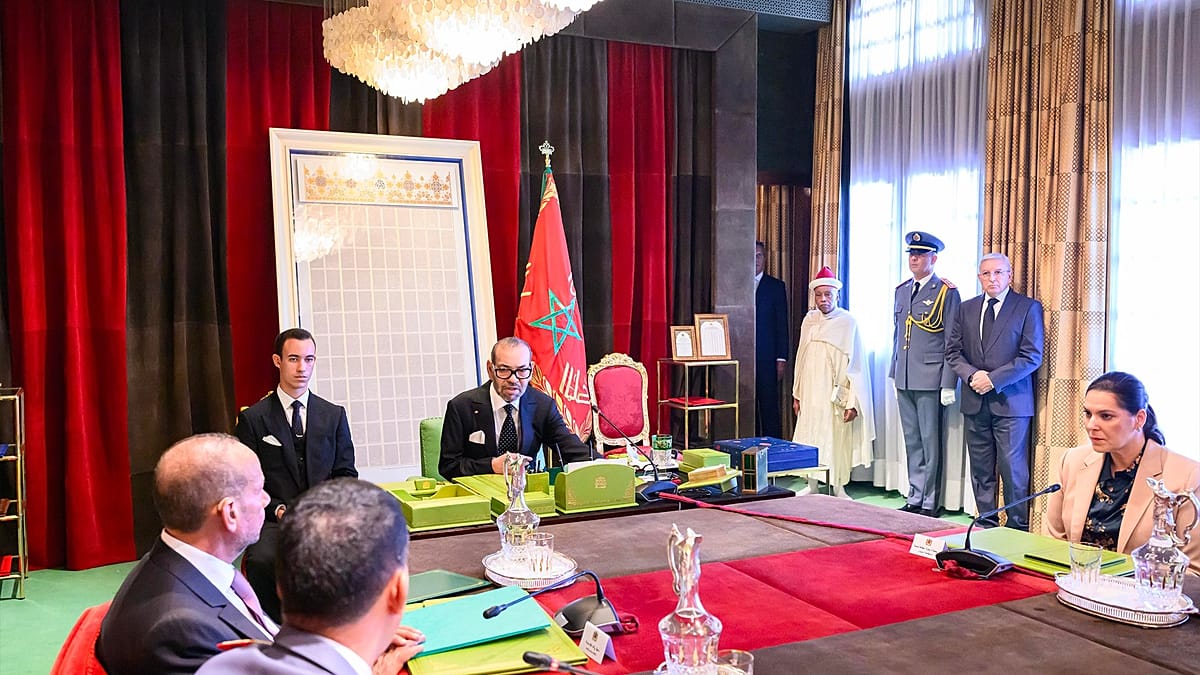
King Mohammed VI has authorised the release of 4 billion dirhams (€366 million) from the Hassan II Fund for Economic and Social Development to launch a comprehensive national defence industry roadmap, the Moroccan Royal Cabinet announced on Wednesday. The initiative marks a significant step in Rabat's efforts to reduce reliance on foreign arms suppliers and position the kingdom as a regional manufacturing hub.
The strategy, with a target horizon of 2035, sets three headline objectives: creating roughly 50,000 direct and indirect jobs, meeting 40% of the Royal Armed Forces' and security services' equipment needs through domestic production, and generating more than 65% of defence industry revenues from exports. The plan is ambitious, given that Morocco currently imports the vast majority of its military hardware, according to data from the Stockholm International Peace Research Institute (SIPRI), which ranks the country among Africa's leading importers of major weapon systems.
Institutional backbone and industrial zones
To implement the roadmap, the government will establish a new strategic agency tasked with executing national defence industry policy and supporting investors. Alongside it, an industrial holding company will be created to organise the production ecosystem and mobilise both public and private capital. The institutional framework is designed to provide a single point of coordination for what has until now been a fragmented set of initiatives.
Two new industrial zones dedicated to defence manufacturing will be developed in Ben Guerir and Benslimane, complementing existing defence clusters in Nouaceur and Sidi Yahya. These zones are intended to attract both domestic and foreign firms, offering infrastructure and regulatory support tailored to defence production.
Morocco is seeking to leverage its established expertise in automotive, aviation, and electronics manufacturing to build a credible defence sector. The priority areas outlined in the roadmap include drones and autonomous systems, land and naval systems, defence electronics, cybersecurity, and artificial intelligence. The strategy also covers dual-use technologies with both civilian and military applications, which could open synergies with the country's broader industrial base.
International partnerships and early moves
Morocco has already begun forging partnerships with foreign defence companies. Indian group Tata Advanced Systems is cooperating with Morocco to manufacture WhAP 8×8 armoured vehicles in Berrechid, with a plan to progressively increase the share of locally produced components. Moroccan firm MMI, which produces military turrets and remotely controlled weapon systems, provides an initial domestic base for broader production.
At the Marrakech Air Show in October, the Emirati defence group EDGE signed two agreements with Morocco's National Defence Administration. The first is a memorandum of understanding to explore manufacturing small arms and aircraft engines in Morocco through local partnerships. The second covers the supply of Desert Sting 16 and Thunder P-31 guided munitions to the Royal Moroccan Air Force, for integration into its fleet of unmanned combat aircraft.
The king has also instructed authorities to establish a specialised academy offering advanced training programmes in partnership with industrial companies. The academy will draw on Moroccan civilian and military expertise, including professionals based abroad, to build a skilled workforce for the nascent industry.
This push comes as European defence supply chains face pressure and as several countries, including German auto suppliers pivot to drones and defence amid the car crisis. Morocco's move also aligns with broader trends in the region, where nations are seeking to bolster their defence industrial bases. The kingdom's ambition to export more than half of its defence output could position it as a supplier to other African and Middle Eastern markets, though it will face competition from established players.
Analysts note that the 40% self-sufficiency target is ambitious, given the complexity of modern weapon systems. However, the focus on drones, electronics, and dual-use technologies—areas where Morocco already has some industrial capacity—may make the goal more attainable. The creation of a dedicated agency and holding company suggests a serious institutional commitment, but execution will be key.
Morocco's defence industry plan also has implications for European partners. The kingdom is a key security partner for the EU, particularly in counter-terrorism and migration control. A more self-sufficient Moroccan defence sector could shift procurement patterns, but also open opportunities for European firms to invest in local production, similar to the Tata deal. The move comes as the EU and Canada deepen ties in defence, and as Norway buys carbon credits from Morocco, highlighting the kingdom's growing economic and strategic weight.
The roadmap is part of a wider effort by King Mohammed VI to modernise the country's economy and reduce dependence on foreign imports. With a young population and a growing industrial base, Morocco is betting that defence manufacturing can become a new pillar of its economy, creating jobs and generating export revenue. Whether it can meet its 2035 targets will depend on attracting the right partners, building the necessary skills, and navigating a competitive global market.