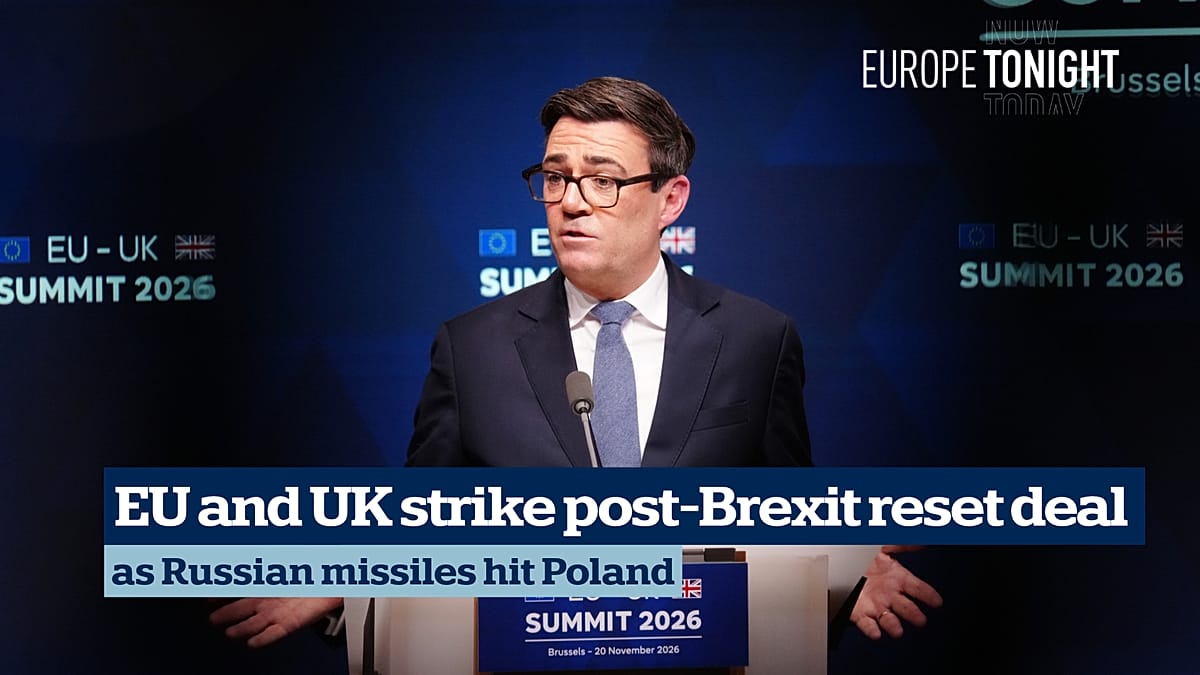
In a significant step toward mending ties after Brexit, European Union and United Kingdom leaders convened in Brussels on Thursday and reached a series of agreements aimed at resetting their relationship. The deal, hailed by both sides as a pragmatic move, covers food exports, carbon emissions trading, and a new youth mobility scheme. British Prime Minister Andy Burnham signaled that the door remains open for an even closer partnership after the next general election.
A new chapter in EU-UK relations
The summit marked a departure from the acrimony that has often characterized post-Brexit negotiations. Under the agreed terms, the EU and UK will ease barriers on agricultural and food products, a move expected to benefit farmers and consumers on both sides of the Channel. The two parties also committed to linking their carbon emissions trading systems, a crucial step for aligning climate policies and facilitating cross-border trade in carbon allowances.
Perhaps most notably, the leaders announced a youth mobility scheme that will allow young Europeans and Britons to live, study, and work in each other's territories more easily. This initiative is seen as a way to rebuild people-to-people ties that were strained by the UK's departure from the bloc.
Burnham, who has been a vocal advocate for a closer EU-UK relationship, described the summit as "a new chapter" in the partnership. He hinted that after the next election, his government would be open to discussing a more formalized arrangement, possibly including a customs union or a return to freedom of movement for certain categories of workers. However, he stopped short of committing to any specific outcome, acknowledging that the British public remains divided on the issue.
The deal was not without its critics. Nigel Farage, the Brexit campaigner and leader of Reform UK, accused Burnham of "betraying Brexit" and warned that the reset would undermine the UK's sovereignty. In a statement, Farage claimed that the youth mobility scheme was "a backdoor to mass immigration" and that linking carbon markets would subject British businesses to EU regulations. His comments were echoed by some Conservative backbenchers, who argued that the government was "sleepwalking back into the EU's orbit."
Despite the political noise, the summit's outcomes were welcomed by business groups and civil society. The British Chambers of Commerce called the agreement "a pragmatic step forward" that would reduce trade friction and boost economic growth. Environmental organizations also praised the carbon market linkage, noting that it could accelerate the transition to a low-carbon economy across the continent.
Russian missiles hit Poland amid escalating tensions
While diplomats in Brussels were celebrating the EU-UK reset, security alarms were ringing in eastern Europe. In the early hours of Friday, two Russian missiles crashed into southeastern Poland, near the border with Ukraine, during a wave of deadly strikes on Ukrainian cities. Polish authorities condemned the incident as an intentional provocation, and the country's air force scrambled jets in response.
The missile strikes came just hours after US President Donald Trump and Russian President Vladimir Putin issued a joint statement vowing to pursue global peace. The timing raised eyebrows across European capitals, with many officials questioning the sincerity of Moscow's commitment to de-escalation. Reports from Washington suggested that the Trump administration is considering a deal that would offer NATO membership to Ukraine in exchange for Kyiv ceding the Donbas region to Russia. Such a proposal, if confirmed, would represent a dramatic shift in Western policy and has already drawn sharp criticism from European leaders, who argue that it would reward aggression and undermine the principle of territorial integrity.
The missiles that landed in Poland are a stark reminder of the war's proximity to NATO territory. In recent weeks, there have been several incidents of Russian missiles entering Polish airspace, prompting air raid sirens in Polish towns. The Polish government has repeatedly called on NATO to take a more robust stance against Russian provocations, but the alliance has so far stopped short of direct military engagement.
European security analysts are now warning that the situation could spiral out of control. "This is a dangerous game," said Dr. Anna Kowalska, a security expert at the Polish Institute of International Affairs in Warsaw. "Russia is testing NATO's resolve, and the response from the West has been tepid. If we don't draw a clear line, we risk inviting further aggression."
The incident also highlights the broader impact of the war on civilian infrastructure. In Kyiv, rescue teams have been sifting through rubble after an overnight Russian strike that killed at least eight people and damaged key bridges. The attacks have also targeted foreign diplomatic missions, with Austrian and Dutch embassies in Kyiv being hit, further escalating tensions between Russia and the West.
COP31 talks stall over four sticking points
Meanwhile, climate negotiators at the COP31 summit in Antalya, Turkey, are facing an uphill battle as talks extend into the weekend. The conference, which was scheduled to conclude on Friday, has failed to reach a consensus on four critical issues: a concrete roadmap for phasing out fossil fuels, ensuring that the 35% electrification target by 2035 is met through clean energy sources, delivering on climate finance commitments, and guaranteeing a just transition that leaves no one behind.
Delegates from the EU, which has been pushing for ambitious climate action, expressed frustration at the slow progress. "We came here with a clear mandate to accelerate the energy transition, but some countries are still dragging their feet," said a senior EU negotiator. The deadlock is particularly concerning given the urgency of the climate crisis, as scientists warn that the window for action is closing rapidly.
The EU has proposed a package that includes increased financial support for developing nations, but disagreements over the scale and distribution of funds remain. Developing countries, led by the G77 group, are demanding that wealthier nations honor their pledge to provide $100 billion annually, a commitment that has yet to be fully met.
As the talks continue, European leaders are also grappling with the security implications of the war in Ukraine, which has disrupted energy supplies and highlighted the need for energy independence. The EU's plan to link its carbon market with the UK's is seen as a step toward a more integrated and resilient European energy system, but the broader geopolitical challenges remain daunting.
For now, the EU-UK reset deal offers a glimmer of hope for a more cooperative relationship, even as the continent faces its gravest security crisis in decades. The coming weeks will test whether the spirit of Brussels can withstand the storms from the east.