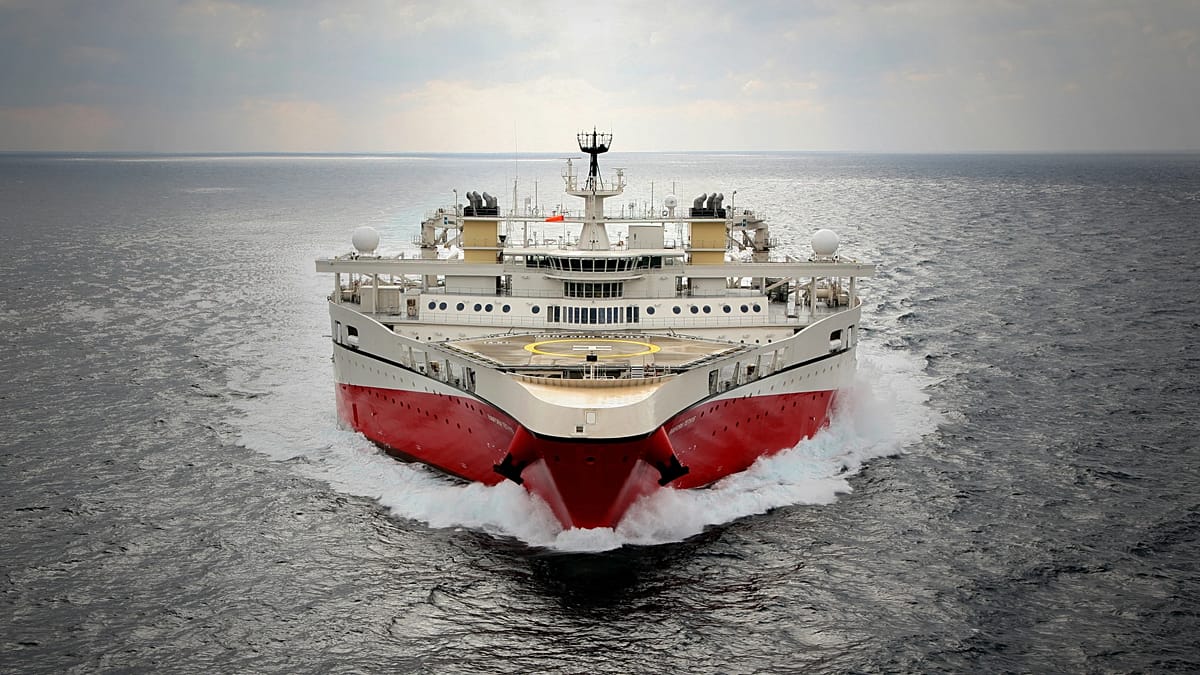
Chevron and HELLENiQ ENERGY are set to begin seismic surveys for oil and gas in the southern Ionian Sea within days, according to Greece's Environment and Energy Minister, Stavros Papastavrou. The survey vessel Ramform Tethys, operated by energy data firm TGS, has already arrived in the area after the necessary maritime notice (NAVTEX) was approved. The consortium holds exploration rights in these waters, and the surveys are expected to run until the end of January 2027.
Greece currently relies entirely on imported natural gas, so a commercially viable discovery could provide a domestic source of supply. The seismic data will help Chevron and HELLENiQ ENERGY decide whether there are promising sites for exploratory drilling. This is a significant step for a country that has long discussed its hydrocarbon potential but has yet to see major offshore production.
International interest in Greek waters
In a separate tender, three leading seismic companies—SLB, Viridien, and BGP—have submitted bids to collect and process non-exclusive seismic data off western and southern Greece. The tender is managed by the Hellenic Hydrocarbons and Energy Resources Management Company (HEREMA). Its evaluation committee met on Thursday 19 November to open the bids and will now assess them, aiming to select one or more contractors for the work.
Minister Papastavrou highlighted the arrival of the TGS vessel and the participation of these major firms as evidence of strong international interest in Greece's energy potential. He noted that four of the world's largest seismic survey companies have now shown interest, following earlier moves by Chevron and ExxonMobil. This comes amid broader European efforts to secure energy supplies, as the continent continues to grapple with the fallout of the energy crisis and the need to diversify sources.
Papastavrou stressed that developing domestic energy resources is a priority for the Greek government. He said the surveys will be conducted in full compliance with international law, including the law of the sea, and will meet strict safety and environmental requirements. The government, he argued, has a responsibility to establish what oil and gas resources Greece might possess.
If the surveys confirm commercially viable deposits, developing them could strengthen Greece's energy security, help supply Europe with energy, and improve living standards in Greece. This aligns with the EU's broader push to reduce dependence on external suppliers, though it also raises questions about the balance between fossil fuel development and the bloc's climate goals. As EU energy officials have argued, faster permitting for renewables is key to ending fossil fuel dependence, but hydrocarbons may still play a transitional role.
The exploration comes at a time when Europe is reassessing its energy strategy. The International Energy Agency has warned that the Middle East crisis poses the gravest energy security threat ever, underscoring the urgency for Europe to diversify. Greece's potential offshore reserves could offer a new source within EU borders, though the timeline for any production would be years away.
Environmental groups have expressed concerns about the impact of seismic surveys on marine life, particularly in the Ionian Sea, which is home to sensitive ecosystems. The Greek government insists that all operations will adhere to rigorous environmental standards, but critics remain skeptical. The debate mirrors broader tensions across the continent between energy security and environmental protection, as seen in other projects such as the human toll of Europe's green energy minerals.
For now, the focus is on data collection. The results of the surveys will be crucial in determining whether Greece can join the ranks of European oil and gas producers, or whether the country will continue to rely on imports. The coming months will reveal whether the Ionian Sea holds the key to a new energy chapter for Greece and possibly for Europe.