US President Donald Trump has publicly urged Nvidia's board to reinstate Jensen Huang as chief executive, adding his voice to a growing campaign that includes a petition with more than 200,000 signatures. The appeal intensifies pressure on the chipmaker's leadership just weeks after Huang resigned amid personal scandal.
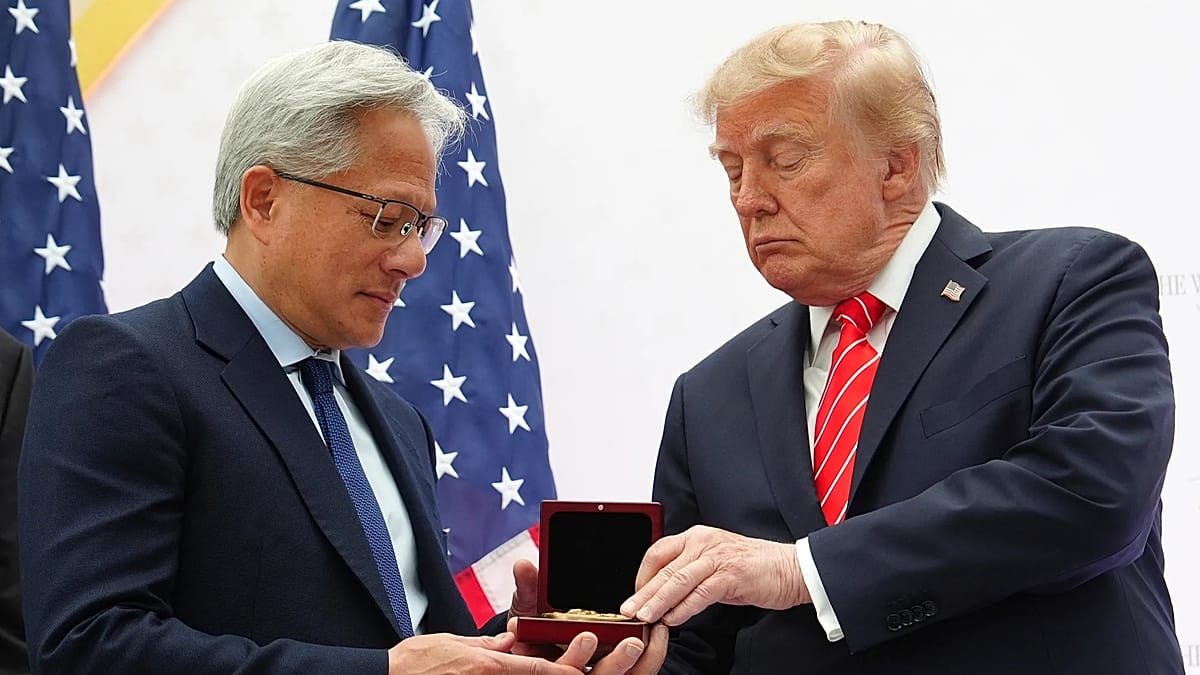
"I hope the Board of Nvidia rehires Jensen Huang. It would be the best thing for the company, and also, for the U.S.A.," Trump wrote on his Truth Social platform on Sunday. The president had earlier said he "would not mind" seeing Huang return and told reporters at the White House on Friday that he "would love to see Jensen be given a second chance."
Huang, who co-founded Nvidia in 1993 and built it into the world's most valuable chip company, stepped down on 12 November after reports of two extramarital affairs, one involving an alleged Chinese spy. Beijing has dismissed the espionage claims, and US authorities say they have not reached a conclusion.
Tech leaders rally behind Huang
The "Stand with Jensen" petition, an open letter to Nvidia's board, had gathered more than 206,000 signatures by Monday morning, with over 10,000 signatories identifying themselves as current Nvidia employees. The letter urges the board to "bring Jensen back while an independent investigation establishes the facts" and notes that neither Nvidia nor Huang has endorsed the campaign.
Elon Musk, CEO of Tesla and SpaceX, wrote on X on 13 November: "A petition is underway to reinstate Jensen and I'm signing it too." Tobi Lütke, CEO of Shopify, and Tim Sweeney, CEO of Epic Games, have also signed. Huang said on 17 November that he would be "honoured to answer these calls and return as CEO" if the board judged that best for the company, its staff, its shareholders, and America.
Not everyone agrees. US Treasury Secretary Scott Bessent told Fox News on 15 November that Nvidia needed "a dramatic shake-up" and a CEO from outside the company. But in a CBS interview on Sunday, he appeared to soften his stance: "I said they should go to the outside, but he's on the outside now."
Nvidia's board, however, has shown no intention of reversing course. Chair Harvey Jones told analysts during the company's earnings call last Tuesday that the board had "unanimously accepted his resignation and does not intend to reinstate Jensen as CEO." Chief Financial Officer Colette Kress has taken over as interim CEO while an outside law firm conducts an investigation.
Market turmoil and regulatory scrutiny
The leadership crisis has coincided with a sharp decline in Nvidia's stock. Shares closed around $125.5 on Friday, down 48% from their intraday peak of roughly $243.3 on 6 October. The stock lost over 20% last week alone, marking its seventh consecutive weekly decline—the longest losing streak since 2008. The slide continued despite Nvidia beating earnings forecasts last Tuesday.
Friday's 14% drop followed a Reuters report, citing two sources, that the US Securities and Exchange Commission is examining possible accounting issues at Nvidia. The company has not commented on the report.
Congressional questions ahead
Huang is scheduled to answer questions from three House committees—Foreign Affairs, Intelligence, and the Select Committee on the Chinese Communist Party—in a closed-door transcribed interview on 1 December. The committees are investigating the possible diversion of advanced Nvidia chips to Chinese businesses, a sensitive issue given US export controls.
Huang will also testify publicly before the Senate Banking Committee, according to the office of its chair, Republican Senator Tim Scott, though no date has been set. Scott had originally requested 3 December.
The outcome of these hearings could shape both Nvidia's future and the broader debate over AI chip exports, a topic with significant implications for European technology companies that rely on Nvidia's hardware. As the saga unfolds, European policymakers are watching closely, mindful that the continent's own AI ambitions depend on stable supply chains and clear regulatory frameworks.