Europe is facing a rising tide of hybrid attacks that stretch from the Baltic Sea to the Black Sea, and the continent must accelerate its military preparations to counter them, the EU's most senior military officer has warned.
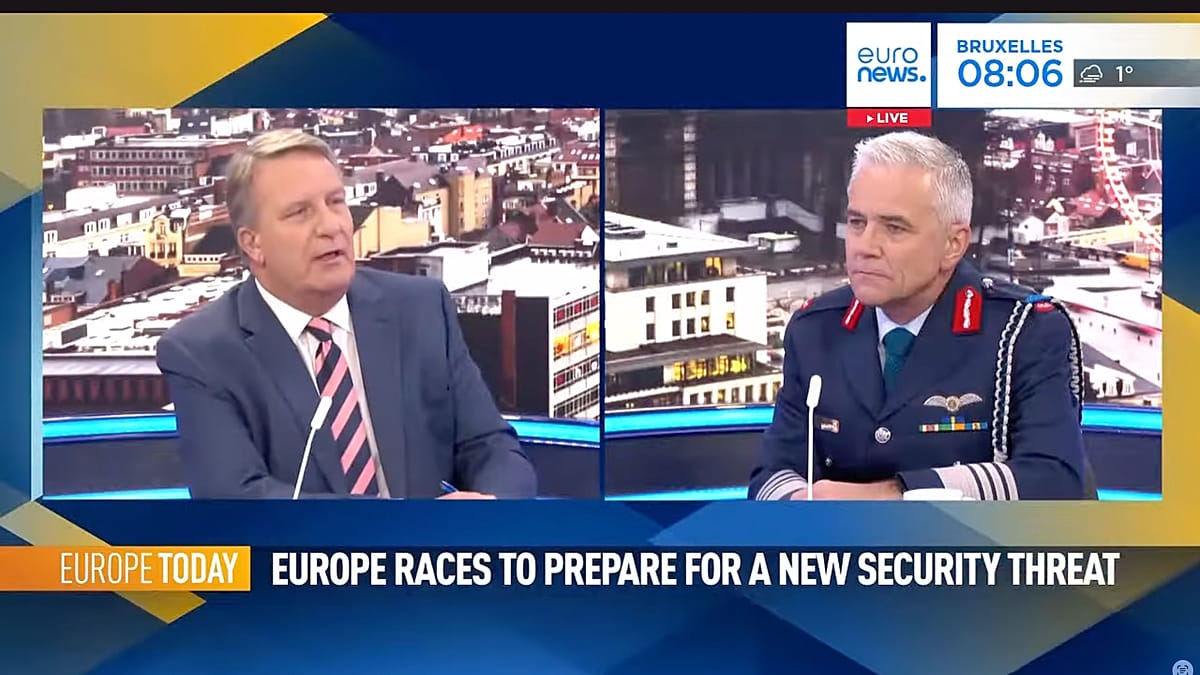
General Seán Clancy, chairman of the EU Military Committee, told Euronews on Monday that the spread of asymmetric threats is his greatest security worry, pointing to recent incidents in Poland, Denmark and Germany. He said the past six to twelve months have seen a clear escalation in sabotage, drone incursions and other forms of hybrid warfare designed to destabilise not only Ukraine but also European democracies more broadly.
“The main concern is the spread and escalation of hybrid threats,” Clancy said in an interview with Europe Today. “We've seen this particularly over the past six to twelve months, from the Baltics to the Black Sea.”
His remarks come after another weekend of Russian attacks on Ukraine and as European governments grapple with growing concerns about disruptive incidents and covert operations. Clancy stressed that readiness and preparedness are at the core of the EU's strategy, adding: “The sooner member states can act collectively in a crisis, the better our chances of containing it.”
Military chiefs gather in Brussels
Europe's military chiefs will meet in Brussels on Wednesday to assess the continent's defence readiness, with Ukraine and the so-called Coalition of the Willing high on the agenda. Clancy acknowledged that enormous challenges remain, particularly in rebuilding weapons stockpiles, expanding industrial production capacity, and sustaining military operations over time.
“We're in a better position than we were. But we need to move faster and accelerate our preparedness,” he said. “Europe is stepping up. It's leaning in. We're closing the gaps.”
Despite these efforts, Europe remains heavily dependent on the United States for critical military capabilities, including air defence, air-to-air refuelling and other strategic support. Clancy dismissed fears that Washington's ongoing review of its military presence in Europe would undermine the continent's security, insisting that any transition would be managed jointly.
The transatlantic partnership, he said, was “without equivocation, our most important relationship, and it will remain so, now and into the future.” Asked whether Europe could defend itself against Russia without American support, Clancy expressed confidence in its armed forces, but stressed that closing the remaining gaps is essential.
The EU has already taken steps to bolster its defence, including a new oil security strategy that prioritises military fuel needs. Yet Clancy's warning underscores the urgency of moving from planning to concrete action, especially as hybrid threats become more sophisticated and frequent.
Analysts note that the EU's ability to respond collectively will be tested in the coming months, particularly as national elections approach in several member states, where disinformation campaigns are expected to intensify. The military chiefs' meeting in Brussels is seen as a key moment to translate political commitments into operational readiness.
Clancy's message is clear: Europe has made progress, but the pace must quicken. With hybrid threats spreading from the Baltics to the Black Sea, the continent cannot afford to be complacent.