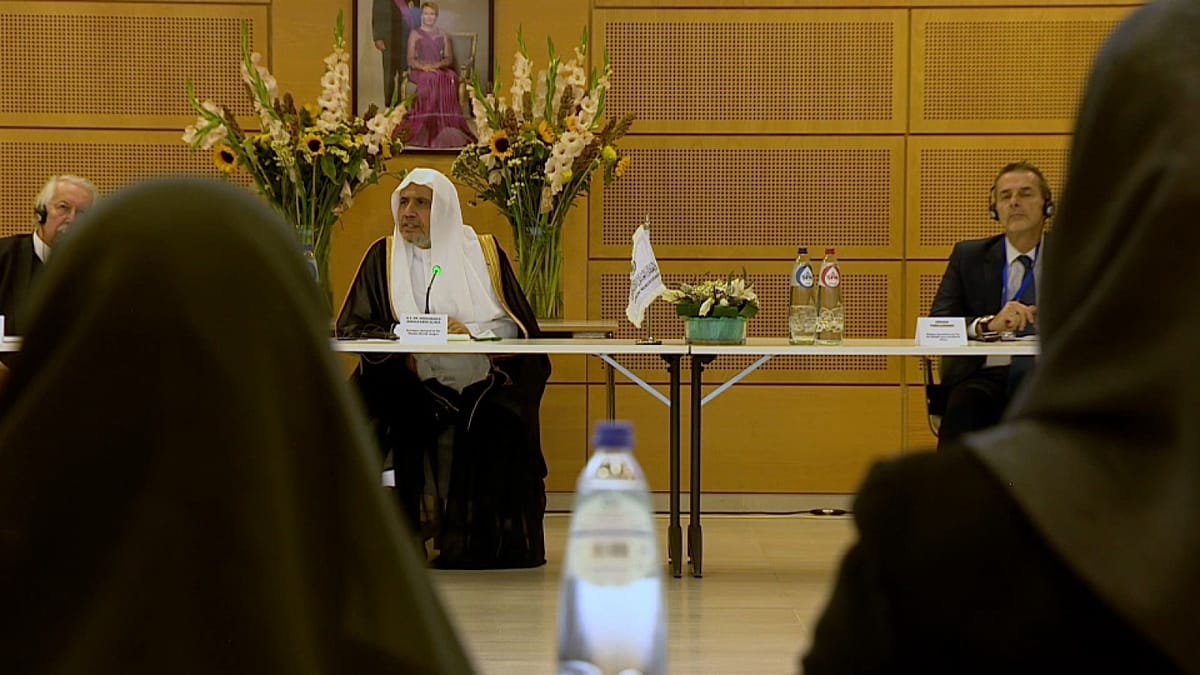
Dialogue was the recurring theme as Sheikh Dr Mohammad bin Abdulkarim Al-Issa, Secretary-General of the Muslim World League, met political and religious leaders in Brussels on Friday. The Saudi-born cleric, who heads the Mecca-based organisation founded in 1962, used his visit to call for stronger communication across Europe's diverse communities as a bulwark against polarisation.
Speaking at a high-level gathering on social cohesion, Al-Issa insisted that dialogue, when pursued with sincerity and effective leadership, remains the most reliable tool for resolving conflicts. "Dialogue is the language of reason and wisdom," he said, adding that his organisation has always placed great faith in it.
The visit came at a moment when Europe's political landscape is shifting. In September, the far-right Alternative for Germany (AfD) scored first-place finishes in state elections in Saxony-Anhalt and Mecklenburg-Western Pomerania. France is preparing for a presidential election in 2027, while Italy, Poland, and Greece face parliamentary votes in the coming years. These developments have raised concerns about the resilience of democratic norms and minority protections.
Yet Al-Issa struck a notably calm tone. "As for talk of a hardline right emerging in some European countries, we are generally not worried," he said. He pointed to the strength of national constitutions and the societal values that underpin them. "Each European country has a civilised constitution that no one can override. There are also societal values that everyone must respect."
He argued that any attempt to breach those constitutional boundaries would trigger a societal response. "Any departure from the constitution and these civilised societal values will prompt society to speak out and put things right," he explained, noting that constitutional courts offer an additional safeguard. He drew parallels with other countries where governments had overstepped, only to be corrected by judicial oversight and an active public conscience.
The issue of religious practice in public spaces is particularly sensitive in Europe. Italy's government, led by Prime Minister Giorgia Meloni, recently approved a decree banning face coverings during school activities, a measure widely seen as targeting the burqa and niqab, though the text does not mention them explicitly. Meloni said the rule ensures that "no one should force a girl to hide herself."
Al-Issa responded by calling for respect for religious practices within the framework of national laws. "We always call for respect for each religion's distinctive practices, provided they do not conflict with the constitution," he said. His comments reflect a broader effort by the Muslim World League to position itself as a moderate voice in interfaith dialogue, a stance that has gained traction in Brussels and other European capitals.
The visit also underscores the growing importance of religious diplomacy in European affairs. As the continent grapples with hybrid threats and social fragmentation, institutions like the Muslim World League are being courted as partners in fostering cohesion. The Brussels summit on hybrid threats earlier this year highlighted similar concerns about societal resilience.
Al-Issa's confidence in Europe's constitutional order is not universally shared. Critics argue that far-right parties, even when they do not overturn constitutions, can shift public discourse and normalise exclusionary policies. However, the Sheikh's message was clear: Europe's institutions are robust enough to withstand political excesses, and dialogue remains the best defence against division.
As Europe prepares for a series of elections, the role of religious leaders in promoting tolerance will likely remain in the spotlight. For now, Al-Issa's Brussels visit serves as a reminder that, in his view, the continent's democratic foundations are solid.