From Madrid to Rome, Paris to Copenhagen, hundreds of thousands of young Europeans have taken to the streets in recent weeks. Their grievances: soaring living costs, an unaffordable housing market, and wages that fail to keep pace. Now they have an unexpected ally in one of the world's most prominent economists.
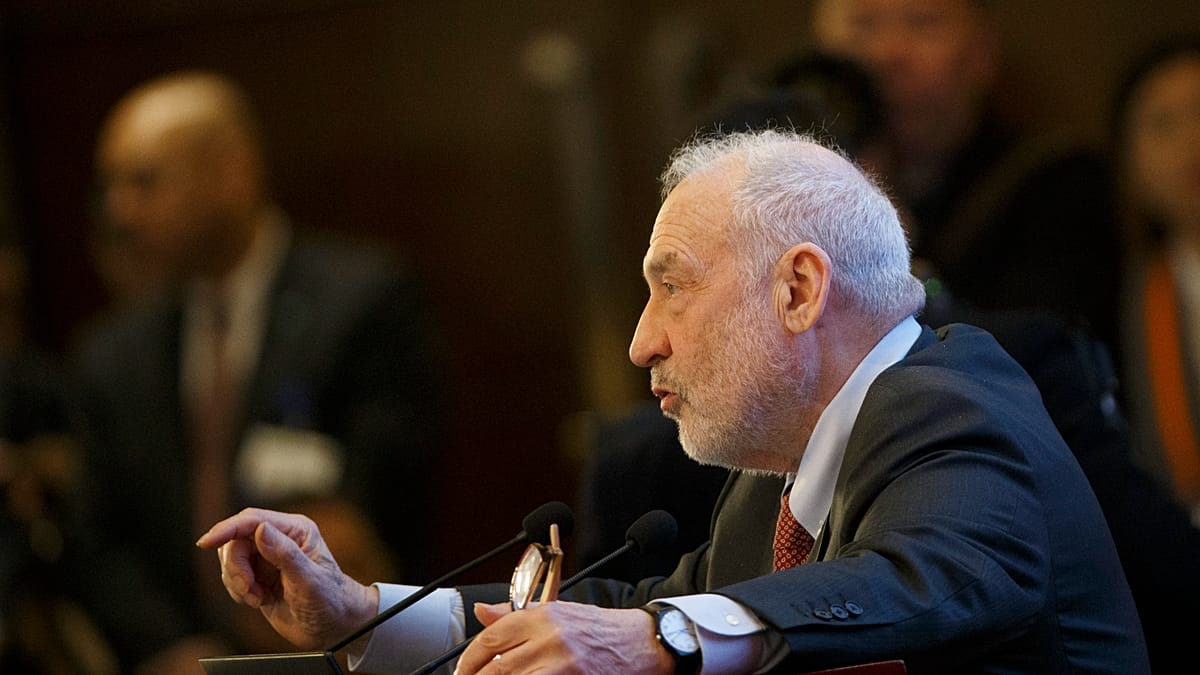
Joseph Stiglitz, the Nobel Prize-winning economist and former chief economist of the World Bank, has described the protests as "legitimate." In an interview, he said the anxieties driving young people onto the streets are rooted in real, structural problems.
"Part of the problem is inequality across generations," Stiglitz said. "They can't afford housing. They're not given the education that would make them productive. AI is giving rise to new sets of anxieties."
The 83-year-old Columbia University professor argued that the world the next generation inherits is marked by rising inequality, climate change, and other uncertainties. "I think those are legitimate complaints," he added.
Housing crisis fuels nationwide strikes
In Spain, the frustration boiled over last week when hundreds of thousands joined the first nationwide 24-hour strike since 2012. In Madrid, protesters marched through heavy rain, chanting "we have no home" and holding signs denouncing the cost of living.
Paula Diaz, a 25-year-old theatre technician, told reporters she still lives with her parents. "People work a lot, and it isn't enough to pay the rent, to pay for a house," she said.
Arturo Leon, a 24-year-old student in Barcelona, pays €460 a month for a five-square-metre bedroom in a shared flat with four others. "We do not have a contract, and there are lots of things in the flat which are broken, but the landlord refuses to fix," he said.
The protests have had political consequences. Prime Minister Pedro Sánchez called a snap election, originally scheduled for 2027, after his minority government failed to push through a housing package in parliament.
Students and nurses demand better public services
In Italy, thousands of students have marched, set up tent camps, and occupied schools to demand more funding for education. Sofia Cataldi, a 16-year-old in Rome, put it bluntly: "We don't want windows falling on our heads, and we don't want mice in our schools. We want clean buildings, and I want to live in a better world than this one."
Similar sentiments have echoed in France since September, where student protests have been simmering. Aurelane Thos, a 38-year-old nurse in Paris, said the deterioration of public services resonates widely. "The state of schools, the state of hospitals, staffing levels in schools and hospitals, the way things are getting worse and worse across all public services — these are issues that really resonate with us," she said.
For some, the protests are also about the right to demonstrate without intimidation. Mathilde, a 17-year-old pupil in Paris, said: "We're stressed about our studies, but when you have a bunch of cops in front of the high school every morning, you only want to keep protesting."
Stiglitz backs taxing the ultra-wealthy
Stiglitz has long argued that governments should tax the rich more heavily. He believes that even a modest levy on the largest fortunes could generate substantial revenue. "There is so much money at the top that even a small tax rate on the top generates a huge amount of money," he said.
He supports proposals such as the one by French economist Gabriel Zucman for a minimum tax of around two per cent on fortunes above €100 million. Stiglitz argues that such a tax should be levied at the EU level to prevent tax avoidance, which is easier given the bloc's free movement of people and capital.
But he cautioned that taxation alone will not solve Europe's challenges. He urged European countries to rethink public spending and to design more flexible pension systems that reflect longer life expectancy while accounting for physically demanding jobs.
The protests, and Stiglitz's backing, come at a time when youth unemployment and NEET numbers are rising across the UK, and as debates about AI's impact on jobs intensify. The economist's words give intellectual weight to a movement that has already forced political change in Spain and could do so elsewhere.