Four British men have been found guilty of multiple sexual offences, including rape, against a woman whose former husband drugged her and offered her to strangers online. The case, which unfolded in the southern English town of Swindon, has drawn comparisons to the notorious Gisèle Pelicot affair in France, where a husband orchestrated the mass rape of his wife over nearly a decade.
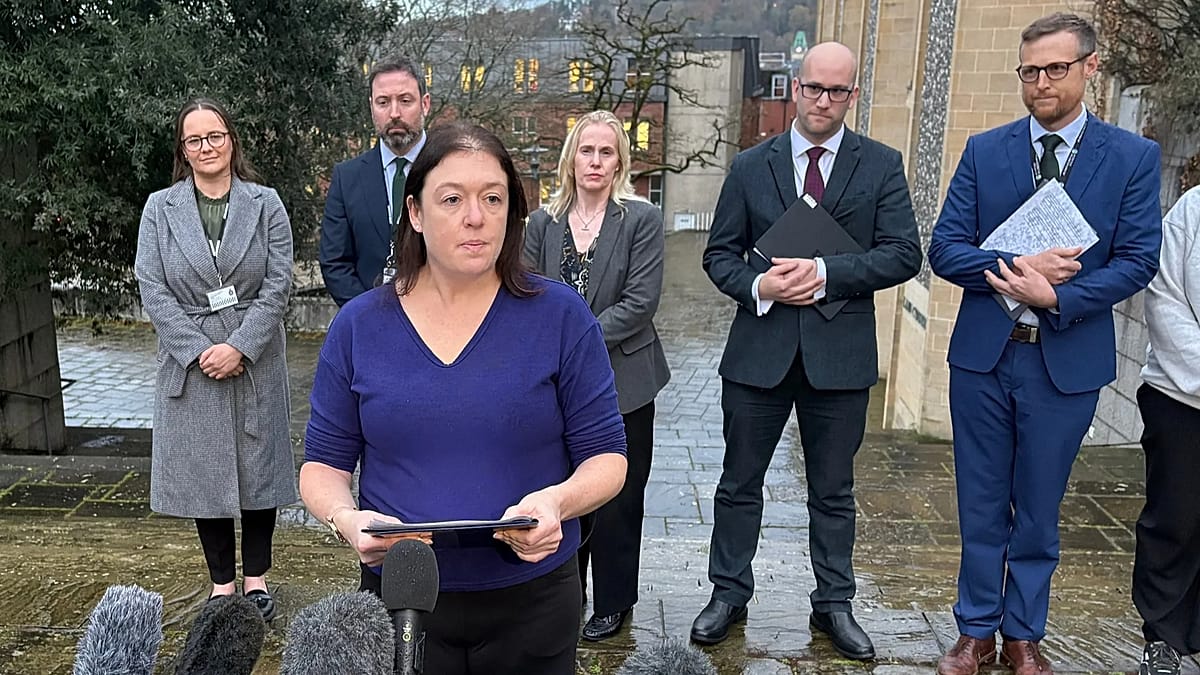
Joanne Young, 49, waived her right to anonymity to speak publicly after the verdicts were delivered at Winchester Crown Court on Thursday. She described her relief at the outcome and encouraged other women who have endured similar abuse to report it, saying they “can be believed and understood.”
“Knowing what has happened to me without my knowledge or consent has been incredibly difficult to process, and this abuse has cost me my life as I knew it,” she said outside the court. “The person I trusted most in the world betrayed me in the most horrific way.”
The case came to light in 2024 when police investigating Joanne Young's then-husband, Philip Young, for uploading images of bestiality discovered hundreds of intimate photographs and videos of her. These images revealed a wider pattern of abuse, in which Philip Young had drugged his wife and advertised her for sexual encounters online, without her knowledge or consent.
Verdicts and guilty pleas
Philip Young, who is in his 50s, had already pleaded guilty to dozens of charges, including 11 counts of rape and 11 counts of administering a substance with intent. His sentencing is expected to follow that of the other defendants.
The jury convicted Norman Macksoni, 48, of rape, and Richard Wilkins, 62, of rape and assault by penetration. Connor Sanderson-Doyle, 32, was found guilty of assault by penetration and sexual touching, while Mohammed Hassan was convicted of sexual touching. A sixth man, Dean Hamilton, 47, had previously admitted one count of assault by penetration, two counts of sexual assault, and one count of rape.
Judge Pushpinder Saini said the four men faced “significant” prison sentences and praised Joanne Young for her “amazing bravery throughout these proceedings.”
The case has reignited debates across Europe about the use of drugs to facilitate sexual violence and the challenges victims face in seeking justice. In France, the trial of Dominique Pelicot, who drugged his wife Gisèle and invited dozens of strangers to rape her, has become a landmark moment for the country's legal system and for public awareness of such crimes.
Joanne Young's decision to speak openly, like Gisèle Pelicot, has been hailed by campaigners as a powerful act of defiance. Her testimony, delivered in a British courtroom, underscores the growing willingness of survivors to confront their abusers and demand accountability.
The case also highlights the role of digital evidence in modern prosecutions. Police in Wiltshire, who led the investigation, said the discovery of the images was pivotal in uncovering the full scale of the abuse. The investigation involved tracing the men who responded to Philip Young's online advertisements and identifying them through digital forensics.
As the legal proceedings conclude, attention now turns to sentencing, which is expected to take place in the coming weeks. The case has already prompted calls for tighter regulation of online platforms that can be used to facilitate such crimes, a concern that resonates across the European Union as it debates new digital safety laws.
For Joanne Young, the verdicts mark the end of a harrowing chapter, but she has made clear that her fight is not over. “I hope that by speaking out, other women will find the strength to come forward,” she said. “No one should have to suffer in silence.”