Brussels is hosting a high-level defence gathering on Wednesday as European leaders confront a deteriorating security environment marked by sabotage, drone incursions, and the financial strain of supporting Ukraine through a fifth wartime winter. The Euronews Defence and Space Summit at the Albert Hall brings together NATO Secretary-General Mark Rutte, Bulgarian Prime Minister Rumen Radev, and European Commissioner for Defence and Space Andrius Kubilius, among others.
The summit takes place against a backdrop of heightened alarm over Russian hybrid warfare. Just a day earlier, Estonia formally accused Moscow of orchestrating an arson attack in August against a major drone manufacturer, an incident that has prompted NATO to reaffirm its commitment to sustaining support for Kyiv despite the escalating threats.
Ukraine's financial crunch
Ukraine's finance minister, Sergii Marchenko, used a meeting with allied donors and financial institutions in Brussels on Tuesday to press the case for tapping into immobilised Russian assets. Kyiv estimates its financial and military needs for next year could reach a staggering $78 billion (€68.77 billion) if allies fail to increase their contributions.
Marchenko argued that using the pool of frozen Russian sovereign assets would be both a practical and fair solution to cover wartime costs, protect debt sustainability, and hold Moscow accountable for its aggression, according to officials familiar with the private discussions. The EU holds €210 billion of these assets, most of it in Euroclear, the Brussels-based depository.
The minister acknowledged the political sensitivity of the proposal but encouraged the bloc to develop a centralised, legally sound framework. The urgency is underscored by talks among EU defence ministers on how to close the gap.
Von der Leyen's Western Balkans tour
European Commission President Ursula von der Leyen begins her annual Western Balkans tour in Albania on Wednesday, with stops in Kosovo and Montenegro on Thursday and North Macedonia on Friday. Notably, she will skip Serbia and Bosnia and Herzegovina, both of which face upcoming elections.
The omission follows von der Leyen's unusually pointed remarks in her State of the Union address, delivered in French, expressing horror at the glorification of convicted war criminal Ratko Mladić during his funeral in Belgrade. EU officials interpreted the language as a deliberate signal to French President Emmanuel Macron, who had warmly welcomed Serbian President Aleksandar Vučić in early September.
The tour comes at a pivotal moment for EU enlargement. The Commission has postponed the publication of its pre-enlargement policy reviews—plans to reform the accession process and prepare the EU's decision-making for a larger bloc—from 30 September to 6 October to accommodate the trip.
Montenegro, the accession frontrunner, faces a crunch period to resolve a bilateral dispute with Croatia if it is to meet its ambition of joining the EU by 2028. The Commission is seeking to mediate between the two countries. Albania, meanwhile, is expected to receive formal backing for its goal of completing accession preparations by the end of 2027, with an upcoming roadmap designed to keep Tirana's reform momentum on track.
Von der Leyen will also face questions in Kosovo and North Macedonia over why the accession roadmaps she announced in her State of the Union address cover only Montenegro, Albania, Moldova, and Ukraine, leaving the two countries out.
Ukraine offers partners access to jet-drone interceptor technology
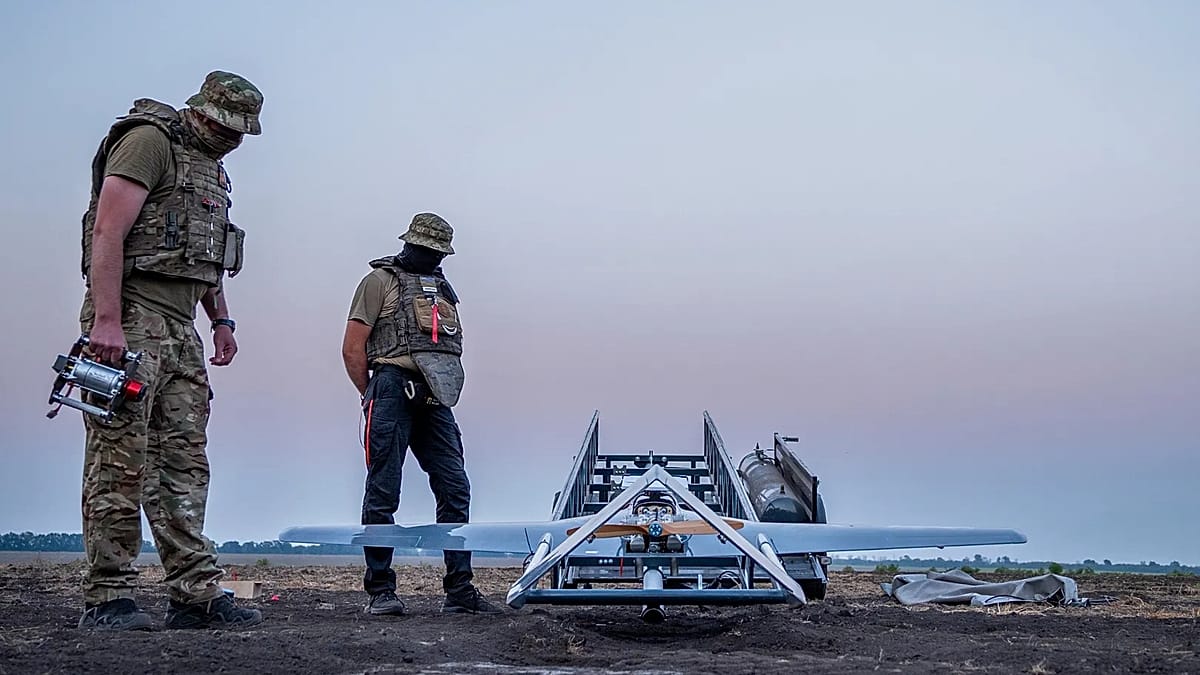
In an exclusive interview from Kyiv, Kyrylo Budanov, head of the Office of the President of Ukraine, told Euronews that countries with drone cooperation agreements with Ukraine could gain access to its newest technology for intercepting Russian jet-powered drones. The cooperation could extend beyond existing interceptor models designed to counter conventional Shahed drones, opening the way for partners to negotiate access to newer Ukrainian technologies.
“This isn’t about any specific product. It’s, in principle, about cooperation between countries on similar products,” Budanov said.
Euronews also gained exclusive access to Ukrainian air-defence troops protecting the Kyiv region, who face the growing threat from faster and higher-flying Russian attack drones. Crews reported having as little as 10 to 15 seconds to react when a jet-powered drone approaches the capital, and some said the intensity of recent attacks had left them with only an hour and a half of sleep.
The summit and the ongoing hybrid threats underscore the need for a coordinated European response. As EU moves forward on a hybrid threat protocol, wary of NATO overlap, the bloc is seeking to bolster its resilience. Meanwhile, Lithuania has called for a NATO response to Russian hybrid attacks, and Estonia's accusations highlight the tangible nature of these threats.