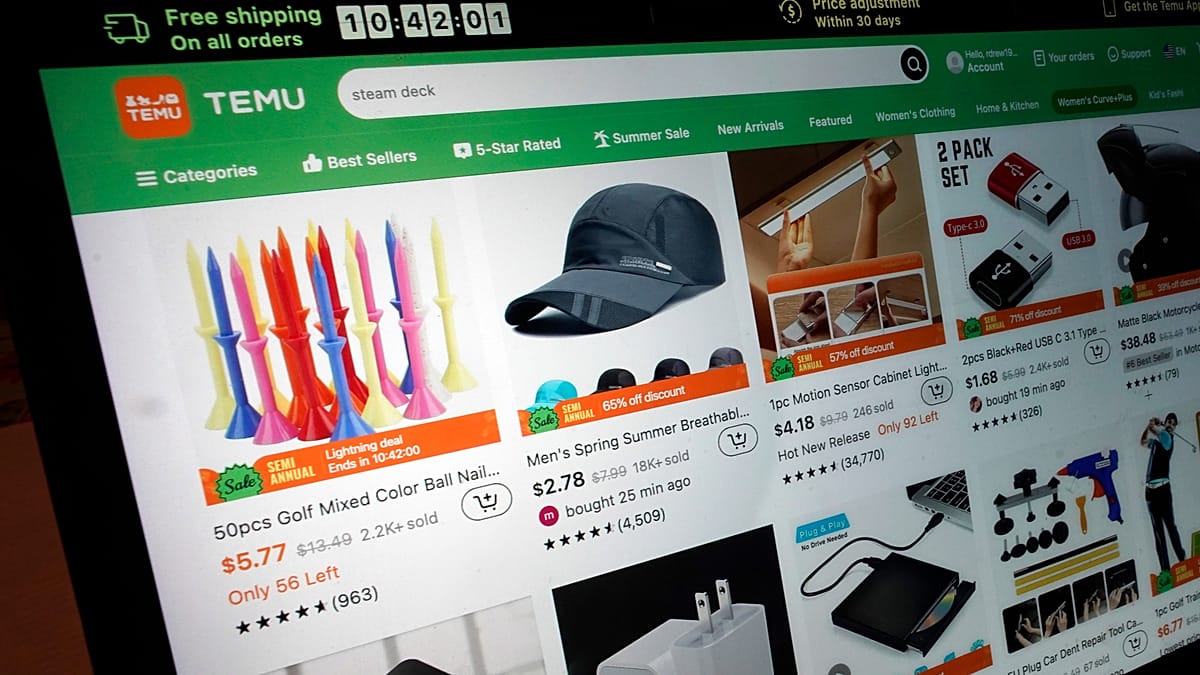
The European Commission has taken the first formal step in what could become a landmark enforcement action against the Chinese e-commerce platform Temu, issuing preliminary findings that accuse the company of failing to do enough to keep illegal and unsafe products off its marketplace. The findings, announced in Brussels, could ultimately lead to a fine of up to 6% of Temu's global annual turnover—a penalty that, given the platform's explosive growth across Europe, would run into billions of euros.
This is not the first time Temu has run afoul of EU regulators. Earlier this year, the Commission fined the company €200 million for allowing the sale of dangerous items such as baby toys that failed safety tests and faulty phone chargers. At the time, Brussels argued that Temu had not carried out the risk assessments required under the Digital Services Act (DSA), the bloc's sweeping rulebook for online platforms. Following that penalty, Temu was ordered to draw up an action plan to address the breaches, which the Commission approved in October. But the new preliminary findings suggest that the company's efforts have fallen short.
Safety checks found wanting
Commission investigators point to a series of persistent shortcomings. On product safety, they say Temu only asks sellers to provide test reports for a small fraction of the items listed, and even then, those reports are often not properly verified. High-risk categories such as electronics and cosmetics are not prioritised, and the results of spot checks are rarely followed up. The report also criticises the platform's content moderation, which it says focuses on the product's own description rather than the actual safety of the item. The system does not appear to learn from previously identified non-compliant goods, making it harder for consumers to find safe alternatives.
Another concern is the number of human moderators, which investigators say has not kept pace with the rapid expansion of Temu's catalogue. The company's sanction system is described as "fragmented" and "ineffective," with penalties applied to individual stores rather than the traders behind them. That means a trader whose store is banned can simply open another one and continue selling. The Commission also notes that Temu takes too long to act against repeat offenders, such as suspending their stores.
In a statement, Temu rejected the preliminary findings. "We respectfully disagree with the Commission's preliminary findings concerning our measures to mitigate risks related to the dissemination of illegal products," the company said. It insisted that it "invests significantly in compliance infrastructure and human expertise" and that its controls "effectively mitigate illegal product risks with a consistently low incidence of problematic products." Temu said it would "review and respond to the findings carefully and will continue to engage constructively with the Commission."
The company now has the opportunity to examine the Commission's evidence and prepare its defence before any final decision is made. If the Commission confirms the breaches, it can impose a fine of up to 6% of Temu's worldwide turnover. The case is being watched closely across the EU, as it tests the bloc's ability to police the fast-growing world of Chinese e-commerce, which has become a major force in online retail from Warsaw to Lisbon.
The preliminary findings come at a time when Brussels is also tightening rules on other digital fronts, from advanced AI chips to autonomous weapons. For European consumers, the outcome of this case could determine whether they can trust that products bought on Temu meet the same safety standards as those sold by domestic retailers.