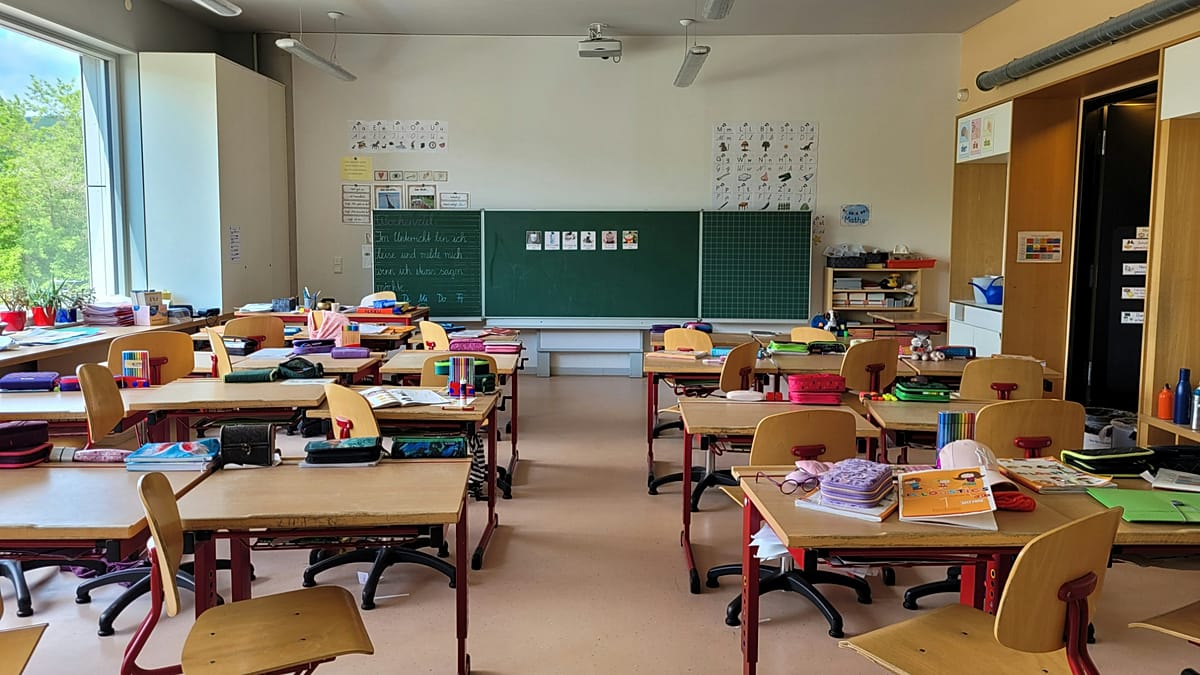
Schools across Germany have been targeted by a wave of emailed bomb threats, but authorities say there is no indication of a real danger. Police in the southwestern state of Baden-Wuerttemberg reported on Monday that more than 450 schools had received threatening messages. In the eastern state of Thuringia, police also confirmed that numerous schools had been sent similar emails, which they do not believe to be genuine.
The German alerts come amid a broader pattern of hoax bomb threats that have disrupted schools and other institutions across Europe in recent weeks. In Denmark, police said they were investigating threats sent to several schools but stressed that there was no cause for concern.
A coordinated campaign?
The latest wave echoes an earlier incident in Italy, where more than 300 schools were evacuated after receiving emailed bomb threats. Those emails also claimed that an explosive device had been planted in the car of Prime Minister Giorgia Meloni. In a Facebook post, Meloni wrote: "At present, based on the checks carried out, no element has emerged that would suggest there is a concrete danger."
Italian Education Minister Giuseppe Valditara said around 300 alerts had been recorded across the country, adding that "it is clear that there is a strategy." The emails, signed by someone calling themselves "Mikhail Andropov, leader of the Vilayat of Misoginistan," contained menacing language, including threats of genocide against Italians and claims of bombs with remote triggers placed in buildings.
The same signature has appeared on bomb threats sent to media outlets in Ireland and Bulgaria in the past week. Similar hoaxes were also reported at schools in the UK and Ireland on 11 November, prompting some evacuations.
In Italy, at least 100 schools received a second round of threats, including poison threats, nearly a week after the initial scare. The government has since introduced a new security protocol to respond to such incidents.
Speaking in Brussels, Italian Foreign Minister Antonio Tajani said there was a "shared vision and desire to be increasingly united in responding to attacks and preventing different types of threats by email, cyber or hacking."
The repeated use of the same pseudonym suggests a coordinated campaign, though investigators have not yet identified the perpetrators. The threats have caused disruption and anxiety, but so far no explosives have been found.
European authorities are increasingly concerned about hybrid threats, including disinformation and cyberattacks. Spain's November vote highlighted how such tactics can be used to undermine democratic processes. The bomb threats, while not directly linked to elections, fit into a broader pattern of disruptive activities that test the resilience of European societies.
Germany, in particular, has been stepping up its defences. The country is testing kamikaze drones and AI targeting in Lithuania as part of NATO's enhanced forward presence. Meanwhile, German auto suppliers are pivoting to drones and defence as the car industry faces a crisis, reflecting a broader shift towards security-related technology.
For now, German police are advising schools to remain vigilant but not to panic. The threats, while unsettling, appear to be part of a hoax campaign that has so far caused no physical harm. Still, the repeated disruptions across the continent underscore the need for coordinated responses to such incidents, as Tajani suggested.
As European nations grapple with these challenges, the focus remains on maintaining public safety without giving in to fear. The authorities' message is clear: these threats are being taken seriously, but they do not represent a concrete danger.