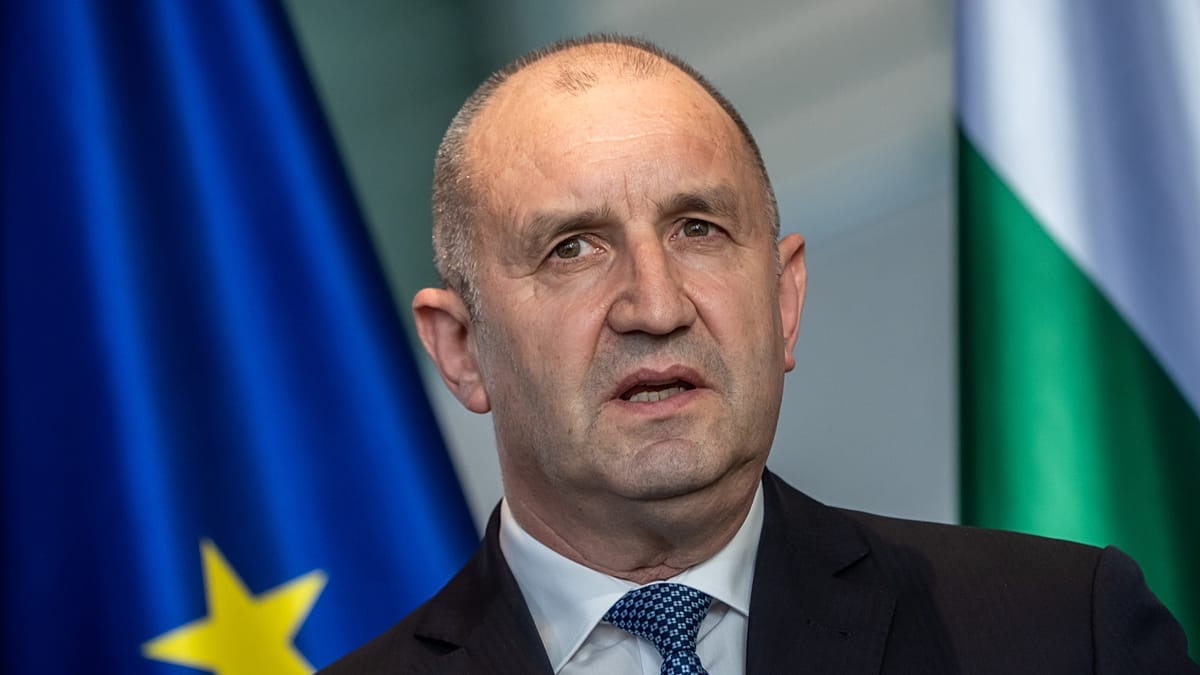
Bulgaria has emerged as the latest obstacle to European Union sanctions against Patriarch Kirill, the head of the Russian Orthodox Church, just as Hungary’s long-standing veto was lifted. The opposition was confirmed on Thursday by Prime Minister Rumen Radev, who made his stance clear before departing for his first EU summit in Brussels.
“What message are we sending when we extend sanctions and war into the sphere of religion? Do we realise where this leads?” Radev told reporters in Sofia. “The era of the Crusades is over. I am not interested in the Russian Patriarch as an individual. I am interested in the fact that he is the head of the Russian Orthodox Church, which is Eastern Orthodox, just like our church. I am concerned about the millions of people who belong to that church.”
Radev’s remarks highlight the delicate religious and cultural ties between Bulgaria and Russia. Both countries belong to the Eastern Orthodox communion, though their churches are administratively independent. The Bulgarian Orthodox Church shares the same faith and dogma as its Russian counterpart, a bond that resonates across many Eastern European nations, including Ukraine.
Symbolic Sanctions or Strategic Misstep?
On Wednesday, Bulgarian Foreign Minister Velislava Petrova-Chamova had already signalled Sofia’s reluctance. She argued that the proposed sanctions—a travel ban and asset freeze—would be purely “symbolic” and risk backfiring. “They have no economic effect but rather have the potential to be counterproductive, because they create an environment in which anti-European propaganda can be carried out, specifically along the lines that Europe is interfering in church affairs,” she said.
Patriarch Kirill is a highly controversial figure who has used his religious platform to spread revisionist propaganda justifying Russia’s invasion of Ukraine. Under his leadership, the Russian Orthodox Church endorsed a document calling for the annihilation of Ukrainian independence and describing the war as a “Holy War.” The EU first attempted to blacklist him in 2022, but Hungary, under then-Prime Minister Viktor Orbán, blocked the move on grounds of religious freedom.
The issue lay dormant until last month, when Hungary’s new government under Péter Magyar signalled it would no longer oppose the sanctions. That shift raised hopes in Brussels that the measure could finally pass, but Bulgaria’s resistance now threatens to derail the process once more.
Radev’s position is particularly significant given his role as a new leader attending his first EU summit. His government must balance domestic sensitivities—where the Orthodox Church holds considerable sway—with the bloc’s collective push to isolate Russia. The unanimity requirement for EU sanctions means that even a single dissenting member state can block the entire package.
The debate comes amid broader European efforts to tighten restrictions on Moscow. Ukrainian President Volodymyr Zelenskyy recently arrived in Brussels with new G7 commitments on air defence and sanctions, underscoring the urgency of maintaining pressure on the Kremlin. Meanwhile, Russian drone attacks continue to devastate Ukrainian cities, including a recent barrage that sparked major fires in Kyiv and Mykolaiv.
Critics of Bulgaria’s stance argue that religious freedom should not shield a figure who actively supports a war of aggression. They point to Kirill’s direct role in legitimising the invasion, which has killed tens of thousands and displaced millions. Supporters of the sanctions say the measure would send a strong political signal, even if its economic impact is limited.
For now, the EU faces an uphill battle to secure the necessary unanimity. The bloc’s foreign ministers are expected to discuss the issue further in the coming weeks, but Bulgaria’s opposition suggests that the path to blacklisting Patriarch Kirill remains fraught with internal divisions.