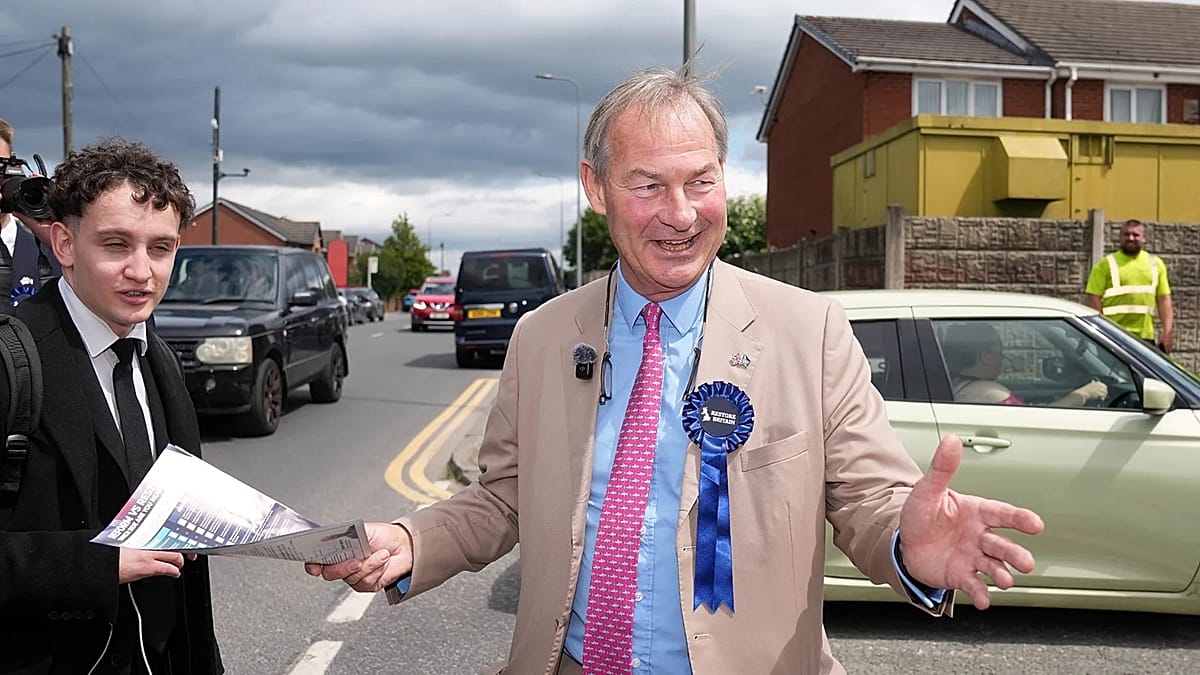
Rupert Lowe, leader of the UK's hard-right Restore Britain party, has publicly offered an alliance with Reform UK's Nigel Farage, aiming to consolidate the country's fractured right-wing vote. In a video posted on social media, Lowe called on Farage to set aside past disputes and work together against what he termed a looming left-wing coalition.
Lowe, who was expelled from Reform in 2025, outlined five conditions he said were non-negotiable for any "common way forward." His proposals touch on immigration, demographic change, justice, economic self-sufficiency, and political trust.
Five conditions for unity
First, Lowe insisted on securing Britain's borders, arguing that "ending mass immigration is not enough" and that the policy must be reversed. He called for the deportation of every illegal migrant, a stance that echoes broader anti-immigration rhetoric across Europe, where countries like Spain face criticism over border management.
Second, he demanded measures to ensure "demographic security," including banning the burqa, halal and kosher slaughter, cousin marriage, and what he called "Sharia courts." He cited projections suggesting white Britons could become a minority, describing this as evidence of "demographic vandalism."
Third, Lowe called for a referendum on reintroducing the death penalty, arguing that "the British people must be given a full, free, and fair referendum" on the matter.
Fourth, he proposed restoring a "self-sufficient Britain" through spending controls, welfare cuts, and inflation management, warning that "enormous cuts" and "difficult, unpopular decisions" would be necessary.
Finally, Lowe demanded a restoration of trust in Westminster, insisting that former Conservative ministers who "failed our country" should be barred from any future cabinet.
Lowe concluded by expressing belief that Reform and Restore Britain could find "sufficient common ground" to defeat the left, which he described as a threat to the nation's future.
Britain's divided right faces new Labour leader
The offer comes as Labour, under new Prime Minister Andy Burnham, has overtaken Reform in recent opinion polls. Burnham, formerly mayor of Greater Manchester, became the UK's seventh prime minister in a decade after succeeding Keir Starmer last month.
Burnham's return to Westminster was marked by a decisive by-election victory in Makerfield in June, where he secured around 55% of the vote. The contest was expected to be tight between Labour and Reform, but Restore Britain's stronger-than-expected performance split the right-wing vote, though not enough to change the outcome.
Since taking office, Burnham has focused on domestic reforms, including education, social care, and devolution. His rapid start has put pressure on the right, which remains fragmented. Lowe's proposal to Farage is an attempt to counter that momentum, but it remains unclear whether Farage, who has previously dismissed Lowe, will engage.
The broader European context is relevant: far-right parties across the continent are grappling with similar questions of unity and strategy. Recent developments, such as EU far-right protests and legal challenges over migration petitions, highlight the tensions within this political spectrum. Whether Lowe and Farage can bridge their differences remains to be seen, but the outcome could reshape Britain's political landscape.