When Andy Burnham meets Ursula von der Leyen on the sidelines of the United Nations General Assembly in New York on Tuesday, the British prime minister will carry a clear message: don't shut us out of your procurement plans. At the heart of the talks is the EU's "Made in Europe" initiative, designed to favour domestic producers and shield the bloc from Chinese competition. Burnham wants to ensure that the UK, as a close neighbour and trading partner, is not caught in the crossfire.
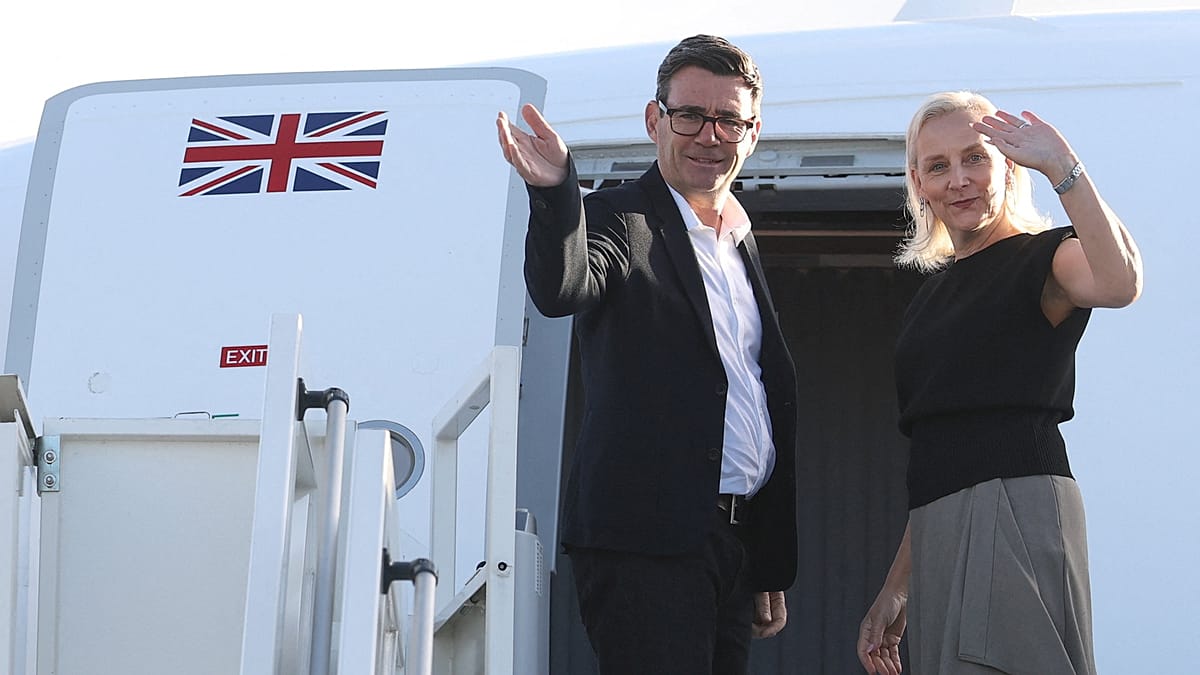
Speaking to journalists en route to New York, Burnham framed the issue as a matter of mutual interest. "Europe's argument is not with us. We both suffer the same effects as other countries, particularly in steel," he said. "We are making the argument: we are not your enemies here. We are not the problem. Made in Europe is dealing with a different problem."
The UK's participation in the scheme is being negotiated as part of a broader reset in relations between London and Brussels. After years of post-Brexit friction, successive Labour governments have sought to rebuild trust. The planned UK-EU summit, originally set for late July, was postponed when Keir Starmer announced his resignation in June, paving the way for Burnham to take over as prime minister uncontested. A new date is expected before the end of the year, but has yet to be confirmed.
EU officials indicate that the "Made in Europe" scheme is now a top priority for the Burnham government in these talks, alongside agri-food trade and a youth mobility visa arrangement. The UK's minister for EU relations, Hamish Falconer, raised the possibility of a special carve-out when he met the bloc's trade chief, Maroš Šefčovič, in Brussels earlier this month. Chancellor John Healey also pressed for a bespoke arrangement during a meeting of EU economic and finance ministers in Dublin last week.
A delicate balance
Burnham's approach is to combine firm advocacy with a conciliatory tone. He said he would present the UK's concerns in a "constructive spirit" during his meeting with von der Leyen, while "working towards what we hope will be a successful EU-UK summit later this year." He also claimed that the UK's position enjoys "considerable support" among EU member states.
France, a key proponent of the "Made in Europe" scheme, has been in discussions with the UK government about a possible resolution. Paris has previously signalled openness to including partner countries, such as the UK and Morocco, in the initiative. That flexibility could provide a path forward, though the details remain sensitive.
The stakes are high for British industry. Steel producers, in particular, fear that being excluded from EU public procurement would put them at a competitive disadvantage in a market that remains one of the UK's largest trading partners. Burnham's argument is that the EU's real concern is unfair competition from China, not from a friendly neighbour with aligned standards and values.
The meeting in New York comes at a moment of heightened transatlantic and intra-European tension. Von der Leyen has recently outlined ambitious security and economic plans, but has faced criticism from some quarters for a lack of urgency. Meanwhile, Burnham is also scheduled to meet US President Donald Trump on the margins of the UN gathering, a first face-to-face encounter that will test the UK's ability to balance its relationships across the Atlantic and the Channel.
For Brussels, the "Made in Europe" scheme is part of a broader push for strategic autonomy, but it carries risks. A recent analysis by the Bruegel think tank warned that local-content requirements could raise the price of electric vehicles by as much as €2,100, a burden that would ultimately fall on consumers. That study underscores the delicate trade-offs involved in such protectionist measures.
Burnham's pitch is that the UK can be part of the solution, not a problem to be managed. Whether von der Leyen and the member states agree will depend on how they weigh the benefits of a closer partnership against the political appeal of a distinctly European industrial policy. The outcome of Tuesday's meeting, and the summit that follows, will shape the contours of UK-EU relations for years to come.