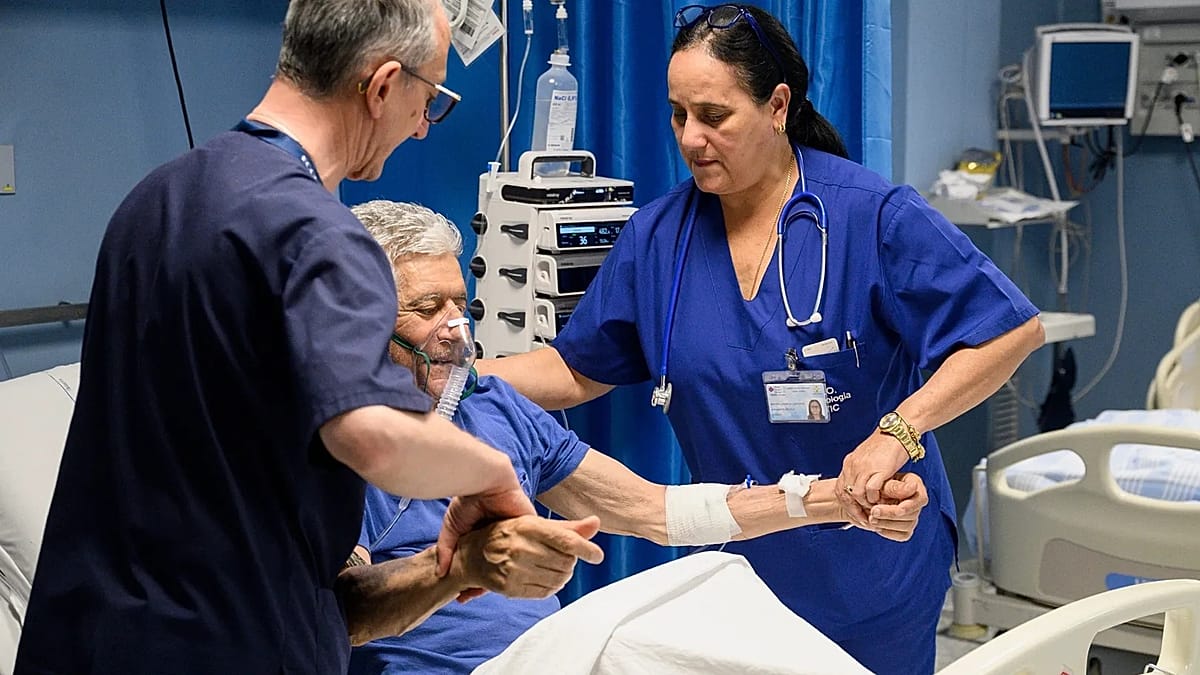
In the hills of southern Italy, the region of Calabria has become an unlikely outpost for Cuban medical diplomacy. Over 200 doctors from the Caribbean island now work in hospitals across this impoverished area, filling gaps left by a chronic shortage of Italian healthcare professionals. Their presence has drawn scrutiny from Washington, which has pressed Rome to sever ties with Havana's medical missions—a program the US calls exploitative. But Calabria's regional government has refused, arguing it cannot afford to lose the doctors.
A Lifeline for Struggling Hospitals
Calabria ranks last in Italy for public healthcare access, according to the health ministry. Wages here are about 30% lower than the national average, and unemployment is double the rate elsewhere. During the COVID-19 pandemic, Cuba sent doctors to several Italian regions, and Calabria continued employing them after the health emergency ended. The region signed individual contracts with the physicians, paying them directly into Italian bank accounts rather than through the Cuban government agency that normally runs such missions.
“It was a disaster. I was keeping the emergency room open all by myself,” recalled Francesco Moschella, chief physician at Polistena hospital, describing the situation before the Cubans arrived in January 2023. The emergency room now sees 30,000 patients annually, with six Cuban doctors making up half its staff. Zoila Yakelin Arevalo Cruz, an emergency medicine specialist who left Cuba in 2023, noted the impact: “In this hospital there were lines that lasted up to eight or 12 hours. Now, thanks to our work, in less than an hour a doctor visits you.”
US Pressure and Regional Resistance
US Secretary of State Marco Rubio has accused the Cuban medical missions of being “a form of human trafficking,” citing the Cuban government's practice of keeping most doctors' salaries and allegedly confiscating passports. In February, US head of mission to Cuba Mike Hammer flew to Calabria alongside the American consul-general in Naples to discuss the issue. Calabria's president, Roberto Occhiuto, acknowledged the pressure: “I had some pressures also during the Biden administration. But pressure grew under Trump.”
Occhiuto told Hammer that his government is working on incentives to lure Calabrian doctors home, but added: “I have also reiterated to the US Ambassador Hammer that I needed to keep hospitals open and that I intend to keep the Cuban doctors who are currently in Italy in their posts.” Italy is not alone in facing US demands. In March, Jamaica ended its 50-year medical cooperation agreement with Cuba, affecting nearly 300 healthcare workers. Honduras also expelled more than 150 Cuban medical staff that same month.
Doctors' Perspectives
Cuban doctors in Calabria acknowledge they send a significant portion of their salaries back to their government—often as much as half. “We are all aware of the economic situation Cuba is going through. It’s a contribution that we make voluntarily because Cuba trained us, educated us and made us doctors,” said Arevalo Cruz. Daisy Luperon Loforte, a Cuban cardiologist, rejected the notion of exploitation: “We do not consider ourselves modern-day slaves at all, as somebody called it. We love our country, we give an economic contribution and we are happy to do so.”
The arrangement highlights a broader challenge for European healthcare systems. Despite being part of a wealthy continent, regions like Calabria struggle to attract and retain medical staff. The Cuban doctors, trained in a community-based prevention model studied worldwide, have become indispensable. As Occhiuto put it, even if Cuba's socialism does not align with his political views, the region depends on these physicians to keep hospitals open.
For now, Calabria's reliance on Cuban doctors continues, a pragmatic solution to a systemic problem that shows no signs of easing. The region's experience underscores the complex interplay between local needs and international pressures, as Europe's poorest areas seek innovative ways to deliver basic services.