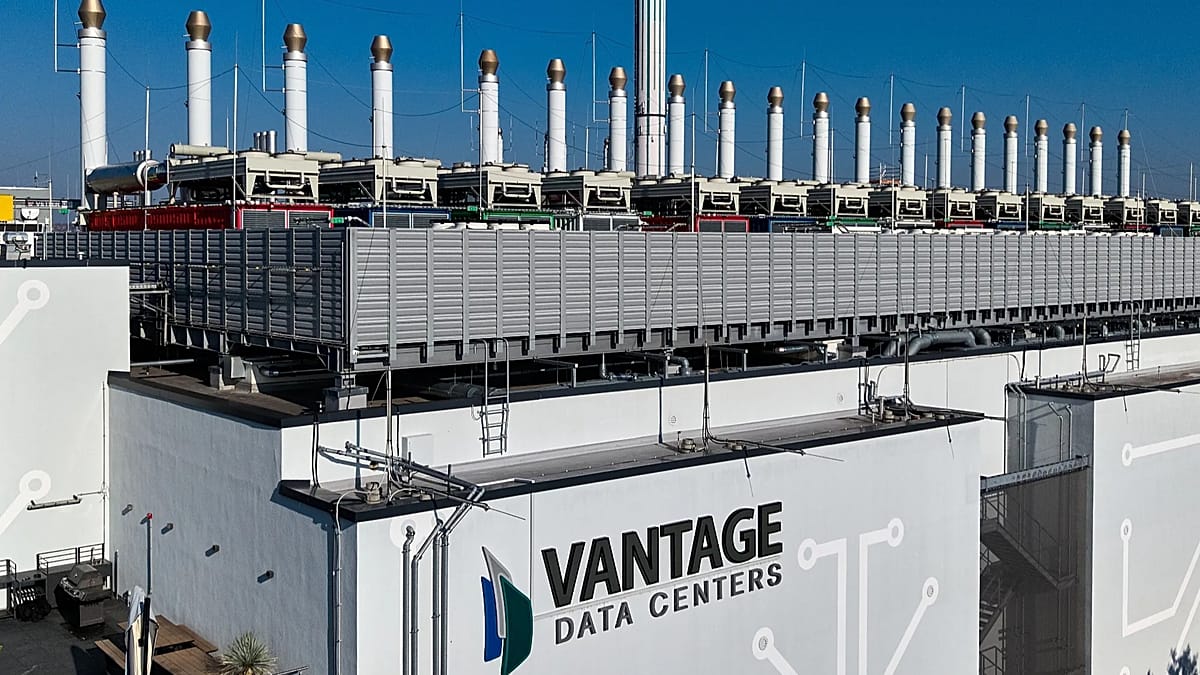
Data centres are the backbone of the digital economy, housing the servers that power everything from cloud storage to artificial intelligence. As Europe pushes to expand its AI capabilities, the number of these facilities is set to triple over the next five to seven years. But this growth comes at a cost: by 2030, data centres could consume more than 3% of Europe's electricity, putting additional strain on power grids and water resources.
The environmental impact of data centres is a growing concern. They require vast amounts of electricity to run and cool their servers, and water for cooling systems. They also depend on critical raw materials and generate significant electronic waste. As the EU seeks to meet its sustainability targets, the expansion of data centre capacity threatens to undermine those goals.
EU proposes a green rating scheme
To address these challenges, the European Commission proposed a common rating scheme in September. The scheme would require data centres with a power capacity above 500 kilowatts to disclose their energy and water usage. This transparency is intended to help integrate these facilities into Europe's energy system and encourage more sustainable practices.
By August 2027, the scheme will assign each data centre a sustainability label on a scale from A to G. The label will reflect several factors, including power usage effectiveness (PUE), water usage effectiveness (WUE), the source of energy, grid flexibility, whether the site is ready for waste heat reuse, and cooling degree days (CDD). These metrics will provide a clear picture of a facility's environmental performance.
The rating scheme is part of a broader regulatory framework. The EU has already enacted the Data Act (2023) and the NIS2 Directive (2022), and the recent Cloud and AI Development Act also touches on data centre governance. The European Parliament and Council are now reviewing the Commission's proposal before it becomes law.
Some member states are already taking their own steps. Spain, for instance, has mandated that 80% of data centre power come from renewable sources. Meanwhile, the International Energy Agency has warned that data centre power use could double by 2030, straining Europe's grids. The EU's AI ambitions are closely tied to this data centre building boom.
Beyond the EU, the environmental toll of data centres is a global issue. A recent Harvard study found that US data centres emit more CO2 than Denmark, highlighting the scale of the problem. Europe's efforts to green its data centres could set a precedent for other regions.
The challenge is significant, but the EU's rating scheme is a step toward making data centres more sustainable. By forcing transparency and encouraging efficiency, the bloc hopes to balance its digital ambitions with its environmental commitments. Whether the scheme will be enough remains to be seen, but it signals a clear direction: Europe wants its data centres to go green.