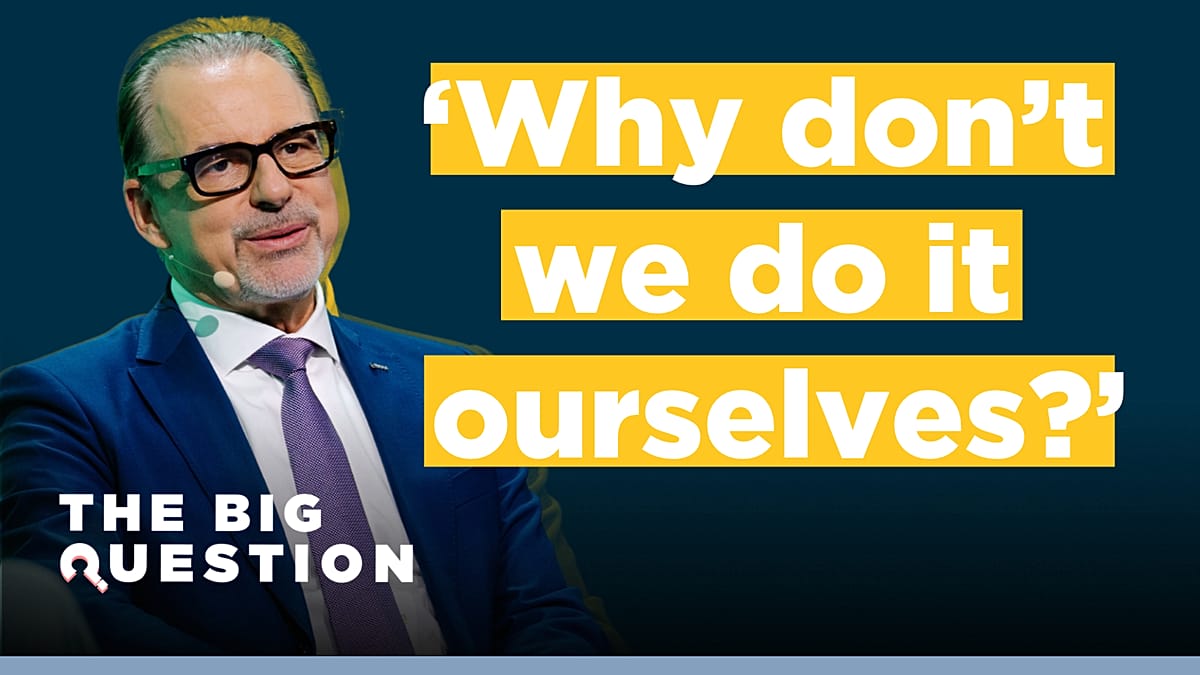
At the European Space Agency's ministerial council in 2025, member states pledged a record €22bn, a 32% increase over the previous round. They also gave ESA a historic mandate to apply space technology to non-aggressive security tasks, including border monitoring. Now Director General Josef Aschbacher wants to use that momentum for a bolder step: giving Europe its own way to put astronauts into orbit.
Since its founding in 1975, ESA has depended on partners—first the Soviet Union, then NASA—to launch its astronauts. That arrangement has worked for decades, but the geopolitical landscape has shifted. With China and Russia politically off-limits, Europe's only practical route to space today is through American vehicles, often operated by SpaceX.
That reliance is becoming fragile. Aschbacher noted that SpaceX plans to retire its Falcon 9 rocket and Crew Dragon capsule around 2029. “That means in a few years, we will not have at least this capability available anymore,” he said. “There may be others coming up, which we do not know today.”
To avoid being left without a ride, ESA is studying a €10bn programme to develop its own crew capsule and recovery system. The agency already has world-class assets—the Copernicus Earth-observation network, the Galileo satellite-navigation constellation, and a skilled workforce—but it lacks the final piece: a vehicle to carry humans safely to orbit and back.
Investing in European industry
Aschbacher argues that the money will be spent anyway. After the International Space Station is decommissioned in 2032, ESA will need to buy seats on commercial stations for its research. He estimates that renting space on future commercial outposts would cost around €5bn over the next decade—money that would flow to foreign providers.
“But the money is lost, or lost in the sense it's being spent not in Europe,” he said. “So I'd rather invest this funding in Europe, strengthen our industry, increase the autonomy of Europe in this domain.”
The €10bn figure is substantial, but it would be spread over roughly ten years and would create high-skilled jobs across the continent. It would also position Europe as a more credible partner in international space projects, rather than a dependent client.
Aschbacher stressed that independence does not mean isolation. “We could even offer a seat maybe to our friends and colleagues from Japan or Australia or some other countries,” he said. “I think this is also something that Europe could consider to build up its own strength, its autonomy, not to isolate, not at all—the opposite, but to be a strong partner internationally.”
The plan still needs political approval from ESA's 22 member states, and it will face competition from other priorities. But the record budget commitment in 2025 suggests that governments are taking space seriously. The agency's recent achievements, such as Sophie Adenot's 235-day ISS mission, show that European astronauts are ready for more ambitious roles.
Europe's space industry is already worth an estimated €600bn globally, with annual growth of about 10%. If ESA can secure its own launch capability, it could capture a larger share of that expanding market. The alternative—continuing to buy seats on American rockets—leaves Europe vulnerable to schedule changes and political whims.
Aschbacher's proposal is not just about prestige; it is about economic resilience. By investing in domestic capability, Europe can keep its space sector competitive and ensure that its astronauts have a reliable path to orbit. The question now is whether member states will back the plan with the same enthusiasm they showed in 2025.



