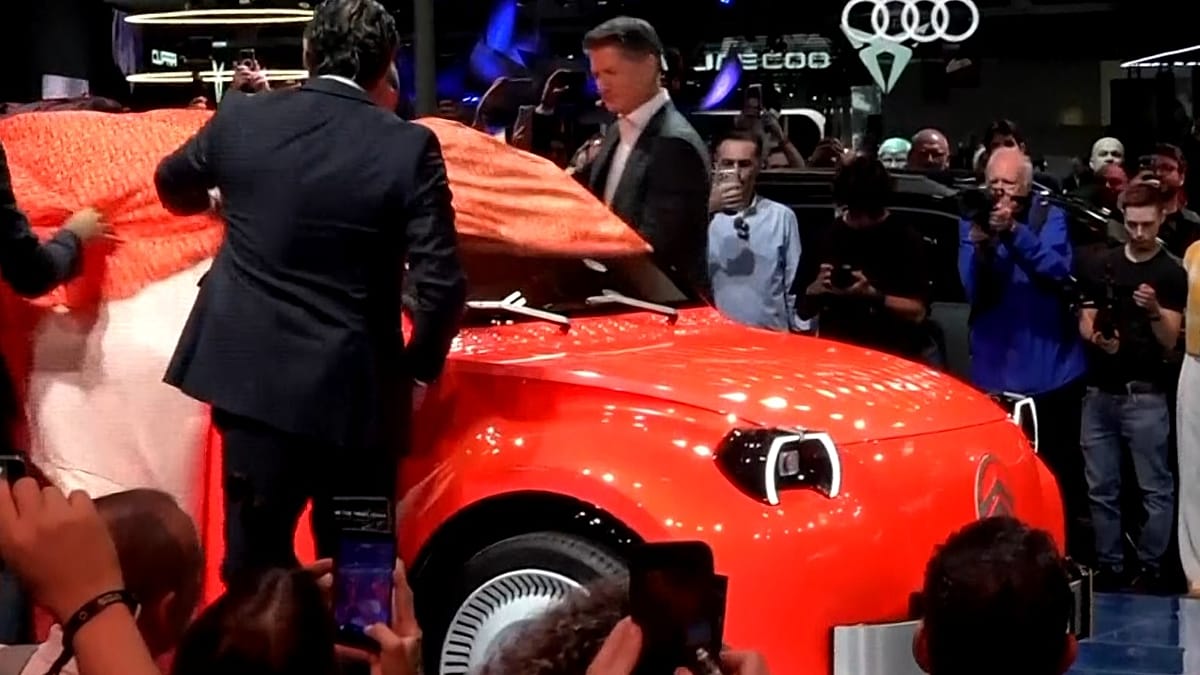
Citroën has taken the wraps off a new electric concept car that pays homage to one of its most beloved models, the 2CV. Unveiled in Paris on October 12, 2026, the vehicle reimagines the iconic Deux Chevaux for a new era, blending minimalist design with modern electric technology.
The concept measures 3.76 metres in length, making it slightly larger than the original but still firmly in the city-car segment. Its styling is deliberately simple, echoing the utilitarian charm of the 2CV while incorporating contemporary touches such as sleek LED lighting and a clean, uncluttered cabin. The interior is designed to be spacious and airy, with a focus on comfort and practicality rather than luxury.
Citroën says the concept is not just a styling exercise. The company has confirmed its intention to bring the model into production within the next two years, with manufacturing planned in Europe. The target starting price is around €15,000, which would position it as one of the most affordable electric vehicles on the market.
A nod to the past, a step toward the future
The original 2CV, produced from 1948 to 1990, was a symbol of French ingenuity and post-war mobility. It was known for its simple mechanics, rugged durability, and surprisingly comfortable ride. Citroën's new concept aims to capture that same spirit of affordability and practicality, but with the benefits of electric propulsion.
While the concept is clearly inspired by the 2CV, it is not a retro remake. The design is forward-looking, with a modern interpretation of the classic silhouette. The company has not released full technical specifications, but it has hinted at a range suitable for urban and suburban driving, which aligns with the car's intended role as a city runabout.
The announcement comes at a time when European automakers are facing intense competition in the electric vehicle market, particularly from Chinese brands that have been expanding their presence. According to recent data, EU electric car sales surged 63% in the first half of the year, with Chinese manufacturers gaining ground. Citroën's move to offer an affordable, European-built EV could help counter that trend.
Other European manufacturers are also making bold moves in the EV space. Jaguar's Type 01EV represents a radical departure for the British brand, while Mercedes has seen a drop in global sales as EV demand hits record levels. Citroën's approach is different: instead of chasing premium margins, it is targeting the mass market with a low-cost, no-frills electric car.
European production and affordability
Producing the car in Europe is a key part of the strategy. It not only supports local manufacturing jobs but also helps avoid import tariffs and reduces the carbon footprint associated with shipping vehicles from Asia. The €15,000 price tag would make it one of the cheapest EVs available in Europe, undercutting many rivals.
However, achieving such a low price will be challenging. Battery costs remain a significant portion of an EV's total cost, and European labour costs are higher than in many other regions. Citroën will need to find innovative ways to reduce costs without compromising on quality or safety.
The concept's minimalist design is likely part of that cost-saving strategy. By keeping the car simple and avoiding unnecessary features, Citroën can keep production costs down. The company has not yet announced which European plant will build the car, but it is expected to be in France or another EU member state.
If Citroën succeeds, it could have a significant impact on the European EV market. An affordable, practical electric car with the 2CV's heritage could appeal to a wide range of buyers, from young urbanites to older drivers nostalgic for the original. It could also help accelerate the transition to electric mobility in Europe, where renewable electricity growth has slowed despite a solar surge.
The concept will be showcased at upcoming motor shows and events, and Citroën is likely to gauge public reaction before finalizing the production version. The company has a history of turning concepts into reality, and with the 2CV's enduring popularity, there is strong potential for this revival to become a commercial success.
For now, the 2CV electric concept remains a vision of what could be. But if Citroën delivers on its promises, it could become a symbol of a new era of affordable, European-made electric mobility.



