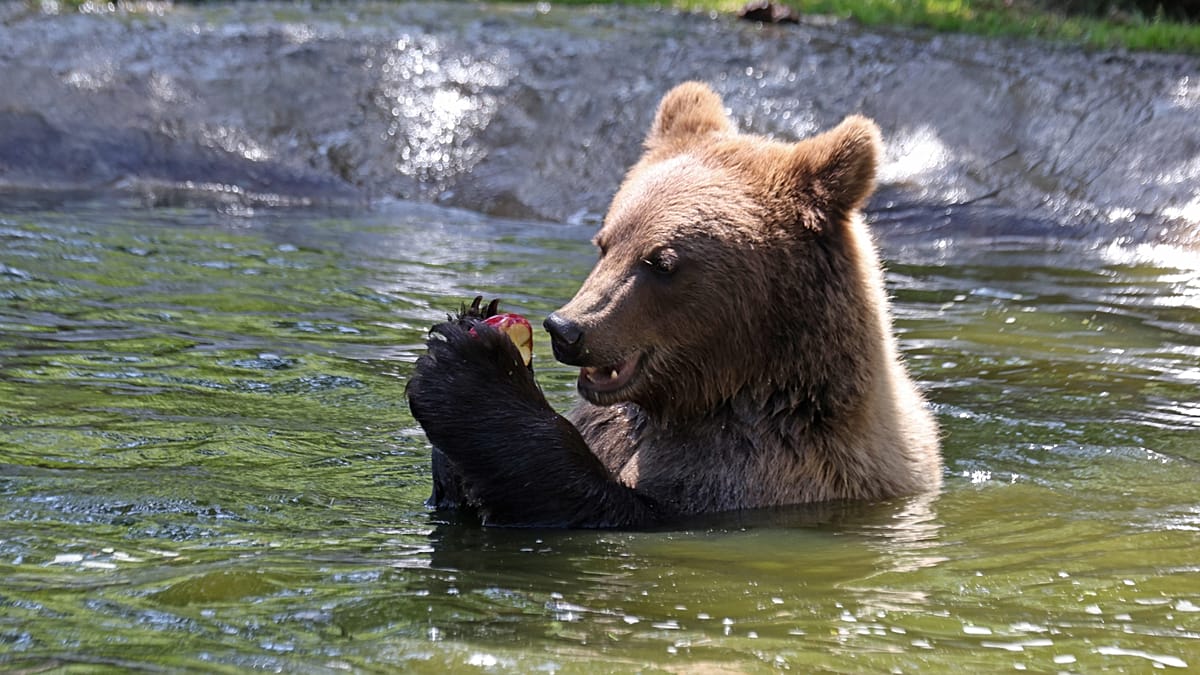
Brown bears in the Cantabrian Mountains are capable of a form of deception previously undocumented in their species, according to a study published in the Journal of Mammalogy. Researchers from Spain's National Museum of Natural Sciences (MNCN-CSIC), the FAPAS conservation group, several Spanish and European universities, and the Principality of Asturias found that a small minority of male bears deliberately leave territorial marks at heights that exaggerate their true size.
The study, which analysed 117,552 hours of camera-trap footage at 14 marking sites between 2021 and 2024, tracked 164 individual bears across the peaks of León, Asturias and Cantabria. Seven males — 4.3% of the sample — made markings unusually high by climbing trees or using other elevated platforms. Of these, 57.1% were adults and 42.9% were young bears.
How the deception works
Brown bears typically leave chemical and visual signals — such as claw marks, scent deposits and rubbed bark — at the maximum height they can reach while standing upright on their hind legs, roughly two metres. The researchers observed one visual signal at three metres, a height unattainable for any bear standing on the ground. A broken branch just below the mark indicated the animal had climbed to make it.
“For a non-dominant male or a young individual, this strategy could provide advantages because, by appearing larger, they could deter bigger rivals, reducing the likelihood of a direct confrontation, avoiding the costs it may entail and even increasing their reproductive opportunities,” said Vincenzo Penteriani, a researcher at the MNCN-CSIC. “It is a strategy that recalls cases of deception described in other mammals, but which until now had never been documented in bears.”
The findings suggest that brown bears can manipulate index signals — cues that were previously considered impossible to fake — adding a new layer of complexity to their communication system. The authors note that this behaviour is rare and confined to specific areas, so they caution against branding Ursus arctos a dishonest species as a rule.
“Our work highlights a fascinating behavioural capacity in bears that justifies carrying out more observational and experimental studies,” Penteriani added.
Spain's two brown bear populations — the Cantabrian and the Pyrenean — now number more than 400 animals after teetering on the brink of extinction in the 1970s and 1980s. Although still classified as endangered, they have moved out of the critically endangered category thanks to decades of conservation efforts. The study's findings add a new dimension to understanding how these recovering populations interact in the wild.
This research also echoes broader questions about animal cognition and deception. Similar strategies have been observed in other mammals, such as misleading signals in wildlife, but the bear study is the first to document such behaviour in a large carnivore. The team plans to expand their monitoring to see if the deceptive marking occurs in other bear populations across Europe.