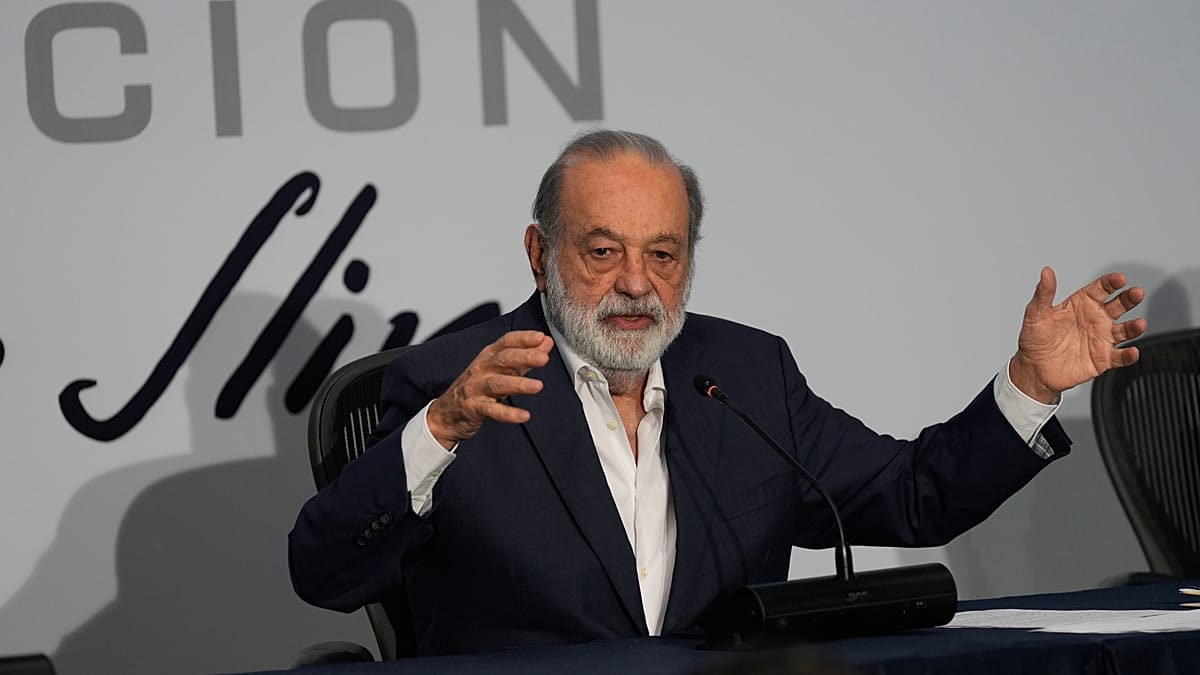
Carlos Slim Helú, Mexico's wealthiest individual with an estimated fortune of $125bn, has declared that the crisis at state-owned oil company Pemex represents the country's most pressing challenge. Speaking at his annual press conference, the 86-year-old tycoon highlighted Pemex's plunging production, insufficient investment, and debt of approximately $85bn (€73bn) as critical weaknesses.
Pemex ended 2025 with losses of roughly $2.5bn (€2.148bn), despite aggressive financial support from the government. The company's struggles have long been a drag on Mexico's economy, and Slim's remarks underscore the urgency of addressing its structural problems.
Slim's Assessment and Investment Plans
During the press conference, Slim praised the economic stewardship of President Claudia Sheinbaum, while sharply criticizing Moody's decision to downgrade Mexico's sovereign debt rating. He argued that Pemex's priority should be to increase oil production, a move he believes would stabilize the company and reduce its reliance on state bailouts.
The billionaire also announced plans to invest around $5bn (€4.3bn) this year, though he did not provide specific details on where those funds would be directed. His comments come as Mexico's economy faces headwinds from global energy market volatility and domestic fiscal pressures.
For European readers, the Pemex crisis offers a cautionary tale about the risks of over-reliance on state-owned enterprises in strategic sectors. Similar debates have emerged in Europe, where governments grapple with the balance between public control and market efficiency in energy, transport, and telecommunications. The situation also echoes challenges faced by BP and other European energy giants as they navigate debt and transition pressures.
Mexico's oil industry has been a cornerstone of its economy for decades, but declining reserves and underinvestment have eroded its competitiveness. Slim's call for a production-focused strategy mirrors arguments made by some European policymakers who advocate for boosting domestic energy output to reduce import dependence.
The broader implications for Europe are indirect but significant. Mexico is a key trading partner for the EU, and instability in its energy sector could affect supply chains and investment flows. Moreover, the debate over state intervention in energy markets resonates with ongoing discussions in Brussels about the future of the European Green Deal and energy security.
As Slim's annual press conference drew attention, his critique of Moody's rating action highlights the interconnectedness of global financial markets. European investors with exposure to Mexican debt or energy assets will be watching closely, as will analysts tracking the health of emerging-market economies.
In a world where energy transitions are reshaping economies, Mexico's struggle to modernize Pemex serves as a reminder that even resource-rich nations must adapt or face persistent crises. For Europe, the lesson is clear: strategic investment and governance reform are essential to avoid similar pitfalls in critical industries.