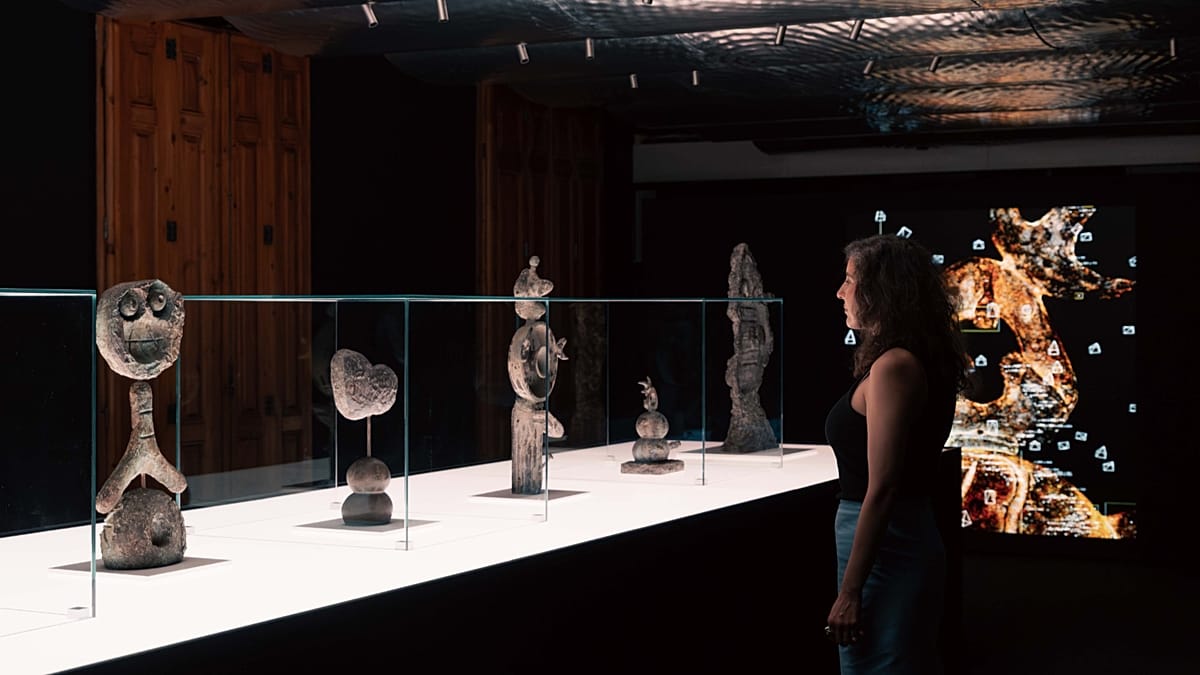
In Barcelona, a new exhibition at Antoni Gaudí's Casa Batlló is using artificial intelligence, high-resolution photogrammetry, and 3D scanning to uncover the hidden connections between three of Catalonia's most influential creative figures: architect Antoni Gaudí, artist Joan Miró, and photographer Joaquim Gomis. Titled Gaudí–Miró–Gomis: Deconstructed, the show reimagines an earlier exhibition by the Fundació Joan Miró, expanding the dialogue between these artists with immersive digital installations.
While Gaudí and Miró are household names, Gomis remains far less known. Yet his photographs, taken in the 1940s and 1950s, were instrumental in shaping how later generations understood Gaudí's radical architecture. At a time when parts of Barcelona's artistic establishment dismissed Gaudí's work as eccentric, Gomis—a modernist and close friend of Miró—recognised its significance. His camera captured the architect's extraordinary forms, textures, and details, preserving them for posterity and influencing how the world would come to appreciate Gaudí's vision.
Digital Archaeology Meets Art History
The exhibition, housed on the newly restored third floor of Casa Batlló, was developed in collaboration with the Fundació Joan Miró and creative studio Tomorrow Bureau. Co-curator Joana Seguro, artistic director of Casa Batlló Contemporary, explained that the project began with a simple question: what was the impact of Casa Batlló on Miró's work? The answer led to a re-examination of Gomis's archive and the creation of digital artefacts that allow visitors to explore the artworks in unprecedented detail.
Tomorrow Bureau used high-resolution scans of Miró's bronzes and etchings to create digital models that can be rotated and examined from any angle, revealing tool marks, weathering, and other details invisible to the naked eye. The same technology was applied to Gomis's photographic archive, which has been digitised and turned into a living database. Using AI, the team generated new digital pieces that reinterpret Gomis's images, creating a dynamic, evolving visual experience.
Seguro emphasised that the digital and physical works are in balance. Conservation and gravity impose limits on how the original pieces can be displayed, but the digital artefacts offer freedom. Visitors can spin the sculptures around, zoom into details, and explore the works as if they were archaeologists. The exhibition also features a carousel of Gomis's entire digitised archive, much of which was previously inaccessible even to researchers.
The show includes original etchings and bronzes by Miró, alongside Gomis's photographs of Gaudí's buildings. Soundscapes and set design by Tomorrow Bureau create an immersive environment that encourages visitors to appreciate the connections between the three artists in a new way. Seguro noted that Miró, as he moved away from painting and towards three-dimensional forms, looked to Gaudí's nature-inspired shapes for inspiration. Miró even created a series of etchings titled Gaudí, further cementing the link.
For those interested in how digital technology is transforming cultural heritage, the exhibition offers a compelling case study. It also resonates with broader European conversations about the role of digital tools in preserving and interpreting art, much like the OmnesViae project that maps Roman roads, or the ongoing debates about the digital euro.
Gaudí–Miró–Gomis: Deconstructed runs at Casa Batlló in Barcelona. It is a reminder that even the most celebrated artists are part of a network of influences and collaborations, and that new technologies can help us see those connections more clearly.