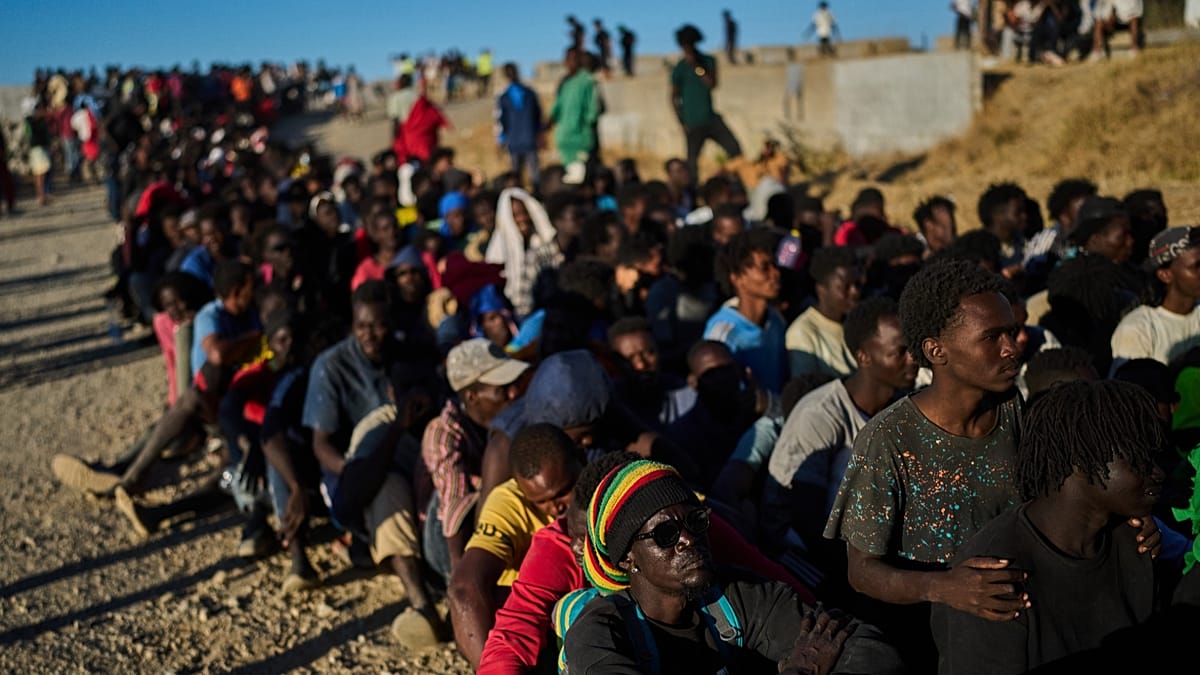
The head of Ceuta's regional government has called for the creation of a detention center to hold and expel migrants who remain in the Spanish enclave after last month's unprecedented border breach. Juan Jesús Vivas, leader of the conservative People's Party (PP) in Ceuta, said the facility is needed urgently to remove migrants from the streets and speed up deportation proceedings.
According to Spanish government figures, around 72,000 people crossed into Ceuta from Morocco on 30-31 July, in a chaotic and deadly rush. Madrid says some 70,000 have since returned to Morocco, but thousands remain, including hundreds of unaccompanied children who cannot be summarily deported under Spanish law.
Vivas estimated that between 8,000 and 11,000 migrants are still in Ceuta, far higher than the government's figure of about 2,500. He described the situation as "unsustainable" and insisted that migrants "are not in our streets" and that expulsion proceedings must be handled "with greater speed and ease."
The enclave, home to about 84,000 people, has seen its resources overwhelmed. Migrants struggle to access food, water, shelter, and sanitation. On Sunday, thousands of residents protested against the handling of the crisis, saying Ceuta has been left insecure and abandoned.
Political clash over minors
The fate of the unaccompanied children has sparked a political battle between Spain's leftist central government and regions governed by the PP and the far-right Vox party, which have resisted taking in minors under existing legal provisions. The central government's minister for territorial policy, Ángel Víctor Torres, assured Ceuta's population that police and troop numbers have been increased, including a 40% boost in Civil Guard presence. He said reuniting the children with their families is "the priority," but did not mention expulsions.
The crisis has deepened questions about Prime Minister Pedro Sánchez's role in the EU, as Brussels weighs new aid for Ceuta. The EU's anti-smuggling law remains stuck, complicating a coordinated response.
Preparing for another surge
Ceuta remains on alert amid fears of a new mass crossing on 15 August. A call circulating on social media has prompted authorities to step up preventive measures. The Civil Guard has temporarily suspended new leave, holidays, and licenses for officers in Ceuta and Melilla, and the Ceuta Garrison has cancelled military leave from 13 August until further notice.
These measures reflect the high level of alert less than two weeks after the record influx. Authorities are trying to prevent a repeat of the events that pushed the enclave's services to the limit. Reports of rapes of migrant girls have added to the urgency, and the spread of AI fakes and old clips has muddied coverage of the border crossing.
Meanwhile, the mayor of Ceuta has urged the EU to deport migrants, and protests have escalated as Madrid faces mounting pressure over migrant minors. The situation remains tense, with no clear resolution in sight.