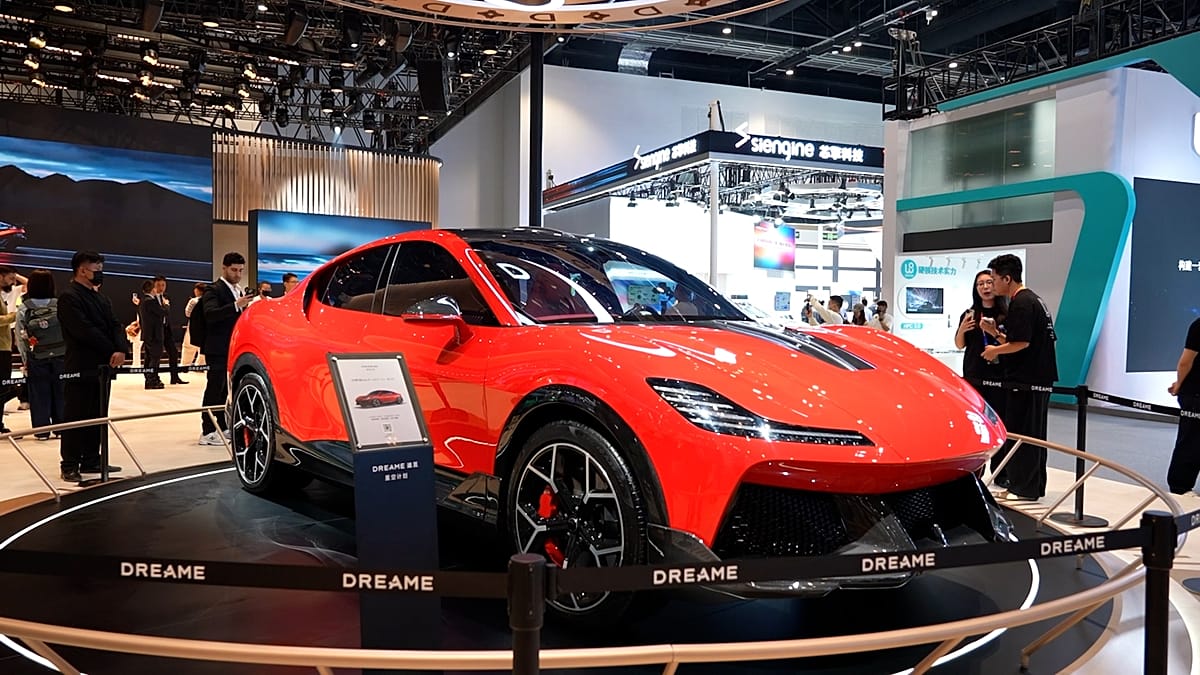
Auto China 2026, held across two sprawling venues in Beijing, has underscored the accelerating shift in global automotive dynamics. The event, covering a record 380,000 square metres, drew over 1,450 vehicles, including 181 world premieres and 71 concept cars. Under the theme “Lead the Era, Intelligent Future,” the conference highlighted China's aggressive push into electrification and vehicle intelligence, with European buyers increasingly in focus.
Chinese manufacturers dominated the exhibition floor. BYD presented its full portfolio—Dynasty, Denza, Yangwang, and Fangchengbao—alongside dedicated booths for its Flash Charge and Sky Eye technologies. Chery grouped its iCAR, EXEED, Jetour, and Zongheng brands, unveiling the EXEED EX7 in fully electric and range-extended variants priced between 194,900 and 258,900 yuan (roughly €25,000–€33,000). Geely showcased its All-Domain AI 2.0 and Safety 2.0 systems, while Xiaomi displayed its production lineup and the Asian debut of its Vision Gran Turismo concept.
Global heavyweights including BMW, Mercedes-Benz, Audi, Toyota, Volvo, and Ford also presented flagship models, but the spotlight remained on Chinese brands. Their growing export orientation, leveraging strengths in batteries, software, and connected services, is reshaping competition in Europe.
European Market Penetration
According to Georg Mrusek, automotive and China expert at management consultancy Horváth, “Every second European consumer is open to buying a Chinese car as the next car.” Horváth's analysis shows Chinese passenger-car market share in parts of Europe already above 10%—notably in Norway, the United Kingdom, and Italy. Battery electric vehicles (BEVs) from Chinese brands account for roughly 14% of the European BEV market.
Mrusek expects the Chinese share in Europe to reach 15–25% within four to five years. If current trends continue, Chinese brands could capture more than 30% of the European market over the next decade, provided they address after-sales, localisation, and regulatory challenges. This projection comes amid broader geopolitical tensions, including the US-Iran talks stalling and rising oil prices, which could affect European energy costs and consumer spending.
European markets should prepare for intensified competition on price, features, and digital services. Chinese automakers are not just selling cars but integrated digital platforms. “Automotive manufacturing is no longer just about the car. The car is becoming a technology platform that connects people’s lives,” said James Pearson, founder and CEO of advertising agency Lionheart Global. He added that legacy manufacturers must keep pace as Chinese cars rapidly integrate AI, services, and broader ecosystems.
This digital integration aligns with Europe's own AI dilemma, as the EU seeks to retain its industrial giants while facing competition from Chinese tech firms. The rise of cost-effective AI models, such as those from DeepSeek V4, further underscores the technological race.
Auto China 2026 opens to the public on April 28. The show alternates annually between Beijing and Shanghai, but its implications for Europe are clear: Chinese automakers are rewriting the rules of the car market, and European consumers are taking notice.