China's economy grew at its slowest pace in more than three years during the second quarter of 2026, official data showed Wednesday, as persistent weakness in domestic demand and a prolonged property downturn offset a surge in exports. The 4.3% year-on-year expansion fell short of market forecasts and marked a sharp deceleration from the 5% growth recorded in the first quarter.
The figures underscore the deepening imbalances in the world's second-largest economy, even as exports—particularly of electric vehicles, semiconductors, and other high-tech goods—continued to boom. Lynn Song, chief economist for Greater China at ING Bank, noted in a research note that this was "the slowest growth in any quarter since the lockdown-impacted fourth quarter of 2022."
Exports Surge, Domestic Demand Stalls
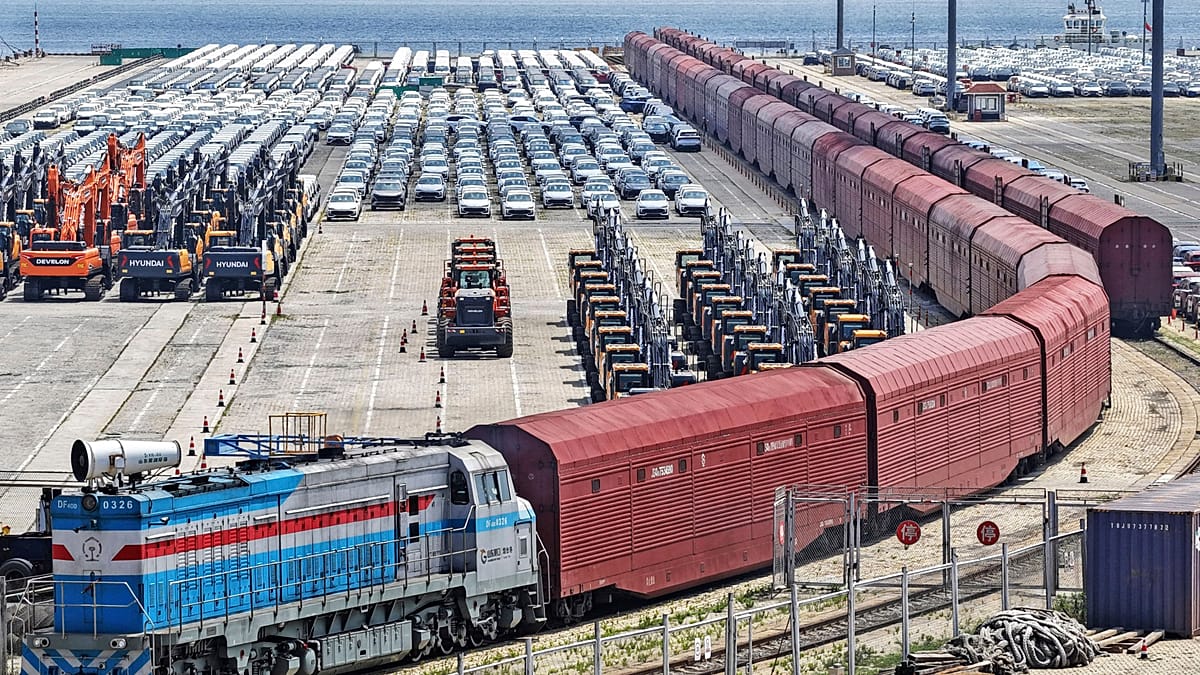
Exports rose 17.6% in the first half of the year compared with the same period in 2025, and jumped 27% in June alone, according to customs data. The artificial intelligence boom and robust global demand for Chinese-made electric vehicles were key drivers. However, the export-led growth model is increasingly seen as unsustainable, drawing complaints from trading partners—including the European Union—over what they view as heavy state subsidies that lead to oversupply.
The EU has already signaled it may impose unilateral trade measures against China before an October deadline, as tensions over market access and industrial policy escalate. The bloc's concerns mirror those of other economies that have criticized China's record global trade surplus of $1.2 trillion (€1.05 trillion) last year.
Domestically, consumer spending showed only tentative signs of recovery. Retail sales rose 1.0% in June from a year earlier, rebounding from a decline in May and beating expectations, according to the National Bureau of Statistics. Sales of communication equipment and cosmetics were strong, but purchases of cars and other big-ticket items remained weak. Industrial production exceeded expectations, rising 5.3% in June from a year earlier, driven by stronger manufacturing output.
Structural Imbalances Deepen
Economists warn that China's growth model is becoming increasingly unbalanced. Heavy state support and private investment are pouring into frontier technologies such as AI, computer chips, and robotics, while lower-value manufacturing and job-creating service industries languish. "China's growth model has become increasingly imbalanced," said Eswar Prasad, a professor of economics and trade policy at Cornell University. "Substantially increasing domestic demand will be tough as confidence remains weak."
Mao Shengyong, deputy head of China's National Bureau of Statistics, acknowledged that the imbalance between strong supply and weak demand "remains acute" at home, given the increasingly unstable and uncertain global situation. He said China would focus on "higher-quality economic growth," build a robust domestic market, and offer support to keep employment stable.
Wei Li, head of Multi-Asset Investments at BNP Paribas Securities (China), described the current period as a "significant transition" for the Chinese economy.
Growth Targets and Outlook
For the full year 2026, Chinese leaders have set a growth target of between 4.5% and 5%, slower than last year's 5%. Overall economic growth for the first half of the year stood at 4.7%, according to the data released Wednesday. The International Monetary Fund recently raised its forecast for China's annual growth by 0.2 percentage points to 4.6%, but expects the economy to expand by just 4.1% in 2027.
The slowdown comes as European policymakers watch closely, given the continent's deep trade and investment ties with China. The EU's own economic challenges—including sluggish growth in Germany and France—make the stability of its largest trading partner a matter of direct concern. As Europe debates the future of its single market and its strategic autonomy, China's internal struggles serve as a reminder of the risks of over-reliance on export-led growth.