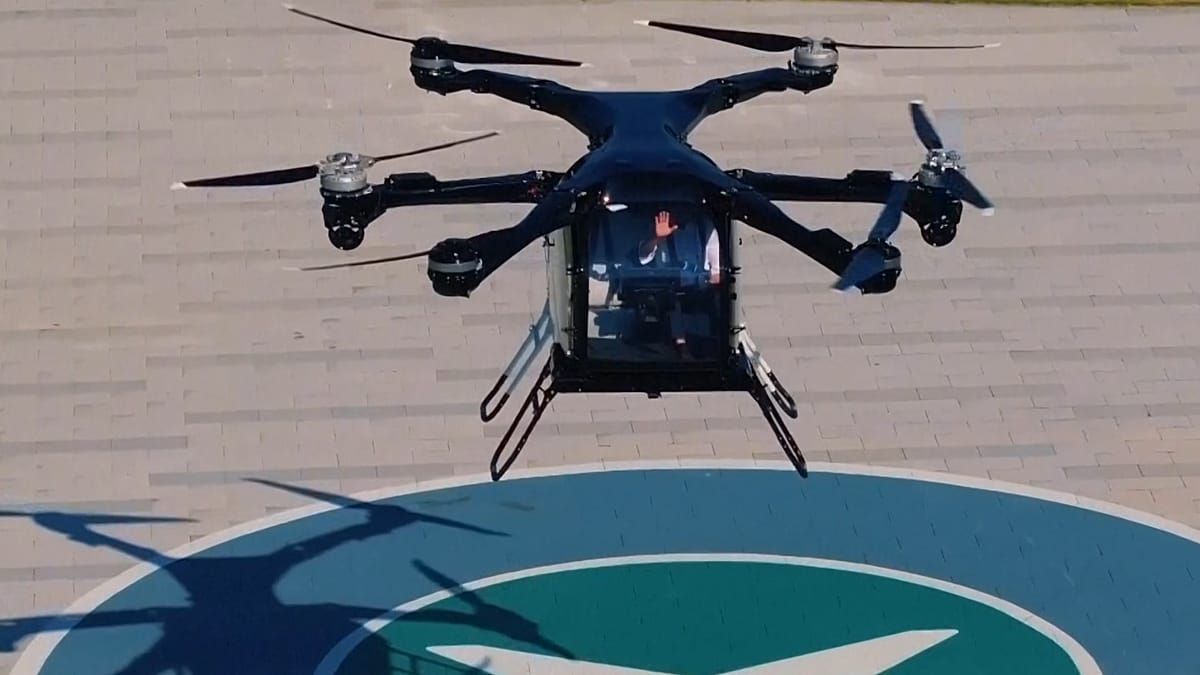
Chinese electric vehicle manufacturer Xpeng has presented a modular flying car and a humanoid robot at an event in Munich, signalling its ambition to expand beyond conventional automobiles. The company stated that both products could reach mass production before the end of 2026.
The flying car, which Xpeng calls a "modular flying vehicle," consists of a ground module and an air module that can separate. The ground module functions as an electric van, while the air module detaches to become a passenger drone. The vehicle is designed for short-distance urban flights, aiming to bypass traffic congestion.
Xpeng also showcased a humanoid robot named Iron, which the company says can perform household tasks and assist in industrial settings. The robot stands 1.7 metres tall and weighs 80 kilograms, with dexterous hands capable of handling objects weighing up to 10 kilograms.
European Context and Regulatory Hurdles
The debut in Munich, a city already home to BMW and a hub for automotive innovation, underscores Xpeng's interest in the European market. The company already sells electric cars in several European countries, including Norway, Sweden, Denmark, and the Netherlands. However, bringing a flying car to European skies faces significant regulatory obstacles.
The European Union Aviation Safety Agency (EASA) has been developing rules for urban air mobility, but certification for passenger-carrying drones remains a work in progress. Xpeng will need to navigate national aviation authorities in each member state, a process that could take years. Germany's Luftfahrt-Bundesamt, for instance, has yet to approve any commercial flying car operations.
This development comes as EU-China trade relations grow more complex. The European Commission has launched an anti-subsidy investigation into Chinese electric vehicles, which could lead to higher tariffs. Xpeng's flying car may face similar scrutiny if it seeks to enter the European market. For more on the broader trade dynamics, see our analysis on EU-China talks and trade tensions.
Meanwhile, Germany's top earners are increasingly considering leaving the country, as reported in a recent survey. This brain drain could affect the availability of skilled engineers needed for advanced mobility projects. Read more in our coverage of the survey.
Xpeng's humanoid robot also enters a competitive field. European companies like Boston Dynamics (owned by Hyundai) and domestic startups such as Germany's Franka Emika are developing similar robots for industrial use. The Chinese firm's claim of mass production by 2026 will test its ability to scale manufacturing and meet European safety standards.
The event in Munich reflects a broader trend of Chinese tech companies using European venues to showcase innovations, partly to build brand recognition and partly to signal readiness for global markets. However, the path from prototype to production is fraught with technical and regulatory challenges. Xpeng's flying car, in particular, will require not only certification but also infrastructure such as vertiports and air traffic management systems.
As Europe grapples with its own mobility transition, the arrival of Chinese flying cars adds a new dimension to the debate. Whether European regulators will welcome or restrict such vehicles remains an open question. For now, Xpeng's Munich debut is a bold statement of intent, but the real test lies in the years ahead.