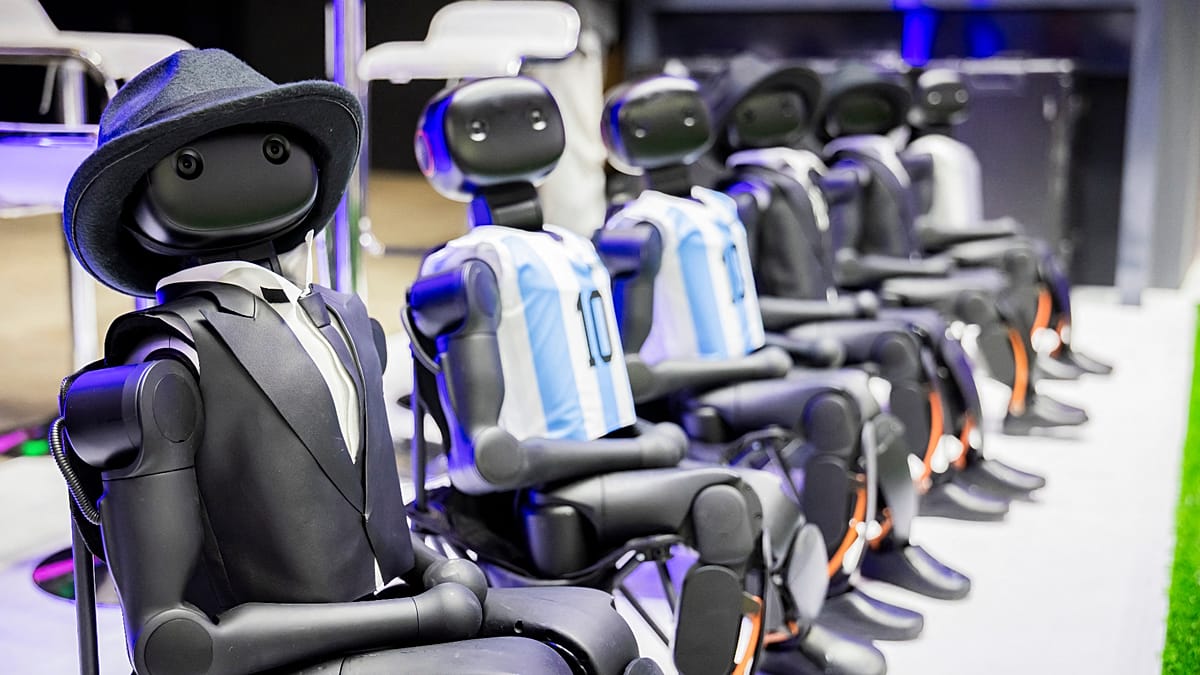
Berlin's Messe fairgrounds have once again become the epicentre of consumer technology as IFA 2026 opens its doors. Under the banner “The Future is Now,” more than 1,900 brands from 49 countries are presenting innovations that promise to reshape daily life. While mobility and AI services draw attention, the most striking transformations are unfolding in the domestic sphere.
Industry leaders are moving past the “smart home” concept—where devices simply respond to voice commands—towards what they call the “intelligent home.” These systems learn from behaviour, adapt to routines, and anticipate needs before a user even thinks to ask. For European households, this could mean a fundamental shift in how domestic chores and leisure are managed.
From reactive to proactive appliances
Haier Europe, a major player at the fair, is demonstrating how AI can take over not just the execution of tasks but also the decision-making behind them. Its latest washing machine uses an integrated camera to identify items placed in the drum. If a red sock slips into a load of whites, the machine alerts the user before the wash begins—potentially saving a favourite shirt from an unfortunate pink tint.
Neil Tunstall, CEO of Haier Europe, sees cooking as another area where this shift is most tangible. New ovens can recognise what has been placed inside and adjust temperature and timing automatically, removing guesswork for those unsure about settings or doneness. “The product now will do that for you,” Tunstall told Euronews. “And that hopefully means that we can actually enjoy eating much more at home.”
He added: “We are talking less about products, much more about experiences. We're talking less about consumers trying to think about things, and the products and the system itself thinking, making life much, much smarter.”
This philosophy extends beyond individual devices. US-based Cozyla is showcasing a connected-home ecosystem that coordinates family schedules, meal planning, and household tasks through interactive displays and digital calendars. Visitors can walk through a simulated day, from a kitchen that scans a recipe and suggests a shopping list to a living room where family members coordinate plans, ending with a bedtime routine that adjusts lighting and temperature.
Rest and recovery, enhanced
The intelligent home does not switch off at night. Hong Kong-based BestQi, founded in 2020, presents the AMADA Smart Adaptive Sleeping System—an adjustable bed with a mattress that uses sound and vibrations, controllable via an app. Each side can be configured independently, allowing couples to choose different positions, massage intensities, and programmes for sleeping, relaxing, or reading.
South Korea's Bodyfriend takes relaxation further with its Quantum Beauty Capsule, a full-body massage chair equipped with LED modules for the face and scalp. Another model, the Davinci AI, integrates a fingertip PPG sensor that measures heart rate, heart rate variability, and blood oxygen saturation. The system uses these biometrics to offer insights into stress levels and recovery status, turning a massage chair into a wellness diagnostic tool.
Entertainment: bigger, but also more mindful
For many, home relaxation means entertainment, and screens continue to grow. TCL, a leading exhibitor, is demonstrating a gaming setup that unifies screens, sound, and connected devices into a single immersive environment. But the company is also exploring the opposite direction: helping users disconnect. Its NextPaper technology mimics e-ink displays, reducing eye strain and minimising distractions, allowing for a more deliberate engagement with content.
This dual approach—enhancing immersion while offering respite—reflects a broader European conversation about digital wellbeing. As Norway tightens rules on smart glasses to protect privacy, manufacturers are increasingly aware that intelligent homes must respect boundaries.
The rise of autonomous vehicles in Europe, such as Waymo's planned robotaxi service in Munich, hints at a future where the home and mobility are seamlessly integrated. Similarly, magnetic micro-robots could one day revolutionise healthcare delivery within the home, while robotics in Ukraine underscores the broader technological shifts shaping the continent.
As IFA 2026 runs through the week, the message is clear: the home of the future is not just connected—it is cognitive. It learns, adapts, and ultimately aims to give residents more time for what matters most.