Scientists in China have unveiled a tiny soft robot that could one day change how drugs are delivered inside the body, how blood clots are treated, and how cancer is monitored. The device, named CiliaVine, uses magnetic fields to move thousands of microscopic hair-like structures, or cilia, in patterns that actively stir the blood around it.
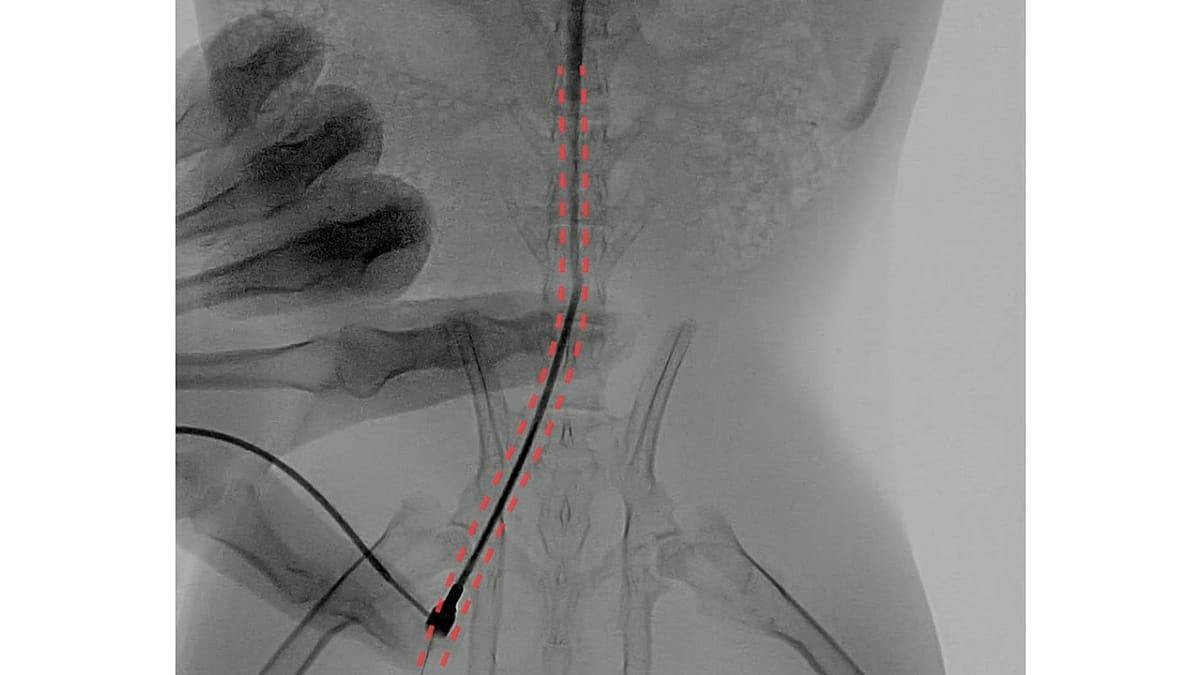
The robot is attached to a medical guidewire and can be inserted into blood vessels. By programming the magnetic field, the cilia can push fluids toward the vessel wall, pull them away, or create tiny vortices that mix the surrounding blood. This local control over blood flow is a departure from the natural laminar flow that keeps blood moving in smooth layers but makes it hard for drugs or cells to reach the vessel walls.
Improving drug delivery and clot dissolution
In laboratory models, the robot significantly boosted the amount of a model drug that reached the vessel wall. The total reaching the wall was 146% higher than when the drug was left to diffuse naturally, and 75% more penetrated 1 mm beyond the wall. This could be crucial for treating conditions like atherosclerosis, where medication needs to act directly on the vessel lining.
The team also tested the robot's ability to help dissolve blood clots. In a vessel model treated with the clot-busting drug tPA, clots dissolved in about 40 minutes when the robot was operating, compared with an average of 70 minutes without it. That nearly halved the time needed, which could be significant in acute stroke or heart attack scenarios.
Capturing cancer cells
Beyond drug delivery, the robot shows promise in cancer diagnostics. By coating the cilia with antibodies, the researchers were able to capture circulating tumour cells (CTCs) – rare cancer cells that have broken off from a tumour and entered the bloodstream. In tests at the Chinese PLA General Hospital, the robot captured CTCs from blood samples of all 23 liver cancer patients tested. The team also inserted the robot into living rabbits with liver tumours, where it operated magnetically for 20 minutes with no signs of inflammation or tissue damage in the examined vessel sections.
“This approach allows us to actively manipulate drugs and cells directly inside specific parts of the bloodstream, rather than relying on blood flow alone,” said the researchers, who come from the Shenzhen Institute of Artificial Intelligence and Robotics for Society, The Chinese University of Hong Kong, and the Chinese PLA General Hospital.
The technology has not yet been tested in human patients as a treatment or diagnostic tool. But the results, published in the journal Science Advances, suggest a future where medical robots can navigate the circulatory system to perform targeted tasks.
While the development comes from China, its implications are global. European researchers and medical device companies are already exploring similar micro-robotic approaches, and the potential for cross-border collaboration is clear. The ability to precisely deliver drugs could reduce side effects and improve outcomes for millions of patients across Europe, where cardiovascular diseases remain the leading cause of death.
As with any emerging medical technology, regulatory hurdles and safety testing will be essential before CiliaVine or similar devices reach clinical practice. But the concept of a tiny, controllable robot that can manipulate blood flow opens up new possibilities for treating diseases that have long been challenging to address.