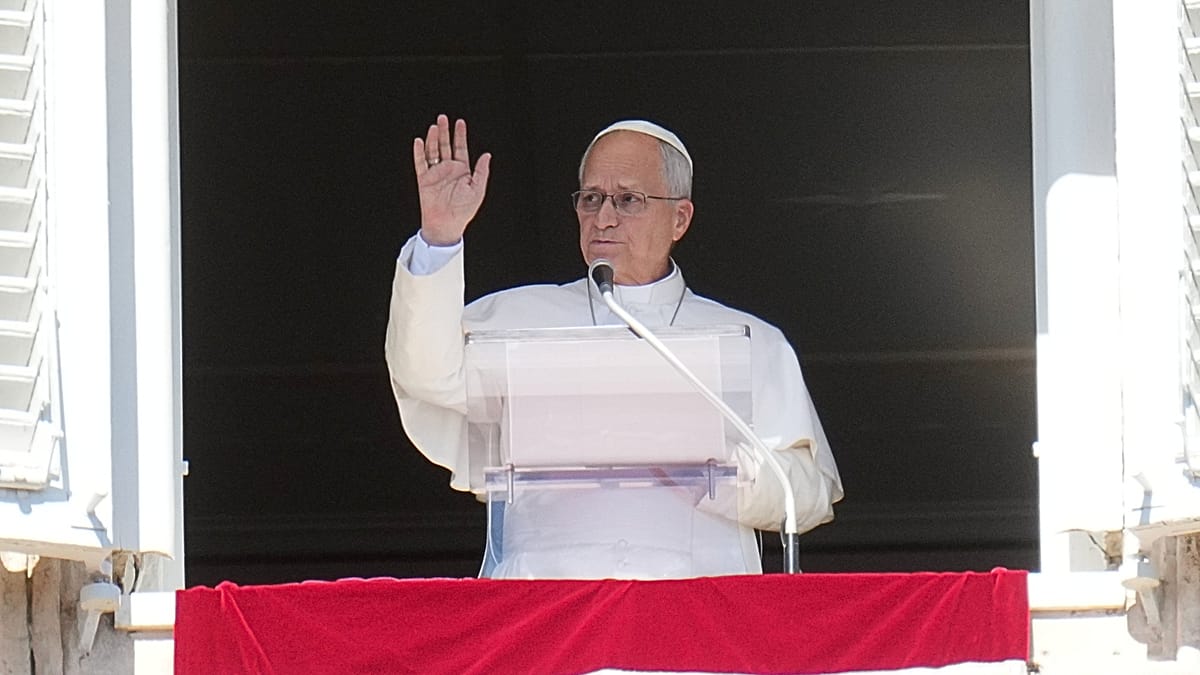
Pope Leo XIV is set to undergo surgery in the coming days to remove a localized nodule in his lung, a growth detected at a very early stage. The announcement, made during his weekly address in St Peter's Square on Sunday, marks the first significant medical event of his 17-month papacy and the first time a pontiff has personally disclosed such a health matter to the public.
The 71-year-old pontiff told the assembled faithful that doctors found the nodule during recent checkups and recommended intervention. “I have decided to undergo surgery to have it removed,” he said, without elaborating on the nature of the growth.
What is a pulmonary nodule?
Pulmonary nodules are small, round areas of abnormally dense tissue in the lungs. The vast majority are benign, causing no symptoms and often discovered incidentally during scans for unrelated conditions. However, a small percentage can indicate early-stage lung cancer, with risk factors including age, smoking, and family history.
If the nodule is malignant and caught early, the prognosis is generally excellent, and surgery alone may be sufficient, according to Stephen Liu, a lung cancer specialist at Georgetown's Lombardi Comprehensive Cancer Center, speaking to the Associated Press.
How common are they?
Lung nodules are extremely common, appearing in roughly one-third to one-half of all chest CT scans or X-rays. Their detection has risen as imaging technology improves and routine scans become more widespread. They fall into two categories: benign, often caused by infections like pneumonia or inflammation, and malignant, resulting from lung cancer or cancer that has spread from elsewhere.
The surgery and recovery
The operation to remove a nodule is typically performed under general anaesthetic, with the patient breathing through a tube. The Vatican has indicated that Pope Leo will undergo the procedure early this week and is expected to remain hospitalised for about a week afterwards. He will be treated at Rome's Agostino Gemelli Polyclinic, a private Catholic teaching hospital that has a dedicated apartment for pontiffs, complete with a meeting room for medical staff, a kitchen, a bathroom, rest areas, and a small chapel.
His immediate predecessor, Pope Francis, was treated at the same facility during a prolonged illness before his death in April 2025. The choice of Gemelli underscores the continuity of papal medical care in Rome.
Who governs while the pope is under anaesthesia?
The Vatican has no specific rules for transferring authority if a pope becomes totally incapacitated. Even while unconscious, Pope Leo remains the pope and retains his full authority. This was the case during Pope Francis's lengthy hospitalisations and those of St John Paul II, both of whom continued to make appointments and issue decrees from their hospital beds.
Medical advances and the longer lifespans of modern popes have, however, exposed this gap in church law. Calls have grown for the Vatican to establish clear protocols for a pope who is too ill to govern, a debate that this surgery is likely to revive. The issue touches on broader questions of leadership continuity in European institutions, much like the strains visible in eurozone bond markets when political uncertainty rises.
For now, the Vatican has given no indication that Pope Leo's condition is anything but routine. The early detection and the planned surgical response suggest a cautious, proactive approach. As the pontiff prepares for the operation, Catholics across Europe and beyond will be watching closely, mindful of the precedent set by his predecessors and the evolving expectations of transparency in the modern papacy.