Three prominent American news organisations — CNN, MSNBC and Politico — have announced they are suing the Trump administration over the revocation of their White House press credentials. In a joint statement issued on Monday, the outlets said they had notified the government of their intention to file a lawsuit to protect their First Amendment rights and to uphold the principle that the government does not decide what the press reports or publishes.
The move follows President Donald Trump's announcement on Friday that he was banning the outlets from the presidential residence, accusing them of distributing what he called "fake news." The White House subsequently withdrew the journalists' credentials "without notice or process," according to the outlets, because it "objected to our reporting."
"Left unchallenged, this threatens press freedom and the public's right to independent journalism free from government interference," the joint statement read.
A broader assault on press freedom
Trump did not specify which articles or broadcasts triggered the ban, but he said that "media Outlets shouldn't be able to constantly write or report FICTION and LIES when they're covering the President of the United States." The 80-year-old Republican, who has long had a fraught relationship with the mainstream media, warned on Friday that other outlets could face similar treatment, though he did not name them.
This is not the first time the Trump administration has taken aim at the press. During his second term, the administration has escalated its confrontations, pursuing legal action against media organisations and using regulatory levers to punish outlets. Trump has also personally attacked individual reporters, both in person and on social media, often in strikingly personal terms, including during his recent speech at the White House Correspondents' Association dinner.
The lawsuit is being filed in a US federal court, where the outlets will argue that the revocation of credentials violates the First Amendment, which guarantees press freedom. Legal experts say the case could set a precedent for how far a president can go in restricting media access to the White House.
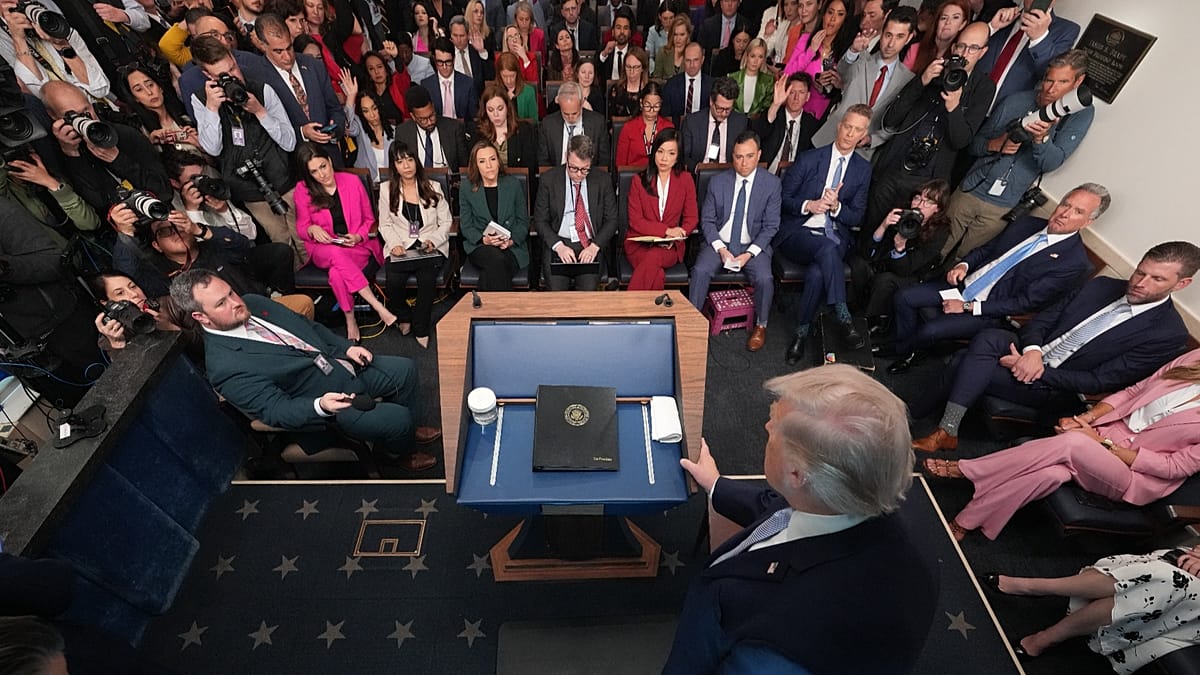
CNN had been scheduled to serve as the White House television pool on Monday — a rotating assignment in which one broadcaster films on behalf of all television outlets for the day. The revocation of its credentials disrupted that arrangement, underscoring the practical impact of the ban on the daily functioning of the press corps.
The White House has not yet responded to the lawsuit, but press secretary Karoline Leavitt defended the decision last week, saying the administration "will not tolerate lies and fabrications from outlets that masquerade as news organisations."
For European observers, the dispute is a reminder of the fragile nature of press freedoms, even in established democracies. While the US First Amendment provides strong legal protections, the practical ability of journalists to do their work depends on access to official sources and events. The outcome of this case could have implications beyond the United States, as governments around the world watch how the judiciary balances executive power against constitutional rights.
The lawsuit is expected to be filed in the coming days, and legal proceedings could take months. In the meantime, the three outlets will continue to cover the White House from outside the building, relying on pool reports and other means to gather information.
This is a developing story, and European Pulse will continue to monitor the legal battle and its implications for press freedom on both sides of the Atlantic.