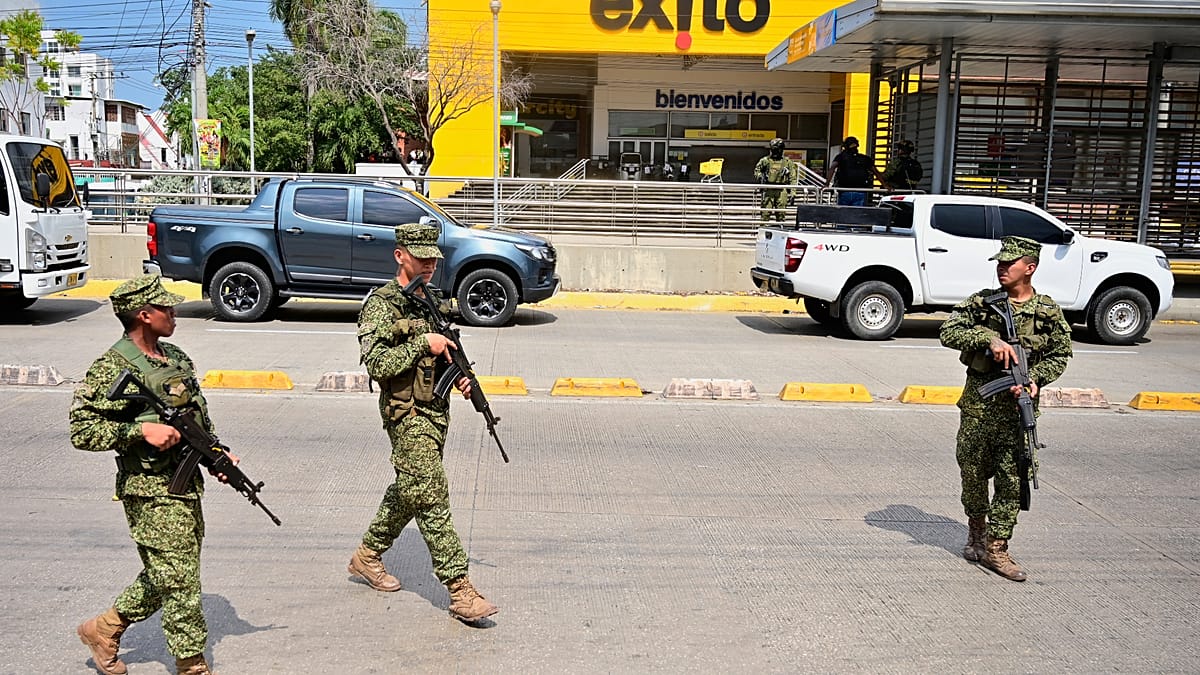
Colombian security forces launched a dramatic raid on a supermarket in the Caribbean port city of Cartagena in the early hours of Wednesday, bringing a tense hostage standoff to a close. The operation followed a day of negotiations that had already secured the release of ten people, according to authorities.
The crisis began when an attempted robbery of an armored vehicle went wrong, prompting the armed suspects to flee into a nearby supermarket and take dozens of people captive. Witnesses reported hearing several explosions before elite units moved into the building, with a police helicopter hovering low overhead to provide cover.
A city on edge
Cartagena, a UNESCO World Heritage site known for its colonial walls and vibrant tourism, was thrown into chaos as the standoff unfolded. Local residents and tourists alike were kept at a distance as police cordoned off the area. The supermarket, a popular shopping destination in the city, became the focal point of a national crisis.
President Abelardo de la Espriella traveled to Cartagena as the situation escalated, meeting with security commanders at the scene. His presence underscored the gravity of the incident, which dominated national headlines and drew comparisons to recent surges in armed violence across Colombia.
Authorities confirmed that roughly 30 people were initially taken hostage, including several elderly women who were among those released during the negotiations. The remaining 20 were still inside when the raid began, though early reports suggested that most, if not all, were safely evacuated.
Negotiation and force
The decision to storm the building came after hours of talks failed to secure the release of all hostages. Security forces, trained in urban counter-terrorism, executed the raid with precision, using controlled explosions to breach entry points. The sound of gunfire was reported but quickly subsided, indicating a swift resolution.
While the full details of the operation have yet to be released, officials praised the coordination between police, military, and intelligence units. The incident highlights the ongoing security challenges facing Colombia, where criminal gangs often resort to extreme measures to evade capture.
For Europe, the Cartagena crisis serves as a reminder of the volatility in Latin America, a region with deep economic and cultural ties to the continent. Spanish and other European tourists frequently visit Cartagena, and the incident has raised questions about safety in popular destinations. European security agencies may also take note of the tactical response, as similar hostage scenarios have occurred in European cities.
President de la Espriella, in a brief statement after the raid, thanked the security forces for their bravery and professionalism. He emphasized that the government would not tolerate such acts of criminality and vowed to strengthen security measures across the country.
The aftermath of the siege will likely involve a thorough investigation into how the robbers obtained weapons and whether they had accomplices. Meanwhile, the people of Cartagena are left to grapple with the psychological impact of a day that brought violence to their doorstep.
As Colombia continues to navigate its complex security landscape, incidents like this underscore the need for robust law enforcement and international cooperation. The European Union has previously supported Colombian peace and security initiatives, and this event may prompt renewed dialogue on security cooperation between the two regions.