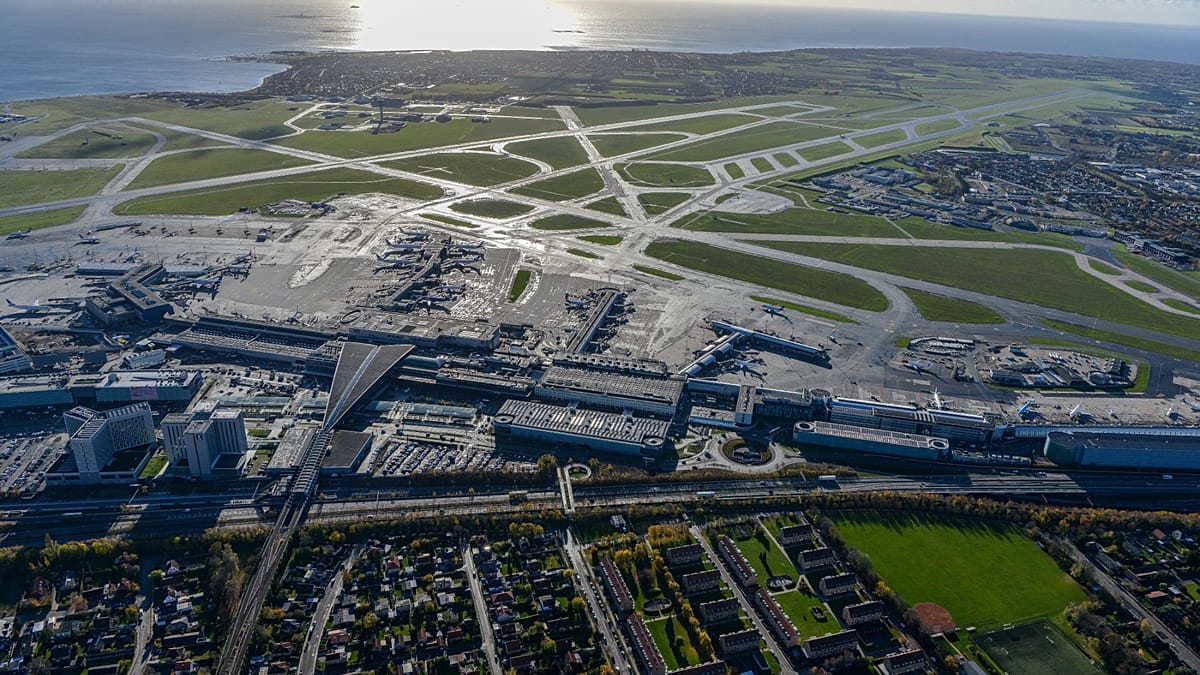
Copenhagen Airport has unveiled ambitious expansion plans that would lift its annual capacity to 55 million passengers – a jump of nearly 60% from current levels. The project, overseen by the Danish Agency for Planning and Rural Development, is designed to meet projected growth in global air travel while modernising facilities for safety, sustainability, and technology.
The airport operator, Copenhagen Airports A/S, said the plans align with forecasts from the International Air Transport Association (IATA), which expects worldwide passenger demand to double by 2050. The airport itself anticipates handling around 34.5 million passengers by the end of 2026 – 2.1 million more than in 2025. This summer, from July to September, it welcomed 9.9 million travellers, the busiest third quarter on record.
A small country's big reliance on air links
Christian Poulsen, CEO of Copenhagen Airport, stressed the strategic importance of the expansion for Denmark. “As a small country with an open economy, Denmark is deeply dependent on connections to the rest of the world,” he said. “They give Danish companies access to markets, bring tourists and investments to Denmark and connect us with the world. Therefore, we must already now create a flexible framework for the airport to develop in line with Denmark's needs.”
The economic stakes are considerable. By 2030, the airport and aviation sector are expected to generate 35,000 new jobs, boosting their total contribution to Denmark's GDP to between 60 and 90 billion Danish kroner (€8–12 billion).
To accommodate growth, the airport will add stands for larger long-haul aircraft in the northwest area and will relocate and shorten its transverse runway to free up space for development. Accommodating new generations of aircraft is a “core focus” of the plan, according to Copenhagen Airports A/S. These modern planes typically take up more space than older models, but they also carry more passengers, are quieter, and generally have a lower CO2 footprint.
Poulsen acknowledged the environmental trade-offs. “We are very aware that the many benefits of a strong airport come with a disadvantage for the environment,” he said. “Therefore, we must continue to find new ways to reduce our footprint. It is our responsibility to ensure that the increase in routes and passengers does not mean a corresponding increase in noise and pollution.”
To that end, the airport plans to expand and raise its noise barriers and is working on noise-absorbing cladding for buildings. The operator also emphasised that future design will keep taxiing distances as short as possible while engines are running, helping to limit air pollution.
The expansion comes as airports across Europe seek to balance growth with environmental concerns. Improving the passenger experience is also a key priority, with digital tools and streamlined processes playing a larger role. Copenhagen's plans reflect a broader trend in the region, where hubs are investing heavily to stay competitive in a rapidly evolving aviation market.
While the project is still in its planning phase, the Danish government's involvement signals strong political backing. The airport's ability to deliver on its promises will depend on careful execution and continued public support, but the direction is clear: Copenhagen is positioning itself as a major gateway for Northern Europe.