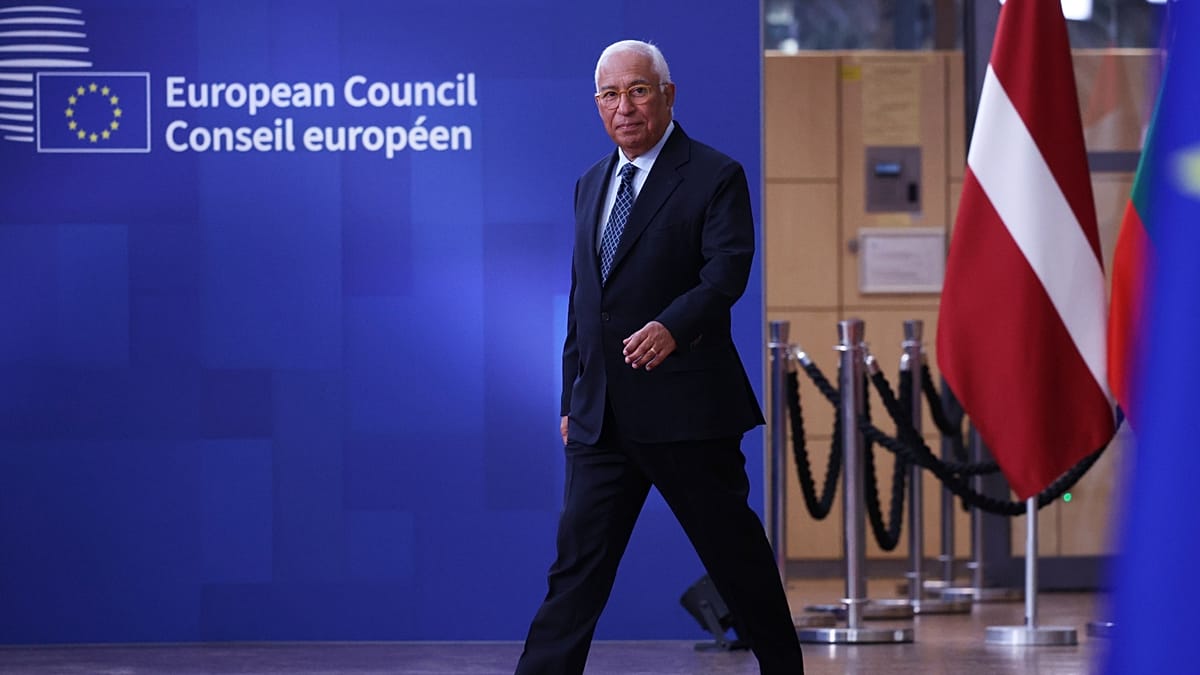
Can the European Union's 27 leaders set aside their red lines and reach unanimous agreement on the bloc's next long-term budget before the year is out? António Costa, the European Council president, is determined to find out.
Costa has embarked on a four-week tour of EU capitals to meet leaders in person and assess their appetite for compromise on the 2028-2034 multiannual financial framework. The tour, which will skip Sweden due to its upcoming general election, begins with talks in Bratislava with Slovakia's Robert Fico and in Tallinn with Estonia's Kristen Michal on Tuesday. Wednesday brings meetings with Latvia's Andris Kulbergs and Lithuania's Gitanas Nausėda, followed by Czech Prime Minister Andrej Babiš in Prague on Thursday.
The aim, according to a senior EU official, is to build a “coherent picture” of each national position and map a viable route to a final deal at the December European Council. Costa's team believes that if negotiations drag into 2026, the entire process could stall, leaving the seven-year budget unprepared to start on 1 January 2028.
“It's been quite comforting to see that this horizon has been well integrated by leaders and accepted by all as an imperative,” the official said, noting that France, which had previously resisted the December deadline, now fully supports it. “We need to hit the ground running in 2028.”
A budget of nearly €2 trillion
At the centre of the talks is the European Commission's draft budget, worth nearly €2 trillion – the largest in EU history. A compromise proposal tabled by Cyprus trimmed that figure by 2%, but it was immediately rejected by the so-called “modernisers” or “frugals”, a group of wealthy member states demanding sweeping cuts, particularly to agriculture and cohesion policy.
“These cuts are essential, regardless of how far we get on new own resources,” German Chancellor Friedrich Merz said last month, dismissing the draft as “not acceptable”. Merz is set to host a meeting of frugal leaders on Thursday.
Opposing them is the “Friends of Cohesion” coalition, a group of 17 countries that wants to increase funding for agriculture and cohesion, which they describe as “the most visible EU policies for EU citizens”. The first five leaders Costa will meet on his tour all belong to this camp.
So far, member states have only agreed on the broad architecture proposed by the Commission, which would allow greater flexibility to respond quickly to crises. The central questions – the overall size of the budget and how to finance it – remain unresolved.
Sweden, for instance, has called for a radical 20% cut, a position anathema to the Friends of Cohesion. Spain, meanwhile, has floated the idea of issuing joint EU debt, which the frugals reject outright.
Another fault line is the introduction of new own resources – EU-wide taxes designed to supplement national contributions. The Commission has proposed five such taxes, while the European Parliament has added three more. Diplomats concede that some combination of new taxes is now inevitable, given the scale of the EU's ambitions, including investments in cutting-edge technology, defence, and climate adaptation. The need to support Ukraine after its €90 billion loan runs out next year adds further pressure.
Yet each capital has its own view on the budget's size and the number of new own resources. Red lines have become the norm, with presidents and prime ministers – particularly those facing elections – wary of voter backlash.
“Leaders have been defending their national positions very assertively but with a very strong commitment to negotiations,” the senior official said. “We need to fill the gap between the positions and the commitment to have a deal by the end of the year.”
While all the competing demands have a “rationale”, the official acknowledged that it is unrealistic to expect them all to be met simultaneously. “We need a balanced outcome.”
Costa's tour will feed into the work of Ireland's EU Council presidency, which is set to present a revised negotiating box in October. Leaders will then debate the proposal face to face at a summit later that month.