The cruise industry has become a lightning rod for criticism in Europe, with protests at ports from Barcelona to Amsterdam targeting its environmental footprint and contribution to overtourism. But as the sector prepares for another busy season, its leaders argue that the industry's reputation is undeserved and that it is quietly transforming itself.
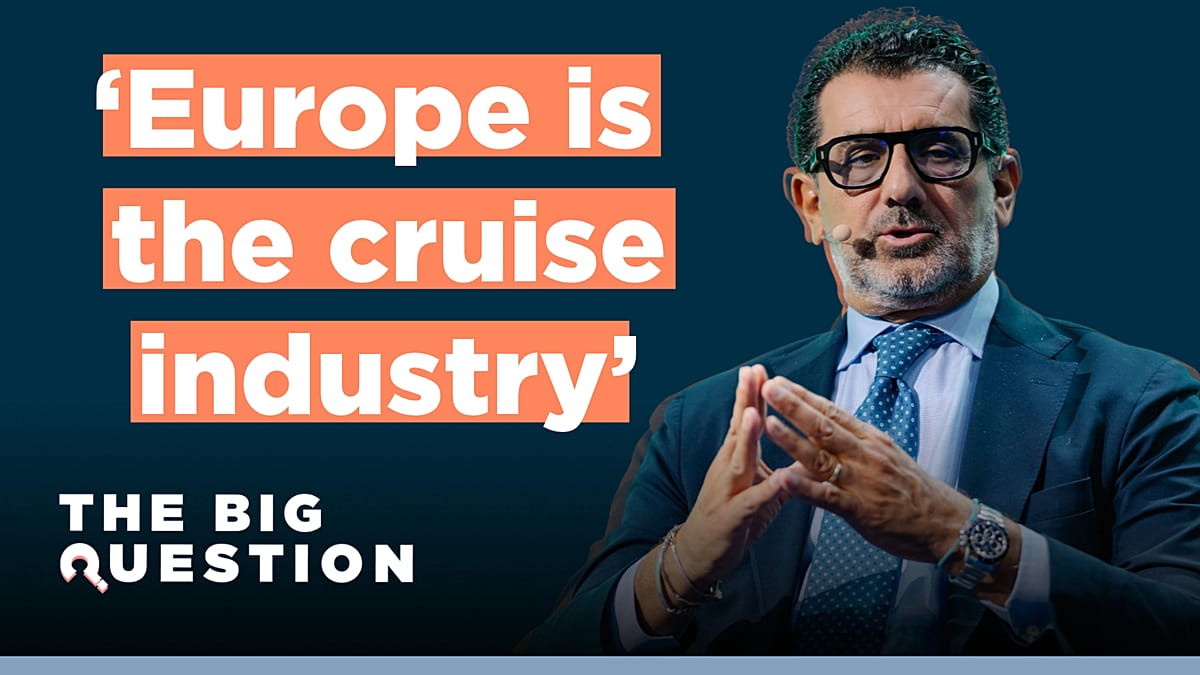
Gianni Onorato, CEO of MSC Cruises, sat down with The Big Question to make the case for an industry that, he insists, is far smaller than its critics assume. Cruises account for less than 2% of travel packages sold globally in 2025, he noted, and even in Barcelona—a city where anti-cruise sentiment runs high—passengers represent only around 3% of daily visitors.
That does not mean the industry is ignoring the concerns. Cruise lines are working to spread arrivals more evenly across the year and to introduce new destinations, easing pressure on hotspots. Unlike airlines, which confirm schedules less than a year ahead, cruise itineraries are set two years in advance, giving destinations time to prepare. “The predictability of cruises allows small family businesses to decide if they want to add, for example, more tables and seats in their restaurants or in their bars because they know that it's for sure that they will have these people coming,” Onorato explained.
Economic heft and environmental hurdles
The economic stakes are considerable. The cruise industry contributes €65 billion annually to the European economy and supports more than 445,000 permanent jobs across the continent, from shipyards in Italy and Finland to tour operators in Greece and Croatia. The sector's supply chain is deeply embedded in Europe, with the world's four major cruise shipbuilders based in the EU.
Yet the industry's environmental record remains its Achilles' heel. Critics point to the carbon emissions of large vessels and the local air pollution they generate in port cities. The most significant technological response has been the introduction of dual-fuel engines, which can switch between traditional marine fuel and cleaner alternatives such as liquefied natural gas or biofuel.
Progress, however, is slow. Of the 327 ships operated by members of the Cruise Lines International Association (CLIA)—which represents about 90% of global capacity—only 30 are equipped with dual-fuel engines, up from a single ship in 2018. The reasons are practical: affordable cleaner fuels are scarce, and ships have a lifespan of around 30 years, meaning fleet renewal takes decades.
Onorato remains confident that the industry will meet the EU's 2050 climate-neutrality target for maritime transport. He pointed to the MSC Euribia, which in 2023 completed a four-day voyage from Le Havre to Copenhagen using biofuel, achieving net-zero emissions when combined with other fuel-saving measures.
In the meantime, retrofits are reducing energy consumption on existing vessels. “The air conditioning on the ship today is through an HVAC inverter that gives the opportunity to automatically regulate the level of air conditioning according to the number of people present in the room,” Onorato said, highlighting just one of the innovations being deployed.
A younger, more diverse clientele
The industry's customer base is also changing. Once seen as a holiday choice for retirees, cruises are now attracting a younger demographic. “In the past, cruises had this perception for being for old people. While now, there is a much younger demographic. The average age is 35-54 and this is very good because this can ensure the future of this industry,” Onorato said.
Solo travellers are a growing segment, driven by safety considerations, while multi-generational holidays are increasingly popular, allowing families to enjoy separate activities as well as time together. These shifts are helping to broaden the industry's appeal and secure its long-term viability.
Growth, however, will be deliberately controlled. With only four major shipbuilders in Europe—in Italy, France, Germany and Finland—production capacity is limited, and demand is likely to outpace supply. Onorato sees this as a positive: “It means the industry has controlled growth—a good thing for investors and its long-term future.”
As the industry navigates its challenges, the question remains whether its reputation can be repaired. For Onorato, the answer lies in transparency and continued investment in cleaner technology. “We are part of the solution, not the problem,” he insisted, pointing to the industry's economic contributions and its commitment to sustainability.
Whether that message resonates with protesters in Barcelona or policymakers in Brussels remains to be seen. But with the industry's economic weight and its efforts to modernise, the debate over cruising in Europe is far from over.