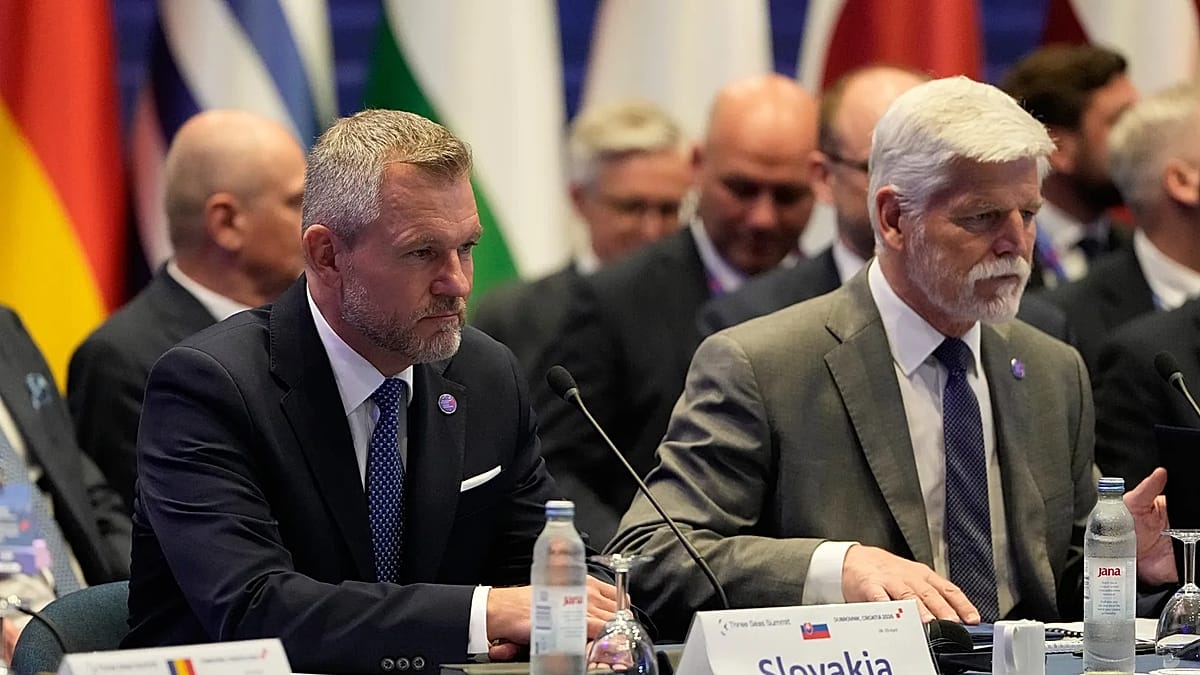
Czech President Petr Pavel has escalated a political standoff with Prime Minister Andrej Babiš by filing a competency lawsuit with the country's Constitutional Court. The dispute centres on Pavel's exclusion from the official Czech delegation to the upcoming NATO summit in Ankara, scheduled for 7–8 July at the Beştepe Presidential Compound.
Pavel, a former general who served in the Czech armed forces for over three decades, took office in March 2023 and has attended every NATO summit since. However, Babiš announced on Monday that the delegation would consist only of himself, the defence minister, and the foreign minister—leaving the president behind. The prime minister, who leads the right-wing populist ANO party and returned to power last year, dismissed suggestions that the decision was politically motivated. He described it as “purely practical,” noting that the government would need to defend its low defence spending and present budget plans at the two-day event.
Constitutional Clarity Sought
In a video statement released on Tuesday, Pavel confirmed he had filed the lawsuit to “clarify the powers of the president and the government” when representing the country abroad. “In this lawsuit, I ask the Constitutional Court to declare who can decide on the president's participation in the summit,” he said. The move underscores a broader tension between the head of state and the executive over foreign policy prerogatives, a question that has remained largely untested in Czech constitutional practice.
The 2026 NATO summit comes at a critical juncture for the alliance. Members committed at the Hague Summit last year to invest 5% of GDP annually on core defence and wider defence-and security-related areas by 2035. Speaking in Brussels last week, US Secretary of War Pete Hegseth acknowledged that while many countries had followed through, some “still need to do more.” The Czech Republic, which currently spends around 2% of GDP on defence, faces pressure to accelerate its commitments.
Babiš’s decision to sideline Pavel may also reflect domestic political calculations. The prime minister has carved out a confrontational relationship with the president, who has been a vocal advocate for robust NATO engagement and increased defence spending. By excluding Pavel, Babiš may be seeking to control the narrative around Czech defence policy at a time when the alliance is pushing for greater burden-sharing. The move has drawn criticism from opposition parties and constitutional experts, who argue that the president, as commander-in-chief, has a legitimate role in summit diplomacy.
The Constitutional Court is expected to fast-track the case given the proximity of the summit. A ruling in Pavel’s favour could set a precedent for future presidential participation in international meetings, while a defeat might further weaken the office’s influence. The outcome will be closely watched across Europe, as similar tensions between heads of state and governments exist in other member states, including Poland and Hungary.
For now, the Czech Republic’s representation at the Ankara summit remains uncertain. The dispute highlights the broader challenge of balancing executive authority with presidential prerogatives in a parliamentary system, especially on matters of national security and international alliances. As the NATO summit approaches, the court’s decision will shape not only Pavel’s role but also the country’s ability to speak with a unified voice on defence matters.