In the wake of repeated Russian incursions into Polish airspace, the Czech Republic has signalled its readiness to assist its northern neighbour. Defence Minister Jaromír Zůna and Chief of the General Staff Miroslav Hlaváč announced the offer during a press conference in Prague, stressing that any deployment of Czech forces would be contingent on Poland's specific needs as defined within NATO.
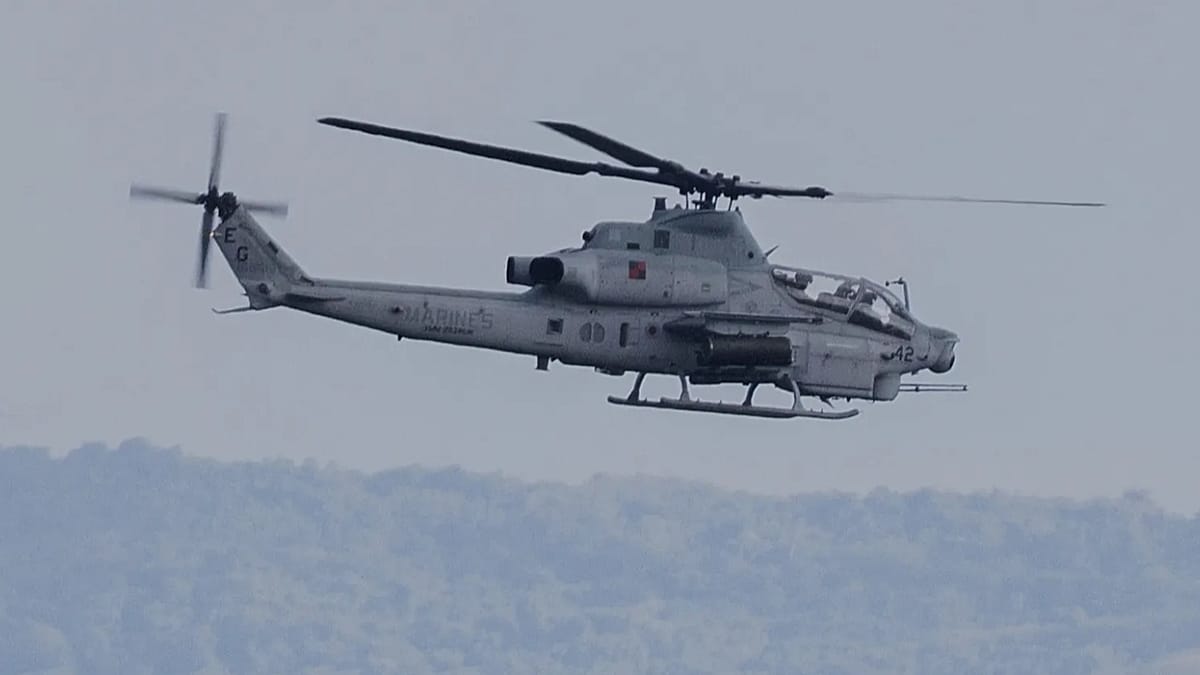
Zůna emphasised that bolstering the security of NATO's eastern flank remains a core mission for the Czech armed forces. "This is our priority," he said, referring to the Czech AH-1Z Viper attack helicopters currently stationed in Poland as part of existing allied deployments.
Chief of Staff Hlaváč detailed the military's preparatory work, noting that assessments of possible support options had already begun over the weekend. "We have prepared scenarios for how we could help. I will present them to the minister, and we will wait for a Polish request and respond to it," he explained.
What could Prague send?
While Prague has not yet specified which assets might be offered, the Czech military operates a range of air-defence systems. These include Israeli-made Spyder systems, which recently achieved initial operational readiness and are expected to reach full capability by 2028. Older Soviet-era Kub systems and Swedish RBS-70 and RBS-70NG short-range systems remain in service, alongside Swedish-built Gripen fighter jets that form a key part of the country's air-defence architecture.
The offer comes after a large-scale Russian attack on western Ukraine on 20 November, during which Russian weapons entered Polish airspace. Polish investigators later recovered debris from three Russian Kh-101 cruise missiles in the Lublin and Subcarpathian regions.
Prime Minister Andrej Babiš strongly condemned the violation and expressed solidarity with Warsaw. In a statement on X, he wrote: "The Czech Republic firmly supports its Polish friends and is ready, if necessary, to provide assistance and cooperation to the neighbouring state."
President Petr Pavel also voiced concern, warning that a similar incident could occur over Czech territory in the future. Hlaváč confirmed that the Czech military has established procedures for responding to such threats.
The incident has heightened tensions across the region, with other allies also responding to Russian provocations. Finland, for instance, recently summoned the Russian envoy over an airspace breach and a Baltic ship incident. The Czech offer underscores the broader European concern about Moscow's willingness to test NATO's resolve.
As the alliance continues to adapt to these challenges, the Czech Republic's commitment to collective defence remains clear. Whether Prague's support will be activated depends on Poland's formal request and the evolving security situation on the eastern flank.



