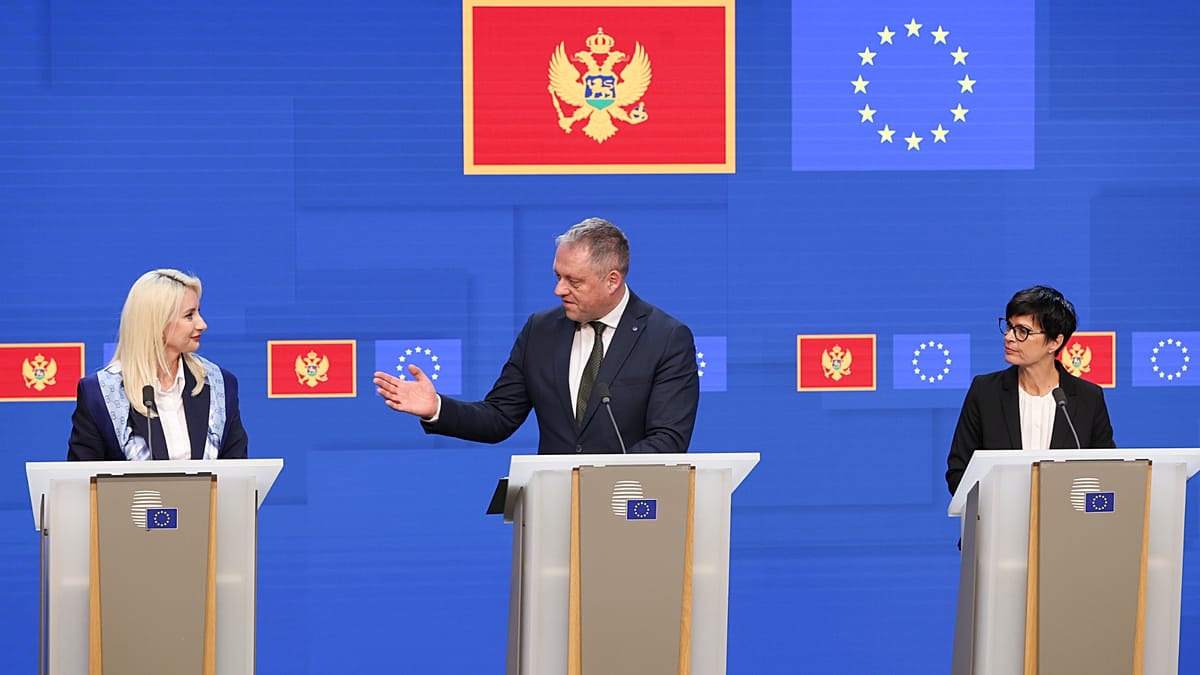
The European Commission has proposed that its new anti-backsliding safeguards continue to apply to Montenegro after the country formally joins the European Union. The move, embedded in the draft accession treaty, is designed to prevent future members from reversing reforms once they have secured membership.
Montenegro, widely seen as the frontrunner among Western Balkan candidates, is the first test case for tougher conditions aimed at avoiding a repeat of the rule-of-law disputes that have marked Hungary's relationship with Brussels under Prime Minister Viktor Orbán. The Commission's draft text, discussed by national representatives on Tuesday, introduces a post-accession monitoring mechanism as part of the so-called Chapter 35 provisions.
Under the original safeguards proposal, the Commission would oversee a candidate country during the gap between the conclusion of accession talks and its actual entry into the bloc. The aim is to stop newcomers from slowing down or reversing reforms once they have secured a political deal to close negotiations but are not yet members. The Commission would verify that the country is implementing all commitments made during the talks, report regularly to the European Parliament and the Council, and propose corrective action where necessary. As a last resort, it could even postpone the country's entry.
During discussions, several member states—notably Germany, France, and the Netherlands—pushed for extending this monitoring beyond accession. The Irish presidency, which holds the rotating EU Council chair, left the idea out of its draft position but kept the question open. Other countries, particularly members of the Friends of the Western Balkans group, questioned the added value, pointing out that existing tools such as rule-of-law reports and infringement proceedings already scrutinise member states. They asked how the monitoring would work, which areas would need extra attention after accession, and how to avoid duplicating existing mechanisms.
The Commission, however, considers it natural that the new safeguards come with monitoring of how they are applied. "In light of the period during which certain safeguard clauses will remain available after accession, the EU considers that a provision on post-accession monitoring should also be included in the Accession Treaty," reads the draft text, seen by Euronews.
Probation period and voting rules
Particularly relevant is the so-called institutional safeguard. It would place a newcomer on a sort of probation, during which violations of EU values and rules would be swiftly addressed, including through the suspension of voting rights for the most serious offences. The Commission's draft confirms the shortening of the probation period from 15 to 10 years, extendable by five more, as Ireland proposed. But it did not follow the Irish compromise on how the measure would be decided.
The original proposal relied on reverse qualified majority voting: a Commission proposal to trigger the safeguard would pass unless a qualified majority of member states voted against it. The Friends of the Western Balkans pushed back, arguing this gives the Commission too much power. As a compromise, Ireland proposed ordinary qualified majority voting, under which countries would have to approve the trigger rather than block it. The Commission, however, put reverse qualified majority voting back on the table.
The Irish presidency will now take over the discussion on Chapter 35 to seek a compromise. The outcome will shape not only Montenegro's path to membership but also the broader EU enlargement strategy, which has gained renewed urgency following Russia's invasion of Ukraine. Montenegro's president has set a target of EU accession by 2028, and the country's progress is being closely watched in the region.
The debate over post-accession monitoring reflects a deeper tension within the EU: how to balance the need for credible conditionality with the principle of equal treatment among member states. Some diplomats argue that the new safeguards are essential to protect the Union's values, while others warn that they could create a two-tier membership. The Commission's insistence on reverse qualified majority voting suggests it wants to retain a strong hand in enforcing the rules, even after a country joins.
For Montenegro, the practical implications are significant. If the safeguards are adopted, the country would remain under Commission oversight for up to 15 years after accession, with the possibility of having its voting rights suspended for serious breaches. That would be a unique arrangement, setting a precedent for future enlargements in the Western Balkans and beyond.
The next steps will be crucial. The Irish presidency is expected to broker a compromise in the coming weeks, with the aim of finalising the negotiating framework before the summer. Meanwhile, Montenegro continues to implement reforms, including in the areas of rule of law and fundamental rights, as it seeks to close the remaining chapters. The outcome of the Chapter 35 discussions will be a key indicator of how serious the EU is about ensuring that new members remain committed to its values long after the accession ceremony.