A devastating fire swept through a candy factory in Indonesia's Banten province on Saturday afternoon, killing at least 24 workers and leaving dozens more unaccounted for, according to police. The blaze broke out around 4:30 pm local time in the Serang Regency, trapping employees inside the building. It took emergency crews roughly 14 hours to bring the flames under control, with the fire finally extinguished by 6:30 am on Sunday.
Hendra Kurniawan, the chief inspector general of the Banten regional police, told reporters on Sunday that the bodies recovered from the site "were no longer physically identifiable" and that DNA testing would be necessary to confirm their identities. The scale of the destruction has complicated the recovery effort, with search teams sifting through charred debris and twisted metal in hopes of finding more survivors or remains.
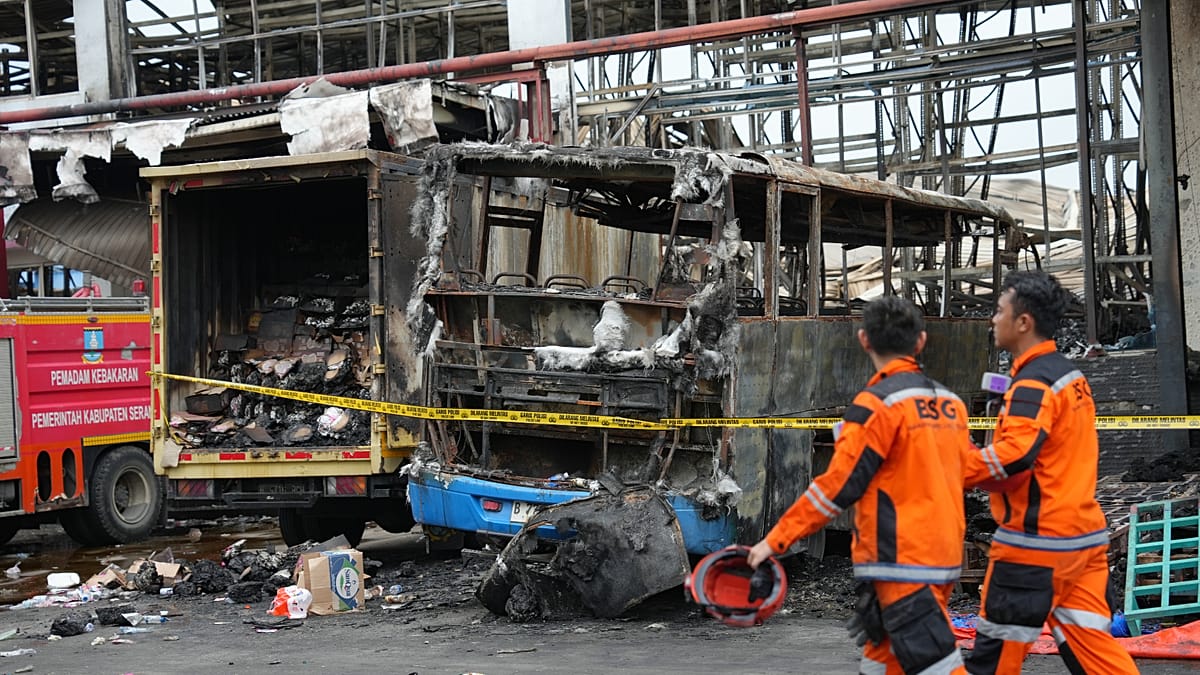
The factory, which produces sweets and confectionery, employed a large workforce, many of whom were on shift at the time of the incident. Local authorities have not yet released a full list of employees, but the number of missing suggests the death toll could rise. Indonesia's National Search and Rescue Agency (Basarnas) shared aerial footage on social media showing emergency crews navigating the ruined structure, while other images revealed extensive damage to the roof and burned-out vehicles parked nearby.
Investigation into the cause
Said Iqbal, a presidential advisor on workers' welfare, said in a statement on Monday that the fire may have been triggered by a short circuit in the building's air conditioning system. However, he stressed that a thorough investigation is still needed to determine the exact origin of the blaze. Industrial accidents are a recurring concern in Indonesia, where safety standards in some factories have been criticized for being inadequate, particularly in sectors with high worker turnover.
The tragedy has reignited debates about workplace safety in Southeast Asia's largest economy. Labour rights groups have long called for stricter enforcement of occupational health and safety regulations, arguing that many employers prioritize production over worker protection. The Indonesian government has pledged to conduct a full inquiry, but families of the victims are demanding answers and accountability.
This incident comes as Indonesia and the European Union have been strengthening economic ties, with the two sides recently finalising a free trade pact after a decade of negotiations. The agreement, which covers goods, services, and investment, is expected to boost trade in sectors such as textiles, electronics, and processed foods. European companies with supply chains in Indonesia will be watching the investigation closely, as safety lapses could have reputational and legal implications.
For European readers, the fire is a stark reminder of the human cost behind global supply chains. Many European brands source ingredients or finished products from Indonesian factories, and consumers increasingly expect transparency about working conditions. The EU has been pushing for mandatory due diligence rules that would hold companies accountable for human rights and environmental abuses in their supply chains, a measure that could gain momentum in light of such disasters.
As rescue operations continue, the focus remains on finding the missing and supporting the families of those who perished. Local authorities have set up a crisis centre to assist relatives, and counselling services have been offered to survivors. The full scale of the tragedy may not be known for days, but the initial reports paint a grim picture of a workplace turned into a death trap.
In a region that has seen its share of industrial accidents, this fire stands out for its ferocity and the high number of casualties. It also underscores the urgent need for improved safety measures, not just in Indonesia but across the developing world, where rapid industrialization often outpaces regulation. For now, the community in Serang mourns its losses, and the world watches to see what lessons will be drawn from this catastrophe.