At least 35 people were killed and 24 wounded in Russian strikes on Ukraine's eastern Donetsk region on Thursday, according to local authorities, as Moscow reported four deaths in its own Belgorod region from Ukrainian attacks.
Vadym Filashkin, the governor of Donetsk Oblast, said in a Telegram post that 32 of the victims died in Kramatorsk and three in the village of Bilenke. Russian forces struck two buses in Kramatorsk on Thursday morning, prompting the suspension of public transport in the city while rescue teams searched the rubble.
Ukrainian President Volodymyr Zelenskyy vowed that the attack "will not go unanswered." In a statement on X, he wrote: "Russia is trying to destroy all life in Donbas, and a response from the world is a must. A forceful response – exactly as the Russians deserve for all the deaths they have brought."
Filashkin reported that Russian forces shelled parts of Donetsk Oblast more than 30 times in the past 24 hours, forcing 379 residents to evacuate. He urged those still in the region to move to safer areas of the country.
Cross-border attacks on Belgorod
Across the border, Alexander Shuvaev, governor of Russia's Belgorod region, said on Friday that four people had been killed in Ukrainian attacks over the previous day. "In the Belgorod district, a married couple were killed as a result of the shelling. In the Valuy and Graivoron districts, a man and a woman were killed in drone attacks," he said, adding that 12 others were injured.
The strikes come as Ukraine continues its campaign against Russian energy infrastructure, a strategy aimed at undermining one of Moscow's key economic lifelines. On Friday, Zelenskyy announced that Ukrainian forces had hit a "major" Russian oil refinery in Omsk and another facility in Ukhta.
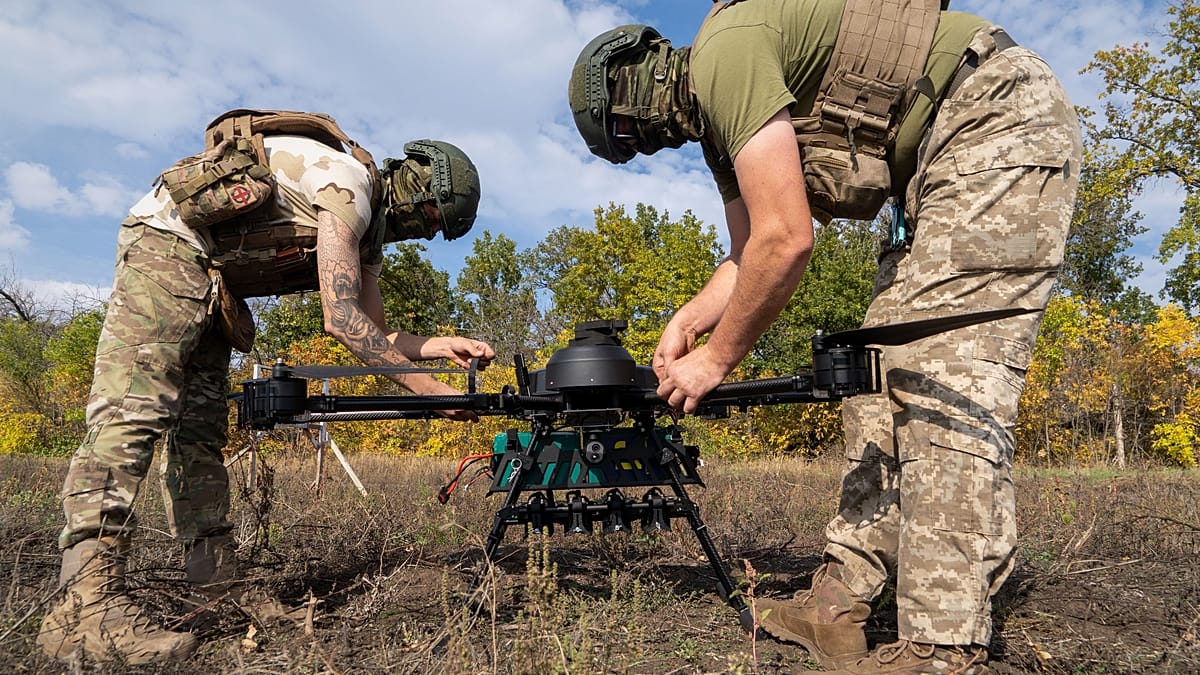
"The target in Ukhta was hit by An-196 RS drones, which can fly about 2,500 kilometers, while FP-6 drones (modified FP-1s) were used against the Omsk refinery the day before," he said, sharing video footage that appeared to show the aftermath of the strikes.
The attacks on refineries are part of a broader Ukrainian effort to reduce Russia's oil revenues, which fund its war machine. However, the strikes have also raised concerns about global energy markets, especially as Europe continues to grapple with the fallout of the war.
Meanwhile, diplomatic efforts to de-escalate the conflict remain stalled. Recent talks in Miami aimed at a partial ceasefire have made little progress, and Ukraine braces for a difficult winter amid continued Russian attacks on its energy grid.
The civilian toll in Donetsk has drawn sharp criticism from European leaders, who have repeatedly condemned Russian attacks on populated areas. Ukrainian officials have called such strikes war crimes, and international bodies are documenting evidence for potential prosecution.
As the war enters another winter, the humanitarian situation in eastern Ukraine remains dire. Thousands of civilians have been killed or injured since the full-scale invasion began in February 2022, and millions have been displaced. The latest attacks underscore the urgent need for a diplomatic solution, though both sides show little sign of backing down.