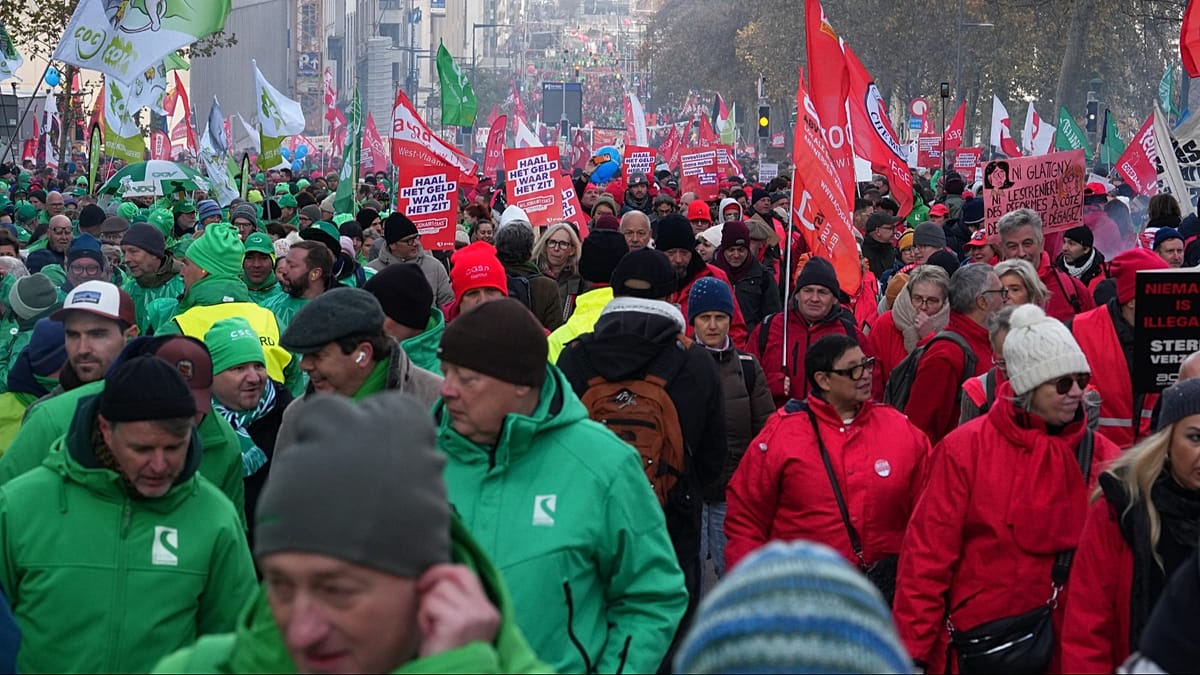
Belgium is bracing for a turbulent Monday as a nationwide strike called by the country's main unions brings transport and public services to a standstill, while Prime Minister Bart De Wever's coalition government teeters on the brink of collapse.
The strike, organized in protest against planned austerity measures, has grounded all flights after air traffic controller Skeyes said it could not provide regular services due to staff walkouts. Public transport, schools, and other public services are also facing significant disruptions, with thousands of demonstrators expected to march through Brussels.
Government in crisis
De Wever, a Flemish conservative, is set to report to King Philippe for the third time in a month on progress in agreeing a new cost-cutting budget with his coalition partners. The monarch refused to accept De Wever's resignation on 2 November, giving him more time to find a solution to the budget impasse.
The coalition has been locked in tense negotiations for weeks over how to save €10 billion over the next few years to reduce Belgium's high deficit, which exceeds 5% of GDP. The proposed measures include spending cuts in healthcare and an increase in VAT, sparking fierce opposition from unions and the left-wing parties within the coalition.
Under the EU's fiscal framework, member states must keep budget deficits below 3% of GDP and public debt under 60% of GDP. Belgium's deficit has been a persistent concern, and the government is under pressure to comply with these rules.
However, divisions remain deep. The only leftist party in the coalition is resisting the cuts, and unions are pushing for higher taxes on high earners to offset some of the reductions. The standoff has led to repeated rounds of strikes and cost-of-living protests in recent months, reflecting broader discontent across Europe.
Similar demonstrations have erupted elsewhere on the continent, as cost-of-living protests sweep Portugal, France and Spain, and coordinated protests across Europe demand wage hikes and public service funding. The unrest highlights a growing backlash against austerity measures in several EU countries.
In Belgium, the strike is a major test for De Wever's government, which has been in office for less than a year. The prime minister's tough stance on fiscal discipline has won praise from some quarters but has alienated many voters and unions.
As the day unfolds, all eyes will be on the royal palace and the outcome of De Wever's audience with the king. If no agreement is reached, the government could fall, triggering fresh elections and further political instability in a country already known for its complex federal structure.
The situation is being closely watched across Europe, as Belgium's struggle to balance its books mirrors challenges faced by other member states. The EU's fiscal rules are designed to ensure long-term stability, but implementing them often comes at a political cost.
For now, Belgian citizens are feeling the immediate impact of the strike, with many unable to travel or access public services. The unions have vowed to continue their actions until their demands are met, setting the stage for a prolonged standoff.